
Technology & Operations
AI Facility Management: What It Can Do for Response Times
January 21, 2026
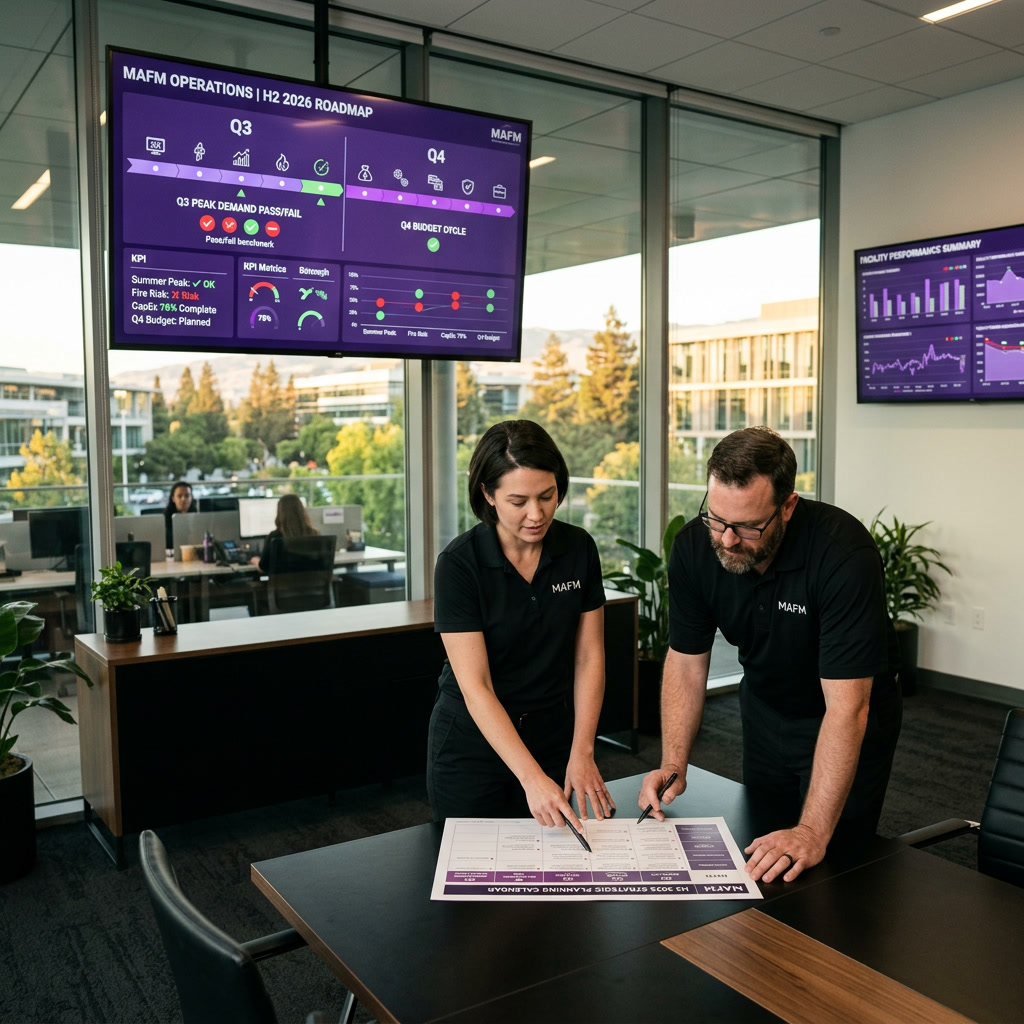
H2 facility planning is the work of turning what the first six months taught you into a short, sequenced, funded list for the second half of the year. The plan that works is narrow: a handful of initiatives with owners, dates and a budget source, plus room for the things nobody predicted.
Start from actuals, not from the January plan. Your Q2 numbers, your open work orders and your tenant feedback say what the building actually needs, and the next six months are the cheapest time to act on them before year-end budget season starts.
Collect every open item from your Q2 review, your vendor reviews and your tenant conversations into one list, then cut it. If you have not run the review yet, our Q2 facility performance review framework shows how to pull that list together.
Score each item on three questions:
Keep the list short enough that every item has a named owner. A long list with no owners becomes a list of things that were discussed. A short list with dates becomes a plan. We do not give a magic number for how many items is right, because it depends on the size of your team and how many vendors you coordinate.
Put the work that needs attention at the right time of year and keep the rest out of the way of the busy months. Three rules of thumb hold for most office buildings.
The exact months depend on your building, your tenants' calendars and your vendors' lead times. For a month-by-month default you can adjust, see our annual facility management calendar.
Ask vendors for lead times before you fix a date. Equipment, permits and specialist contractors often set the real schedule, and a project that cannot start until a part arrives should not be pinned to a window it will miss.
Compliance dates do not move, so put them on the calendar first and plan around them. A few that matter to California offices:
Add your own list on top: elevator permits, fire system tests, lease expirations and contract end dates. Pull the dates from your records and your authorities having jurisdiction, not from memory.
Give every initiative a funding source before it goes on the plan: operating budget, an approved capital line, or a request that still needs sign-off. Anything in the third group needs a business case now, not in the quarter it becomes urgent.
A request that arrives with a few months of your own data and a schedule is easier for ownership to approve than one that arrives as an emergency. Use your records, not industry averages, as evidence. Work-order history, repair invoices, energy bills and vendor performance notes are all things you already hold.
Benchmarking is a good place to start for anything energy related. ENERGY STAR describes benchmarking as the first step to saving energy: measuring and comparing your building's energy use to similar buildings, to past consumption or to a reference level, using little more than your utility bills and basic building information. It also notes that its financial tool in Portfolio Manager can help you compare cost savings across buildings when setting investment priorities.
If you are weighing preventive work against run-to-failure, the Department of Energy's Operations and Maintenance Best Practices Guide (Release 3.0, 2010) estimates that a preventive maintenance program can cost 12 to 18 percent less than a reactive one. That is an older federal estimate written for government facilities, so treat it as direction, not a promise for your building. Our mid-year facility budget review walks through how to test the same question against your own actuals.
Plan on being interrupted. An equipment failure, a tenant departure, a smoke event or a vendor that walks off a contract will all compete with the plan, so hold some capacity back instead of scheduling every available hour.
There is no standard percentage for this, and we will not invent one. Pick a contingency that matches your own history: look at how many unplanned work orders and emergency calls the first half generated, and reserve time and budget in proportion.
Then write down the rule for what happens when something new arrives. A new item can be added only if you name what moves out, and the person who owns the plan makes that call. That keeps emerging priorities from quietly pushing planned work aside.
Schedule a mid-H2 checkpoint on the calendar now. At that meeting, ask what changed, which initiatives are late and why, and whether the original ranking still fits the building.
Present the plan as a short story: what the first half showed, what you will do about it, when, and what it costs. Ownership and executives respond to a clear ask with dates, not a long activity list.
Agree on priority order and funding before work starts. Surprises in the fourth quarter, such as a stakeholder learning that something they considered urgent was never prioritized, are almost always a communication gap that a two-page plan would have closed.
Set a reporting rhythm at the same time, monthly or quarterly. Tell tenants early about anything that touches their space or schedule, and put dates in writing. A building where the people who work in it know what is coming rarely generates avoidable complaints.
What is the difference between H1 and H2 facility planning?
H1 planning is built around the January budget and the assumptions behind it. H2 planning starts from what actually happened: real Q2 data, real vendor performance and real tenant feedback, with the budget for next year coming into view by the final quarter.
How many initiatives should an H2 plan include?
As many as your team can fund and finish while still running the building day to day. There is no published right number, so count your people, your vendors and your funded budget, and cut the list until each item has an owner and a date.
When does the OSHA annual injury summary need to be posted?
If your company keeps an OSHA 300 Log, the annual summary rule requires an end-of-year review, a certified summary and posting by February 1 of the following year. Confirm with your safety lead or OSHA whether your establishment is covered.
Should we start 2027 budget work in H2?
Yes, begin gathering the inputs early. Benchmarking data, repair history, contract renewal dates and known wage changes all exist before the final quarter, and collecting them early leaves the last quarter for decisions rather than data entry.
M.A.C. Attack Facilities Management plans, schedules and coordinates building services and the vendors behind them for commercial offices. If you want help turning your Q2 findings into a sequenced H2 plan with clear owners and dates, talk to us about facility management.
MAFM offers comprehensive facility management solutions tailored to your business needs.
Get in Touch