Technology & Operations
AI Facility Management: What It Can Do for Response Times
January 21, 2026
For a mid-size commercial property, smart building technology pays off first where it changes how existing equipment runs: better HVAC control sequences, LED lighting with occupancy controls, and water leak sensors in the places that can flood. Predictive maintenance, air quality monitoring and the more futuristic platforms depend on your building, and several can wait.
There is no honest single payback timeline for any of these, because it depends on your utility rates, operating hours and starting condition. What follows is what federal labs and agencies have measured, what the numbers do and do not tell you, and a practical order of operations.
Usually yes, because HVAC is where the control logic matters most and where a software change can do the work of new hardware. A 2026 Lawrence Berkeley National Laboratory field study looked at 17 projects that adopted ASHRAE Guideline 36 control sequences: supply air temperature reset, duct static pressure reset and economizer controls. For control reprogramming projects, HVAC savings ranged from 2% to 49%, with a median of 18% (Lawrence Berkeley National Laboratory, multi-site field study of ASHRAE G36). The authors conclude that owners can capture significant benefits by updating sequences of operation without buying new control infrastructure.
That spread is the real lesson. A median says nothing certain about any one building. Two things set where you land in the range: how your current sequences are written, and whether anyone has checked them lately.
Before buying anything, ask your HVAC controls contractor to review the existing sequences, schedules and setpoints against how the building is actually occupied. The U.S. Department of Energy's operations and maintenance guide estimates that O&M programs targeting energy and water efficiency can save 5% to 20% on energy bills without significant capital investment, an older estimate written for federal sites (PNNL, Operations & Maintenance Best Practices Guide, 2010). Tuning what you have is the cheapest first step, and it tells you whether newer controls are worth adding.
For the maintenance side of HVAC, see our post on smart HVAC maintenance for Silicon Valley offices.
Yes, if your building still runs fluorescent fixtures, and the controls are often where the extra savings come from. The U.S. Department of Energy notes that lighting accounts for between 10% and 20% of the electricity use in a typical commercial building, and that linear fluorescent lamps still provided most of the lighting service in commercial buildings in 2018 (DOE Better Buildings, LED troffer retrofit fact sheet, 2022).
DOE's federal energy program guide says that retrofitting or replacing fluorescent troffers with LEDs can save 20% to 60% at the project level (DOE FEMP, LED Retrofit Kits, TLEDs, and Lighting Controls, 2017). That is a wide range because savings depend on the starting lamps, the hours of use and the retrofit method.
Controls add to it. A Lawrence Berkeley National Laboratory meta-analysis of 240 savings estimates from 88 papers and case studies put the best estimate of average lighting energy savings at 24% for occupancy strategies and 28% for daylighting strategies (LBNL, A Meta-Analysis of Energy Savings from Lighting Controls in Commercial Buildings, 2011). DOE's guide cautions that savings from combining several control strategies are not additive.
Two practical points for California properties:
For most mid-size buildings it is one of the lowest-risk additions, because the cost of a missed leak is large compared with a sensor. The U.S. EPA's WaterSense program describes two main device types for commercial facilities: leak sensors placed where leaks or flooding are likely, such as under sinks and near water heaters, which sound an alarm or trigger a shut-off valve when they touch water, and flow monitoring devices that send an alert or close a valve when water use looks abnormal (EPA WaterSense at Work, Leak Detection and Repair, 2023).
The same EPA guide suggests a no-cost check first: read the water meter when all water-using equipment is off, read it again an hour later, and investigate if the reading changed significantly.
Place sensors where your building actually leaks, and decide in advance who gets the alert at 2 a.m. and what that person is authorized to do.
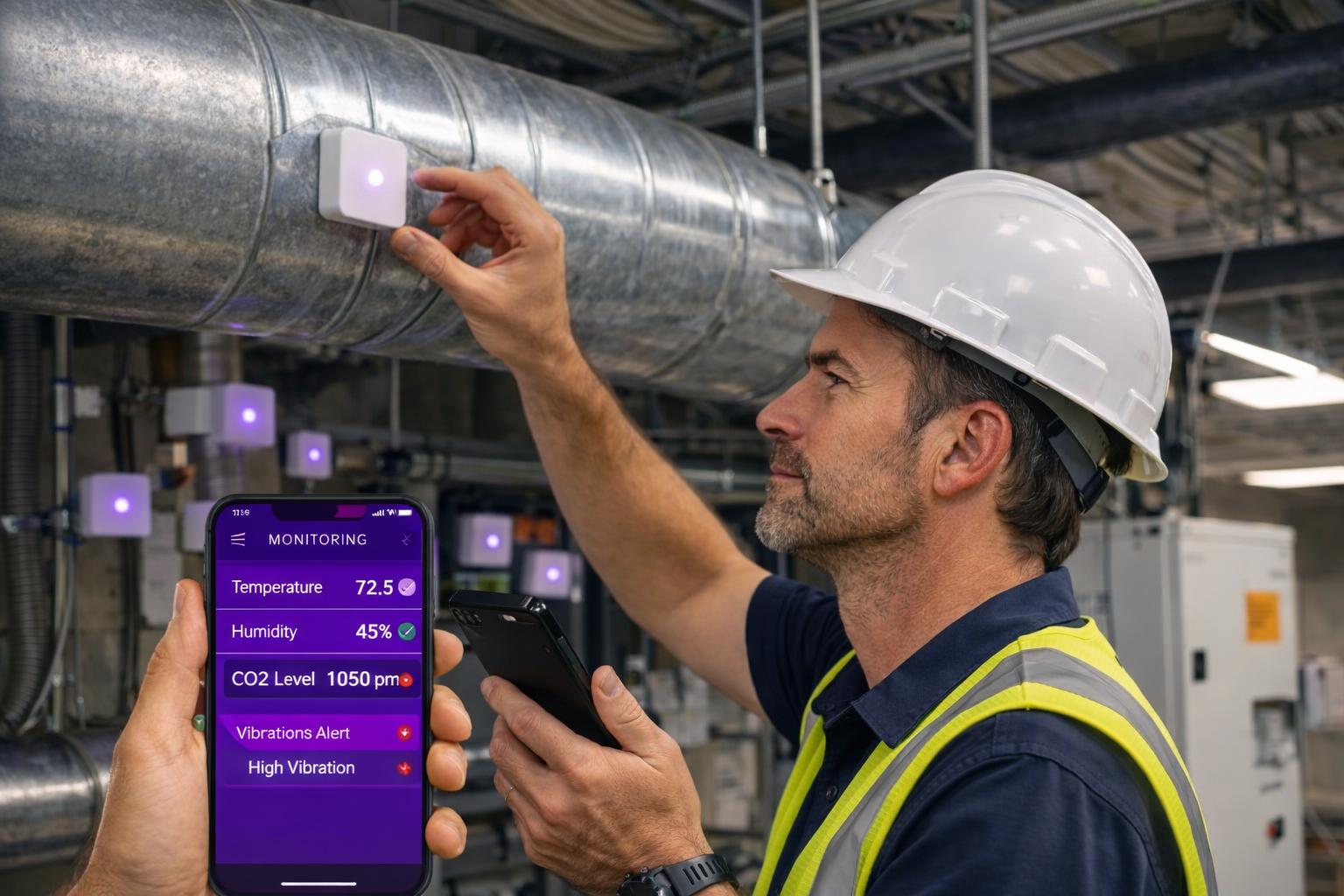
It depends on your building's history and your tenants. OSHA's guide to indoor air quality in commercial buildings says carbon dioxide levels can serve as a rough indicator of ventilation effectiveness, and that high levels may point to overcrowding or inadequate outdoor air (OSHA, Indoor Air Quality in Commercial and Institutional Buildings, 2011). The same guide notes that many complaints come from flaws in design and from inadequate routine preventive maintenance of the building envelope, plumbing and HVAC.
That points to the order of operations: keep up the HVAC maintenance first, then monitor. If you have no air quality complaints, a modern HVAC system and normal occupancy, a permanent sensor network may be premature. Rotating portable monitors through suspect zones can tell you whether a persistent problem exists before you commit to permanent infrastructure. If tenants ask for the data, or the building has a history of comfort complaints, permanent monitoring becomes easier to justify.
Only when the building has enough critical equipment to monitor. DOE's O&M guide says past studies estimated that a properly functioning predictive maintenance program can save 8% to 12% over a program using preventive maintenance alone. It also lists the downsides: more investment in diagnostic equipment and in staff training (PNNL, Operations & Maintenance Best Practices Guide).
Treat that figure with care. It comes from a 2010 guide describing earlier studies, and it was not measured on a small office building. A building with a couple of rooftop units, one elevator and standard plumbing generates little data, and a good preventive maintenance routine with disciplined inspections may deliver most of the benefit.
Consider predictive tools where unplanned downtime is expensive: critical cooling, large pumps and fans, or equipment with a history of surprise failures. Our post on predictive maintenance and AI in Silicon Valley buildings covers the approach in more depth.
Technology that adds complexity faster than it adds decisions can wait. This is our judgment from how building crews work, not a measured finding.
Add one system at a time, and treat security, data and upkeep as part of the purchase price.
A facility management partner can help with the unglamorous part: scheduling vendors, checking their work, keeping a service log and connecting what the sensors report to what the crew does. MAFM does not install building controls or sensors, but plans and coordinates that work alongside the janitorial and facility programs it runs.
What smart building technology should a mid-size office building install first? Start with a review of your existing HVAC control sequences and schedules, because a 2026 LBNL field study found median HVAC savings of 18% from reprogramming controls, with a wide range. Then look at LED lighting with occupancy controls and water leak sensors. Add air quality monitoring and predictive maintenance only if your building's profile supports them.
How much do occupancy sensors save on lighting? An LBNL meta-analysis of 88 papers and case studies put the best estimate of average lighting energy savings from occupancy strategies at 24%. Your result depends on how long spaces sit empty and what lighting you have now, so measure your baseline before and after.
Do I need permits or code compliance for a lighting upgrade in California? Possibly. California's 2022 Energy Code applies control requirements to indoor lighting alterations that involve 10% or more of the luminaires in an enclosed space, with several exceptions. Your designer, contractor or local building department can confirm which rules apply.
Is predictive maintenance worth it for a small building? Often not as a first step. DOE's guide cites estimated savings of 8% to 12% over preventive maintenance but also lists added diagnostic equipment and training costs. A building with only a few major systems is usually better served by disciplined preventive maintenance.
If you are weighing smart building upgrades, the useful first step is a walkthrough of how your building runs today. MAFM can help you list the systems, set priorities, coordinate the vendors and build the new data into your facility program. Talk to us about facility management or contact MAFM to get started.
MAFM offers comprehensive facility management solutions tailored to your business needs.
Get in Touch