How Cupertino and Mountain View Tech Campuses Set the Standard for Facility Excellence
How Cupertino and Mountain View Tech Campuses Set the Standard for Facility Excellence
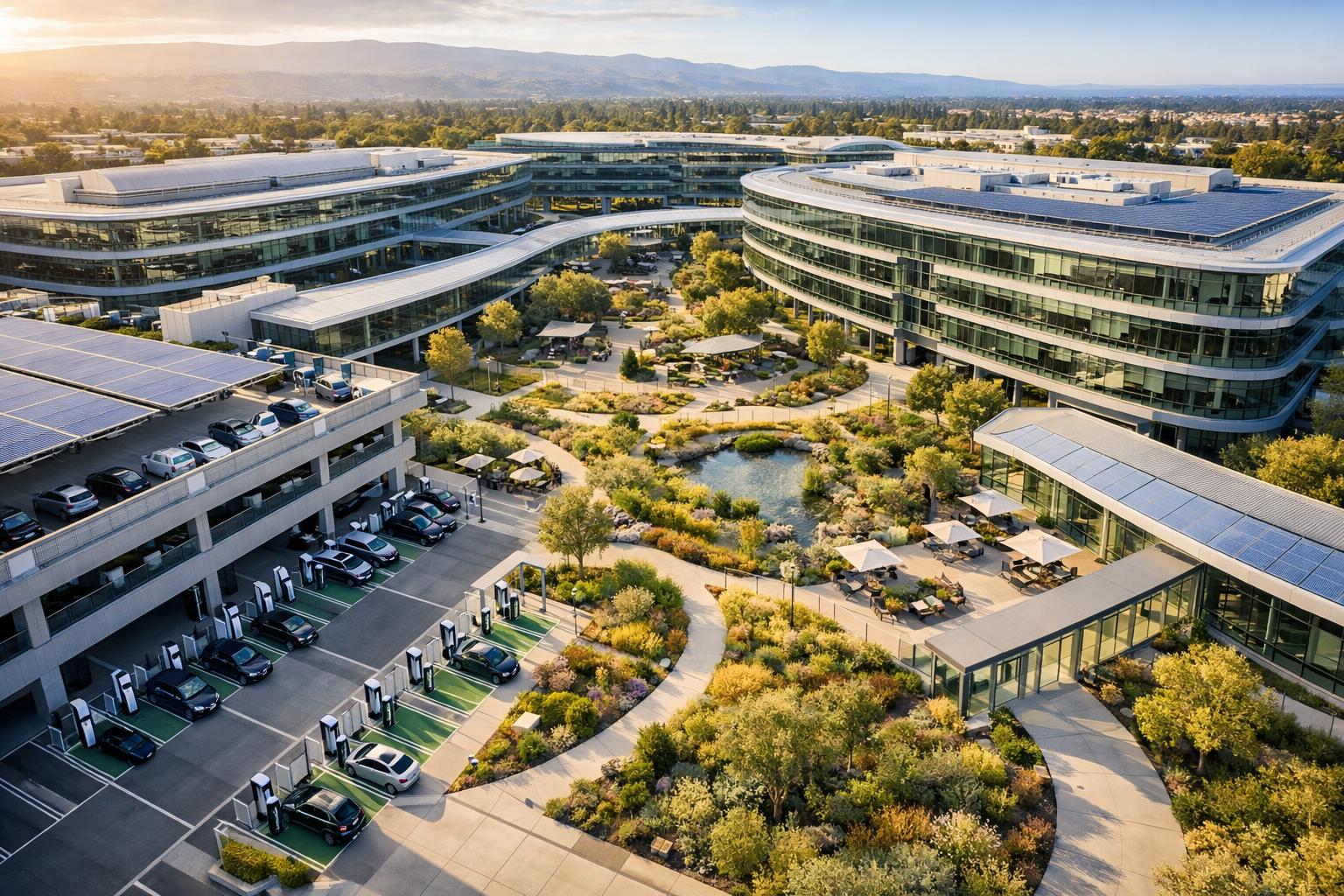
Cupertino and Mountain View are home to some of the most demanding commercial facilities in the world. The tech campuses that dominate these cities operate at a level of facility management sophistication that most commercial properties never approach, not because they have unlimited budgets, but because they have recognized that facility quality directly impacts employee productivity, recruitment, and retention.
The operational frameworks these campuses use are not proprietary secrets. They are systematic approaches to cleanliness, maintenance, sustainability, and occupant experience that any Silicon Valley facility can adapt. Understanding what makes these campuses exceptional reveals practical lessons that translate to office buildings, multi-tenant properties, and mixed-use facilities across the Bay Area.
The Experience-First Operating Model
The fundamental difference between tech campus facility management and traditional commercial property management is the operating philosophy. Traditional facilities management focuses on building maintenance. Tech campus management focuses on occupant experience, with building maintenance as one component of that broader goal.
This distinction changes everything about how decisions get made. When a traditional facility manager receives a budget request, the question is typically about cost and necessity. When a tech campus facility leader receives the same request, the question is about impact on the people using the space.
The result is not reckless spending, it is smarter allocation. Tech campuses invest more heavily in the touchpoints that people interact with daily: restroom quality, common area aesthetics, air quality, temperature consistency, and outdoor space maintenance. They spend proportionally less on areas that occupants rarely notice, creating an overall budget that is competitive with traditional properties but produces dramatically different outcomes.
For Silicon Valley facility managers outside the tech campus world, the lesson is clear: understanding which facility elements your occupants actually experience and prioritizing those elements produces better satisfaction results per dollar spent than distributing budget evenly across all building systems.
Cleaning Standards That Redefine the Baseline
Walk into a major tech campus restroom in Cupertino and compare it to a typical Class A office building restroom in downtown San Jose. The difference is immediately visible, and it is not about fixture quality or design, it is about cleaning frequency, attention to detail, and accountability standards.
Tech campuses typically operate on cleaning frequencies that commercial buildings would consider excessive. Restrooms in high-traffic areas get serviced every 60-90 minutes during business hours, not twice daily. Common area touch points (door handles, elevator buttons, conference room tables) get sanitized on rotating schedules throughout the day rather than once during nightly cleaning.
The staffing model that supports this frequency is the day porter system, and tech campuses have refined it into a science. Rather than relying on a large nighttime cleaning crew, campuses deploy trained day porters who circulate continuously through the facility, addressing issues in real time and maintaining appearance standards throughout the occupied hours.
This approach produces a compounding effect. When spaces are maintained continuously, the level of deep soil accumulation drops dramatically. Carpets last longer. Restroom fixtures stay cleaner between services. Common area furniture shows less wear. The higher operational cost of day porter coverage gets partially offset by extended asset life and reduced deep cleaning frequency.
Commercial properties that adopt even a scaled-down version of this model (adding a single day porter to a 50,000 square foot building) consistently report measurable improvements in tenant satisfaction scores within the first quarter.
Sustainability as Operational Standard
Cupertino and Mountain View tech campuses do not treat sustainability as a marketing initiative. They treat it as an operational requirement built into every procurement decision, maintenance protocol, and vendor contract.
The practical implications are significant. Cleaning chemical selections must meet strict environmental and health criteria that often exceed California state requirements. Waste diversion programs operate at levels that satisfy the most aggressive municipal targets. Energy management systems are monitored continuously, not just checked quarterly during utility bill reviews.
Landscaping on tech campuses demonstrates the sustainability commitment most visibly. Native and drought-adapted plantings dominate. Smart irrigation systems respond to real-time soil moisture and weather data. Organic maintenance practices replace conventional chemical lawn care.
The cost of these sustainability practices is often misunderstood as a premium. In reality, mature sustainability programs frequently cost less than conventional approaches because they eliminate waste, reduce resource consumption, and avoid regulatory penalties. Green cleaning products have reached price parity with conventional chemicals. Native landscaping requires less water, less fertilizer, and less maintenance labor than traditional turf-dominated landscapes.
For facility managers at conventional properties, the opportunity is adopting sustainability practices that simultaneously improve environmental performance and reduce operating costs. These are not competing objectives, they are complementary ones.
Technology Integration in Facility Operations
Tech campuses naturally lead in facility technology adoption, but the systems they deploy are increasingly accessible and affordable for properties of any size.
Occupancy sensors drive HVAC, lighting, and cleaning schedules based on real-time usage data rather than fixed timers. When a conference room is unoccupied, climate and lighting systems adjust automatically. When sensor data shows a restroom has received above-average traffic, the day porter team receives an alert to prioritize that location.
Building management systems integrate data from hundreds of sensors to provide facility managers with real-time visibility into building performance. Energy consumption, air quality, temperature deviations, equipment status, and maintenance alerts flow into unified dashboards that enable proactive management rather than reactive response.
Work order systems track every maintenance request from submission through completion with time stamps, technician assignments, parts usage, and resolution notes. This data feeds into preventive maintenance algorithms that predict equipment failures before they occur and schedule interventions during convenient windows rather than emergency responses.
The most relevant lesson for mainstream facility managers is that these technologies have matured past the early-adopter phase. Cloud-based building management platforms, wireless sensor networks, and mobile-first work order systems are now available at price points that make sense for 25,000 square foot multi-tenant buildings, not just million-square-foot tech campuses.
Outdoor Spaces as Productivity Assets
One area where tech campuses have fundamentally changed facility management thinking is the treatment of outdoor spaces. Traditional commercial properties maintain outdoor areas to look acceptable. Tech campuses design and maintain outdoor spaces as productivity environments.
Walking paths, outdoor meeting areas, fitness circuits, and garden spaces are maintained with the same attention and frequency as indoor common areas. The landscaping budget for a major tech campus outdoor program often exceeds the total facility management budget for a similarly sized conventional office building.
The reasoning is data-driven. Employees who have access to well-maintained outdoor spaces during the workday show measurable improvements in afternoon productivity and overall job satisfaction. Companies that invest in campus outdoor environments see the return in recruitment and retention metrics.
For conventional Silicon Valley properties, the practical application does not require building a campus park. It means maintaining your existing outdoor areas (building entrances, courtyards, parking lot landscaping, patio spaces) to a standard that makes them inviting rather than merely acceptable. A well-maintained outdoor seating area with clean furniture, trimmed landscaping, and adequate shade costs very little to maintain but contributes meaningfully to tenant experience.
Lessons for Every Silicon Valley Facility
The most transferable lesson from tech campus facility management is not about budget or technology, it is about intentionality. Every operational decision on a well-run tech campus connects to a clearly defined standard of occupant experience.
Conventional facilities can adopt this mindset without adopting tech campus budgets. It means asking different questions: not just whether the building is clean, but whether the people in the building feel like it is clean. Not just whether systems are functioning, but whether occupants are comfortable. Not just whether the landscape is maintained, but whether outdoor spaces invite people to use them.
Adopt Tech Campus Standards for Your Property
Cupertino and Mountain View tech campuses represent the leading edge of facility management practice, and their innovations are not staying behind campus fences. The experience-first operating model, elevated cleaning standards, integrated sustainability practices, smart technology deployment, and outdoor space strategy they have pioneered are all adaptable to conventional commercial properties.
The facility managers who will lead the next generation of Silicon Valley property management are the ones studying these campuses today and selectively adopting the practices that deliver the highest impact for their specific buildings and tenants.
MAFM PRO brings tech campus-caliber facility management to commercial properties across Silicon Valley. Learn how to elevate your building's operational standard with our proven methodologies.
Schedule your consultation: Contact MAFM.PRO
Ready to Optimize Your Facilities?
MAFM offers comprehensive facility management solutions tailored to your business needs.
Get in Touch