
Sustainability & Energy
De-Icing Solutions for California Facilities: What Works
January 28, 2026
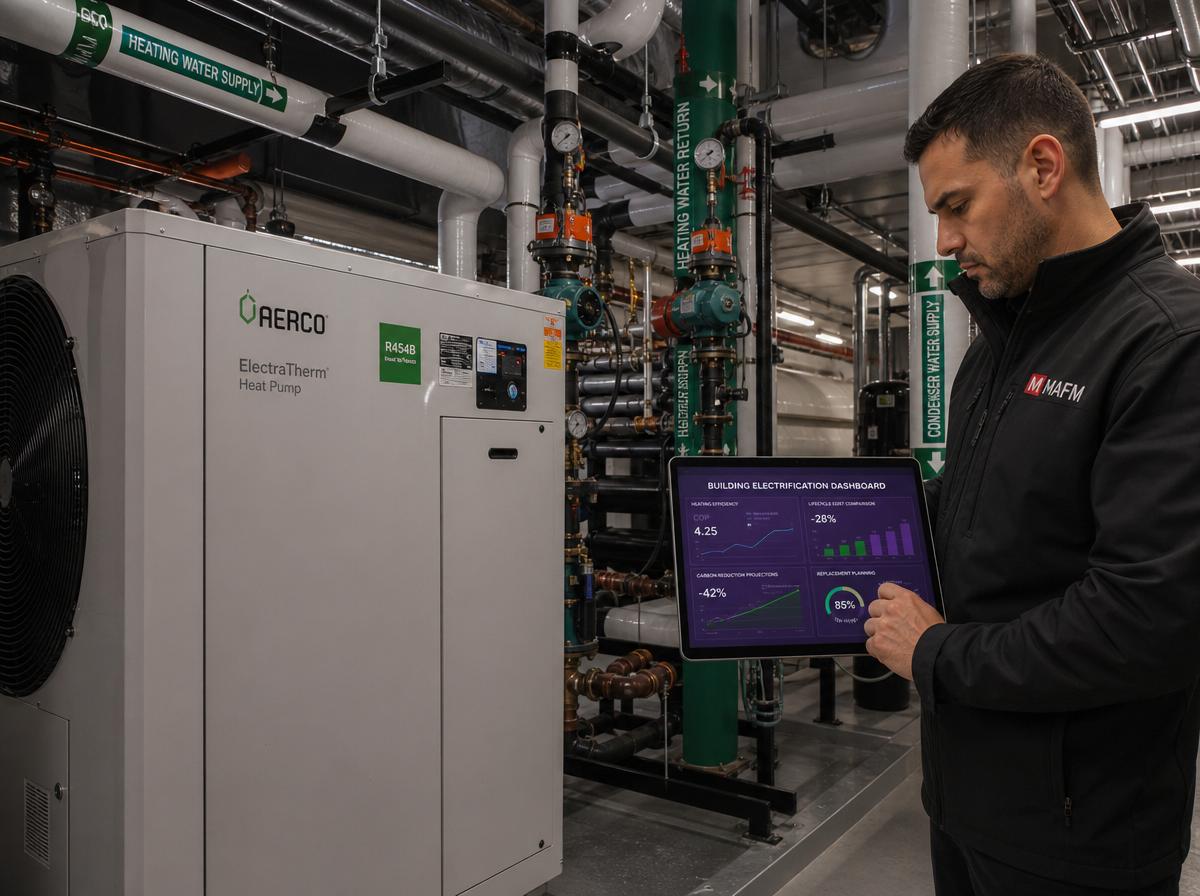
A commercial heat pump moves heat instead of burning fuel to make it, which is why it can heat a building on less energy than a gas boiler or an electric resistance heater. For a Silicon Valley building, the practical question is not whether heat pumps work here but when your gas equipment reaches the point where replacing it with a heat pump is the easiest path.
The answer for most buildings is the next scheduled replacement, not a rip-and-replace project. Plan for that moment now, because the rules, the tax treatment and the incentives around it are changing in 2026 and 2027.
A heat pump uses electricity to move heat from a cooler place to a warmer one. The U.S. Department of Energy puts it this way: heat pumps use electricity to transfer heat from a cool space to a warm space, so in cold seasons they move heat from the outdoors in, and in warm seasons they move it from the building out. Because they transfer heat rather than generate it, DOE calls them significantly more efficient than traditional heating systems.
That one design gives a building heating and cooling from the same equipment. DOE also says modern air-source heat pumps can cut electricity use by 50% compared with furnaces and baseboard heaters. That figure comes from DOE's consumer guidance and does not say how a commercial system compares with gas, so treat it as a rough guide and ask your engineer for a building-specific estimate.
The type follows the building you already have. DOE describes two broad families, air-source and geothermal, which differ in where they collect heat: outdoor air, or the ground and water. Geothermal costs more to install but has low operating costs because ground and water temperatures stay fairly constant.
In practice, the options a facility team compares are:
Ask the engineer for a load calculation before you pick a type. Equipment that is sized for an average day can struggle on the hottest afternoon of the year, and a bad fit shows up in tenant comfort complaints before it shows up on a bill.
The Bay Area Air Quality Management District already has a schedule that ends the sale of new gas water heaters and furnaces that emit nitrogen oxides. Its building appliance rule page lists zero-NOx standards for appliances manufactured after these dates:
The Air District says the only commercially available appliances that meet these standards today are electric. The rules apply in Santa Clara County and the rest of the Air District's territory.
These dates are moving. The Air District's Rule 9-6 page says its board was set to consider amendments on November 4, 2026 that would delay the date for residential water heaters to January 1, 2028. It also states the rule applies only when a water heater is replaced and does not require replacing a working unit. Check that page for the final outcome before you plan around a specific date.
Choose at the replacement decision, not before it. Equipment that still works and is maintained properly does not have to come out because of these rules. The decision point arrives when a rooftop unit, a water heater or a boiler fails or reaches the end of its planned life.
Three things belong in that decision:
Our guide to a building decarbonization roadmap for Silicon Valley shows how to line these replacements up over several years so no single year carries the whole cost.
Check the incentive picture before you budget, because some federal support has already ended. The section 179D deduction for energy-efficient commercial buildings is one example. DOE's 179D page says the One Big Beautiful Bill Act added a termination provision, so 179D does not apply to property whose construction begins after June 30, 2026. Heating, ventilation and air conditioning are among the building systems it covered. A project that began earlier may still qualify, so ask your tax adviser about timing.
On the California side, TECH Clean California tracks heat pump incentives statewide and reports that some rebate pools have been fully reserved, including multifamily rebates as of September 1, 2026. For businesses, San Mateo County's sustainability office explains that heat pump water heater incentives for non-residential buildings are paid to contractors in TECH's network, and cover offices and retail but not shared central systems. Funding changes often, so confirm what is open for your address before you bid the work.
A heat pump replacement succeeds or fails on planning and coordination. MAFM is a facilities management company, and our role is to schedule the work around tenants, coordinate the licensed HVAC and electrical contractors who install and service the equipment, and keep the building's records and maintenance calendar current after the switch.
Practical steps a facility team can take now:
Our post on commercial HVAC maintenance for Silicon Valley offices covers the upkeep side once the new equipment is in.
Do heat pumps work in Silicon Valley's climate?
Yes. DOE states that modern air-source heat pumps are now a legitimate option even in colder regions with extended subfreezing weather, and the Bay Area is milder than those places. The bigger design question here is sizing for the hottest days, not the coldest.
Do I have to replace my gas equipment now?
Not because of the Bay Area rules described above. The Air District says its water heater rule applies when a unit is replaced and does not require replacing a functioning one. The standards apply to appliances manufactured after the listed dates.
Is the federal 179D deduction still available for a heat pump project?
Only for property whose construction began on or before June 30, 2026, according to DOE. Talk to a tax professional about whether your project began in time.
Does MAFM install heat pumps?
No. MAFM plans and coordinates the project and its contractors, and manages scheduling, tenant communication and follow-up maintenance.
If you are mapping out which gas equipment comes out first, talk to us about facility management support for the planning, scheduling and vendor coordination, or contact MAFM to start with an equipment inventory.
MAFM offers comprehensive facility management solutions tailored to your business needs.
Get in Touch