Technology & Operations
AI Facility Management: What It Can Do for Response Times
January 21, 2026
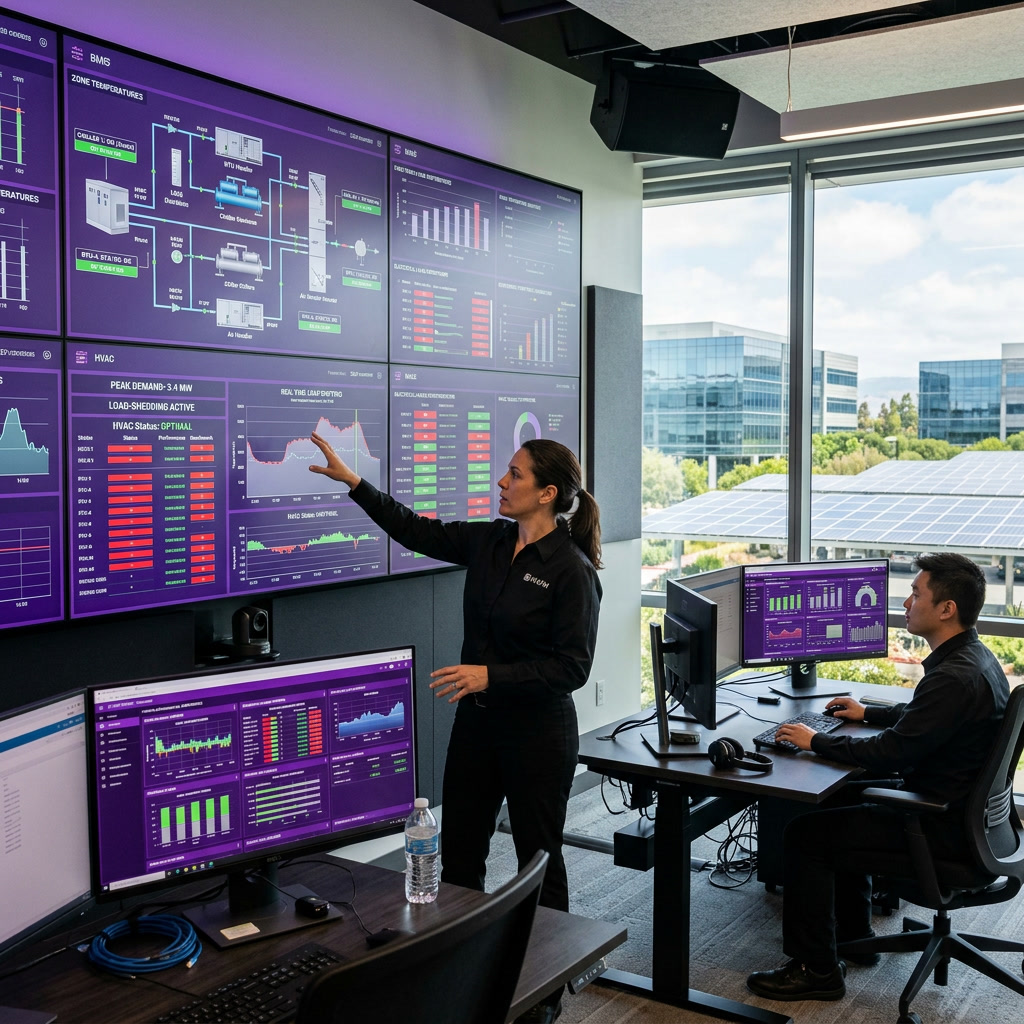
Building automation load shedding means programming the building's control system to turn down non-essential equipment automatically when electricity use approaches a limit you have set. Done well, tenants do not notice it. Done badly, it produces comfort complaints, so the work is mostly in choosing what to shed and in what order.
Many buildings already own a control system that can do this and run it only as a clock and a thermostat. This post covers how to check what yours can do, what is reasonable to shed, and how to keep the people in the building comfortable.
It is the controls temporarily reducing or switching off non-essential energy use. The U.S. Department of Energy's Federal Energy Management Program describes load reduction strategies, also called load shedding or curtailment, as temporarily reducing or turning off non-essential energy use during peak hours to lower demand and costs.
The same page lists building automation systems among the technologies that make this possible: they automate control of heating, ventilation, air conditioning, lighting and other systems to respond to demand signals. The U.S. General Services Administration adds that a system can enable facility managers to balance energy use during times of peak demand.
A related term is demand limiting. A Berkeley Lab paper defines it as shedding loads when pre-determined peak demand limits are about to be exceeded, then restoring them when demand is sufficiently reduced. The same paper notes that controls have been used to reduce electrical peaks since the 1980s, so this is not new technology. It is a mid-2000s paper, so treat the specifics as background.
Because peaks cost money and can earn money. Two bill lines respond to it: the monthly demand charge, covered in our post on demand charge management, and time-of-use energy prices, covered in time-of-use load shifting. Utility demand response programs can also pay for curtailment on event days.
FEMP's guidance says that in regions with grid constraints, a facility's peak demand, not just its overall energy consumption, can increasingly affect utility bills. Shedding is a way to act on that, but only if the controls are set up to do it.
Check before you buy anything. FEMP notes that many demand flexibility strategies work with equipment facilities already use, including smart scheduling and HVAC optimization. A system installed for scheduling may already support demand limiting that was never switched on.
An honest capability review asks a few questions:
The answers decide whether you are adjusting settings or planning a controls project. Our post on why your building automation system may be older than you think covers when a refresh is the real answer.
Start with the loads people feel least. A FEMP presentation on smart buildings lists dimming lights with fully controllable LED fixtures as a load shed measure, and lighting is usually the least noticeable place to begin. Work down from there toward the changes tenants can feel.
A sensible order, from least to most noticeable:
Never shed anything tied to life safety, critical equipment or tenant operations that cannot tolerate a change. A short written list of what is off limits, agreed in advance, prevents a bad day.
Make each step small, gradual and reversible. A Berkeley Lab study of thermal mass found that pre-cooling has the potential to improve the demand responsiveness of commercial buildings while maintaining acceptable comfort conditions, and that it works best when building mass is heavy. It is a 2009 paper and it says more work was needed across climates, so test in your own building.
A practical approach:
The log is what turns a complaint into a fact. When a tenant says the third floor was warm, you can see whether a shed ran.
The controls contractor programs the sequences and the facility team owns the decisions about what is acceptable. Shedding that nobody maintains drifts: setpoints get overridden, schedules go stale and no one notices until a bill arrives.
MAFM is a facilities management company, not a controls contractor. What a facility management partner does is coordinate: scheduling the contractor's visits, keeping the change log, handling tenant communication and checking after each change that service is where it should be.
What is the difference between load shedding and load shifting?
Load shedding reduces or turns off non-essential use for a period, so some of that use does not return. Load shifting moves use from on-peak to off-peak hours, as FEMP's demand flexibility page describes it. Many buildings use both.
Do I need a new building automation system to shed load?
Not necessarily. Many strategies work with the equipment a facility already has, and the first step is understanding what your current controls can do. A new system matters when the old one cannot read meters or adjust by zone.
Will tenants notice automatic load shedding?
They can, which is why order and pace matter. Start with lighting and fan adjustments, change one zone at a time and log every change. If complaints rise, undo the last step.
Can a facility management company set this up for me?
MAFM coordinates the work and the vendors, but a licensed controls contractor programs the system. A facility manager's role is to decide what is acceptable to shed and to check results.
If your control system was set up once and has never been revisited, a capability review is a low-cost first step. Talk to MAFM about facility management for your building, or see our San Jose office service page.
MAFM offers comprehensive facility management solutions tailored to your business needs.
Get in Touch