Staffing / Workforce
Why Your Facilities Team Keeps Quitting (And What Silicon Valley Building Owners Can Do About It)
July 13, 2026
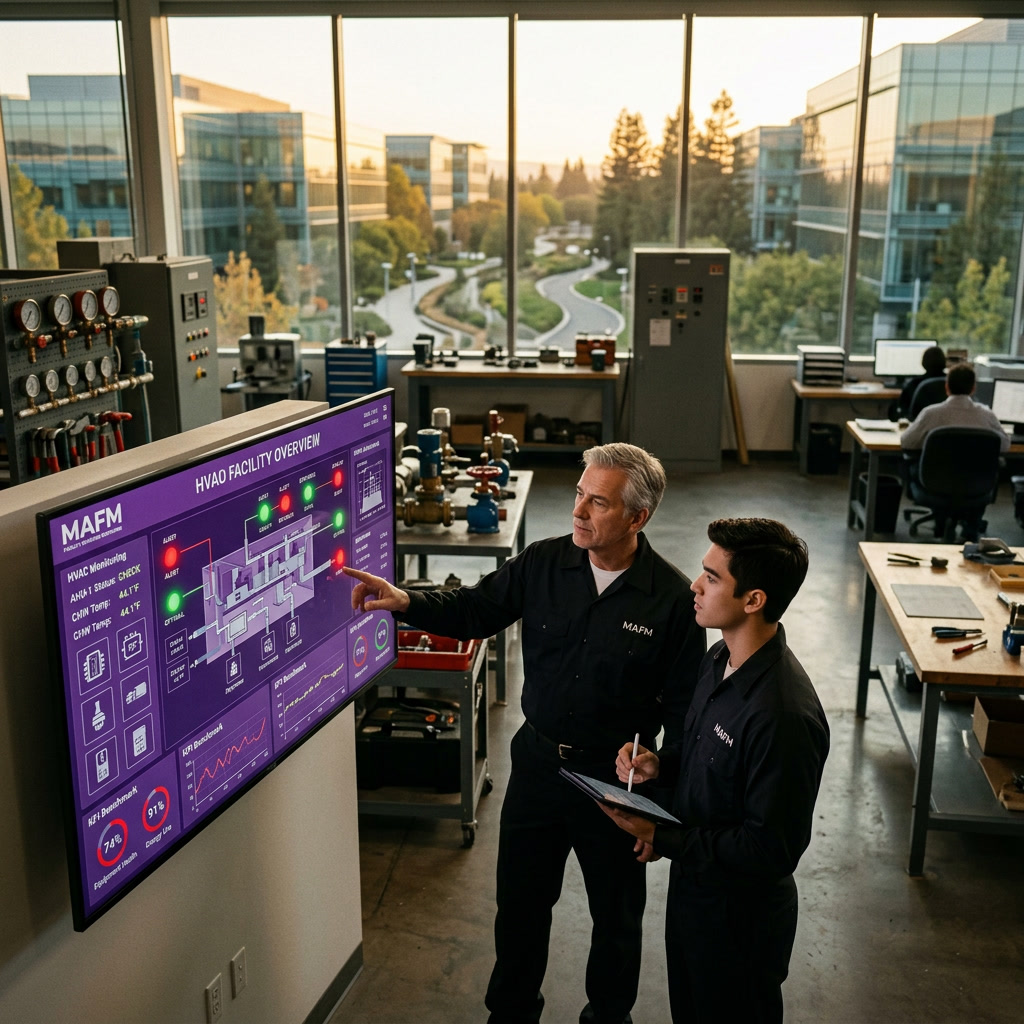
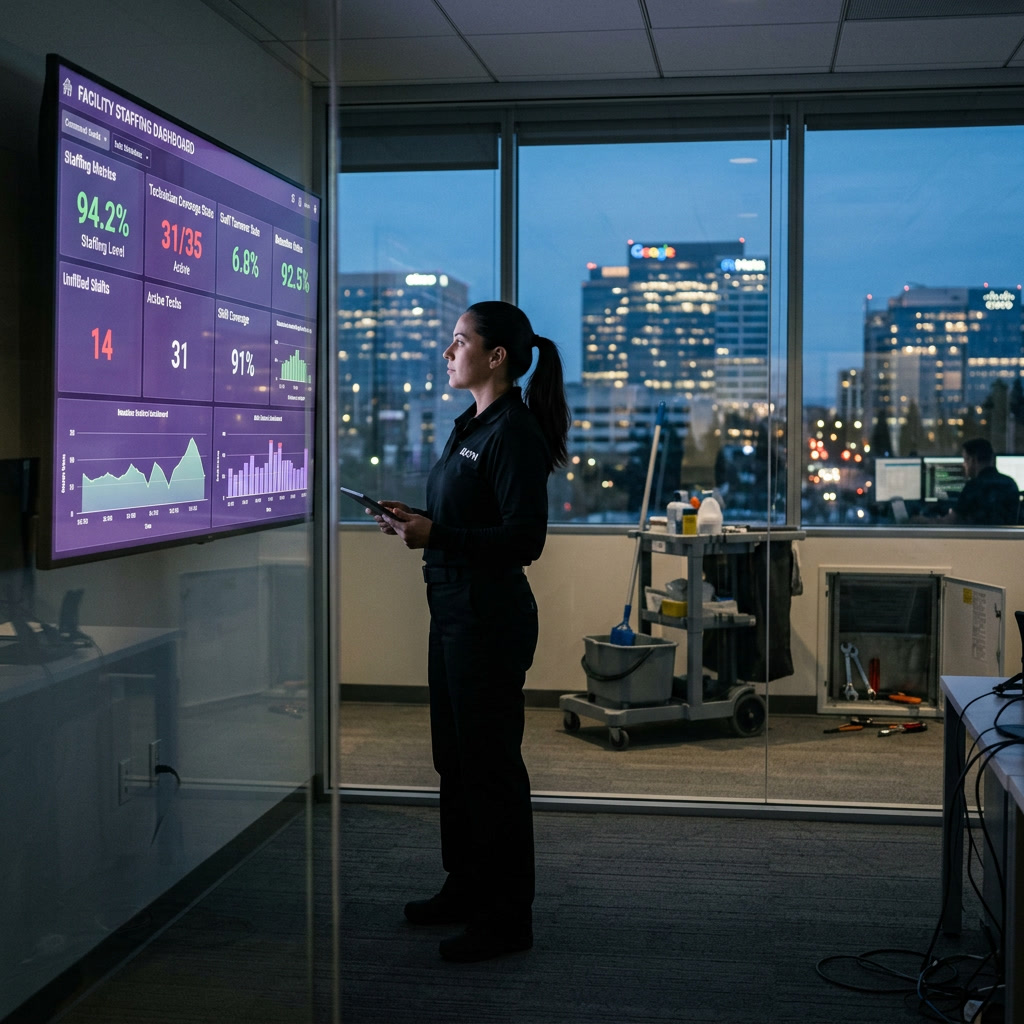
Post a requisition for a chief building engineer in Santa Clara County right now and you'll likely get three qualified applicants, if you're lucky, and one of them is probably already employed by a competitor two exit ramps down 101. The skilled trades pipeline feeding commercial facilities work (HVAC/R, controls, electrical, plumbing) has been shrinking for over a decade, and the Bay Area's cost of living makes it worse. A journeyman who can command $48 an hour in Fremont has options that didn't exist when he started his apprenticeship, and none of them require a two-hour reverse commute.
We covered the broader theme of workforce development for this week's series in Monday's post. Today we're going deeper into one specific, expensive problem: the exodus of mid-career building engineers and technicians from facilities teams, and why the fix isn't a bigger recruiting budget, it's an internal career ladder that gives people a reason to stay past year three.
Most facility organizations we work with in Silicon Valley have a hiring plan but no retention architecture. They budget for turnover instead of budgeting against it. That's backwards, and it's costing far more than anyone tracks on a P&L line labeled "recruiting."
Everyone can quote the recruiting cost of replacing a technician, agency fees, job board spend, the six weeks a req sits open. What almost nobody quantifies is the knowledge cost. A building engineer who's run the chiller plant at a 400,000-square-foot campus for four years knows which VFD throws a nuisance fault every August, which zone's VAV boxes were mis-commissioned during a 2022 retrofit, and which loading dock roll-up door needs a specific WD-40 trick instead of a service call. None of that is in the CMMS. When that person leaves, the building doesn't just lose a headcount, it loses institutional memory that takes 18 to 24 months to rebuild in a replacement, even a good one.
We've seen this play out at a mixed-use campus in Mountain View where a senior engineer's departure preceded a 40% spike in reactive work orders over the following two quarters, not because the new hire was incompetent, but because he had no idea the rooftop unit serving the third-floor server room ran a nonstandard economizer sequence installed by a contractor who's since gone out of business. That's four months of nuisance alarms and two tenant escalations that a documented transition plan would have prevented entirely.
The second hidden cost is what happens to the technicians who stay. When a team loses its most experienced person and doesn't backfill with equivalent expertise, the remaining staff absorbs the complexity gap through longer hours and more stress calls, which accelerates the next departure. Turnover compounds. Facility directors who treat each departure as an isolated incident, rather than a symptom of a structural retention problem, end up chasing the same crisis every 14 to 18 months.
A real career ladder in facilities work has defined competency tiers, not just seniority-based title bumps. We recommend a four-tier structure for in-house or contracted maintenance teams: Technician I (general maintenance, basic PM execution), Technician II (single-trade specialization (HVAC, electrical, or controls) with license or certification progress), Senior Technician/Building Engineer (cross-trade competency plus BAS proficiency and vendor management authority), and Chief Engineer or Facilities Supervisor (budget ownership, capital planning input, and team development responsibility).
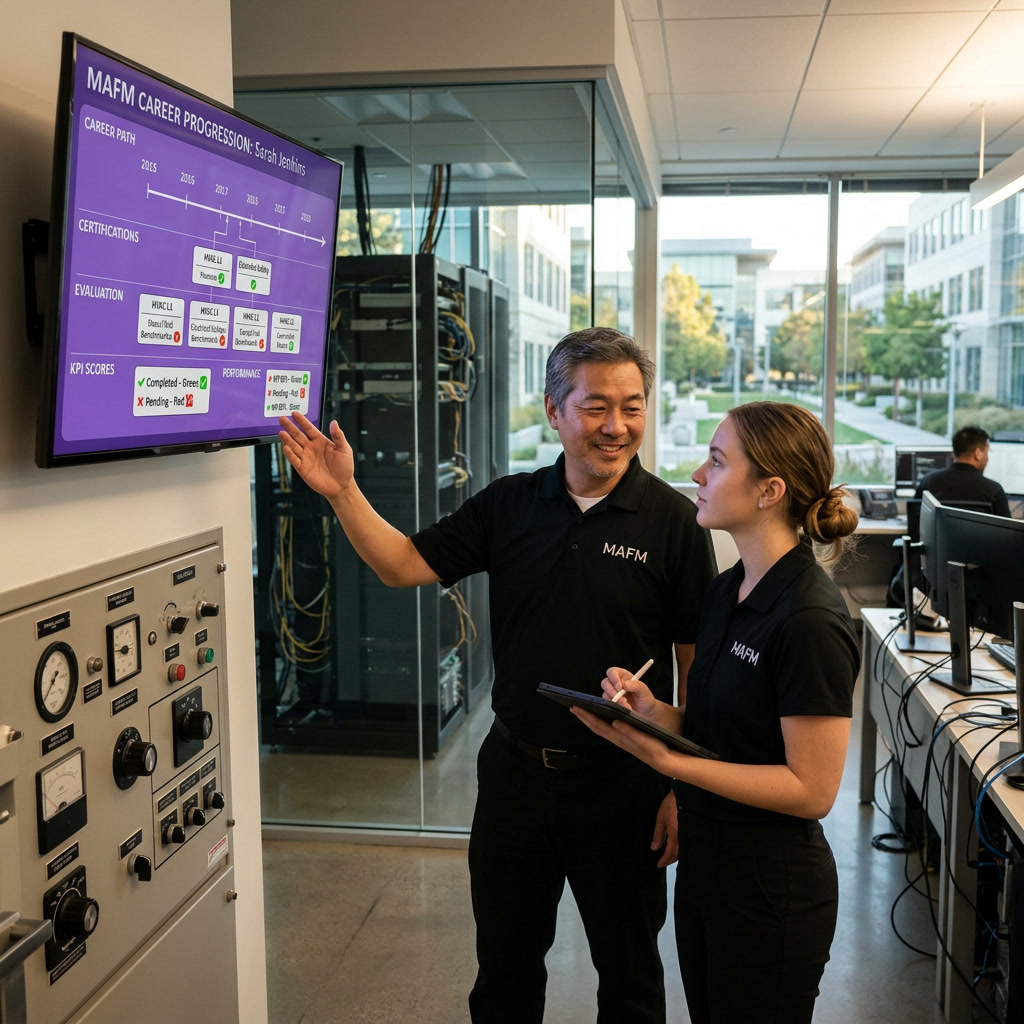
The tiers only work if they're tied to specific, verifiable milestones, not tenure. That means EPA 608 certification for refrigerant handling, a state electrical certification track, BAS-specific training (Tridium Niagara, Johnson Controls Metasys, or whatever platform the portfolio runs on), and a documented competency checklist signed off by a supervisor, not a self-assessment. When a technician can point to a checklist and see exactly what stands between them and a $6-per-hour raise, they behave differently than when a raise is a discretionary decision made in a manager's head once a year.
Pay needs to move with the tiers in a way that's visible before someone else offers it to them. In this labor market, a technician who has to leave your company to get a $4-an-hour raise will leave, and they'll tell three other technicians why. We've advised clients to publish (internally, at minimum) the wage band for each tier so technicians can calculate their own trajectory. Transparency here isn't generosity; it's a retention tool that costs nothing and closes the information gap that recruiters exploit.
Single-trade specialists are vulnerable to layoffs and vulnerable to burnout, and facilities teams that rely on one HVAC specialist and one electrician with no overlap are one flu season away from a coverage gap. Cross-training, getting your electrical tech comfortable with basic refrigerant diagnostics, or your HVAC tech conversant in BAS point mapping, does two things simultaneously: it makes the team more resilient to absences, and it gives technicians a reason to stay engaged instead of plateauing in a role they've mastered.
The mechanism matters here. Cross-training shouldn't be informal shadowing squeezed in during slow weeks. It should be scheduled, budgeted training time, four hours a month minimum, with an outside vendor or manufacturer rep brought in for equipment-specific instruction. Chiller manufacturers like Trane and Carrier run technician certification programs specifically for this; so do BAS vendors, who have every incentive to get more people comfortable operating their platforms competently, since a poorly tuned building automation system undermines the manufacturer's own energy performance claims.
We've also found that pairing junior technicians with senior staff on a formal mentorship structure, not just "follow him around", accelerates skill transfer and gives senior technicians a leadership credential that matters when they're evaluating whether to stay for a supervisor track. A senior engineer who's been given real teaching responsibility, with recognition and modest additional pay attached, is a senior engineer who feels invested in the team's future rather than counting down to retirement or a competitor's offer.
Every facilities team has one or two people whose departure would be genuinely disruptive, the chief engineer who's the only one who fully understands the central plant sequence of operations, or the controls specialist who wrote half the BAS programming himself. Succession planning means identifying those roles explicitly and building redundancy before there's a resignation letter on the desk, not after.
Practically, that starts with documentation: sequence of operations narratives, as-built drawings reconciled against actual field conditions, a living punch list of nonstandard equipment configurations, and a transition binder for every critical system that assumes the person who knows it best might not be available to explain it verbally. This isn't glamorous work, and technicians resist it because it feels like documenting yourself out of a job. Framing matters, position it as documenting the building, not the person, and tie the documentation effort itself to the competency checklist we described earlier so there's a direct incentive to do it.
The second half of succession planning is identifying a viable internal candidate for every critical role at least 18 months before you expect a transition, and giving that person visible stretch assignments (running a capital project, presenting at a tenant meeting, owning a vendor relationship) so the promotion, when it happens, isn't a surprise to anyone on the team. Facility directors in this market who wait until a chief engineer gives two weeks' notice to start thinking about succession are choosing crisis management over planning, and in a labor market this tight, that crisis can run six to nine months before it's resolved.
The facilities teams weathering Silicon Valley's skilled trades shortage best aren't the ones with the biggest recruiting budgets, they're the ones who've made staying more attractive than leaving, through visible pay progression, real skill development, and documentation that protects the building rather than just the org chart. That's a structural investment, not a hiring campaign, and it pays off on a multi-year timeline that most facilities budgets don't naturally account for.
If your team's retention strategy currently consists of counteroffers made in exit interviews, it's worth stepping back and building the ladder before the next departure forces the conversation.
MAFM helps Silicon Valley property owners and facility directors design competency-based career ladders, cross-training programs, and succession plans for in-house and contracted maintenance teams, contact us to assess your current staffing resilience.
Reference Monday's series-opening post on this week's Workforce Development & Leadership theme, and point ahead to later-in-week posts on training program design and leadership development for facility supervisors.
U.S. Bureau of Labor Statistics Occupational Outlook Handbook (HVAC Mechanics and Installers); Building Owners and Managers Association (BOMA) workforce development research on facility engineer staffing trends.
July 13, 2026
July 15, 2026
July 16, 2026
MAFM offers comprehensive facility management solutions tailored to your business needs.
Get in Touch