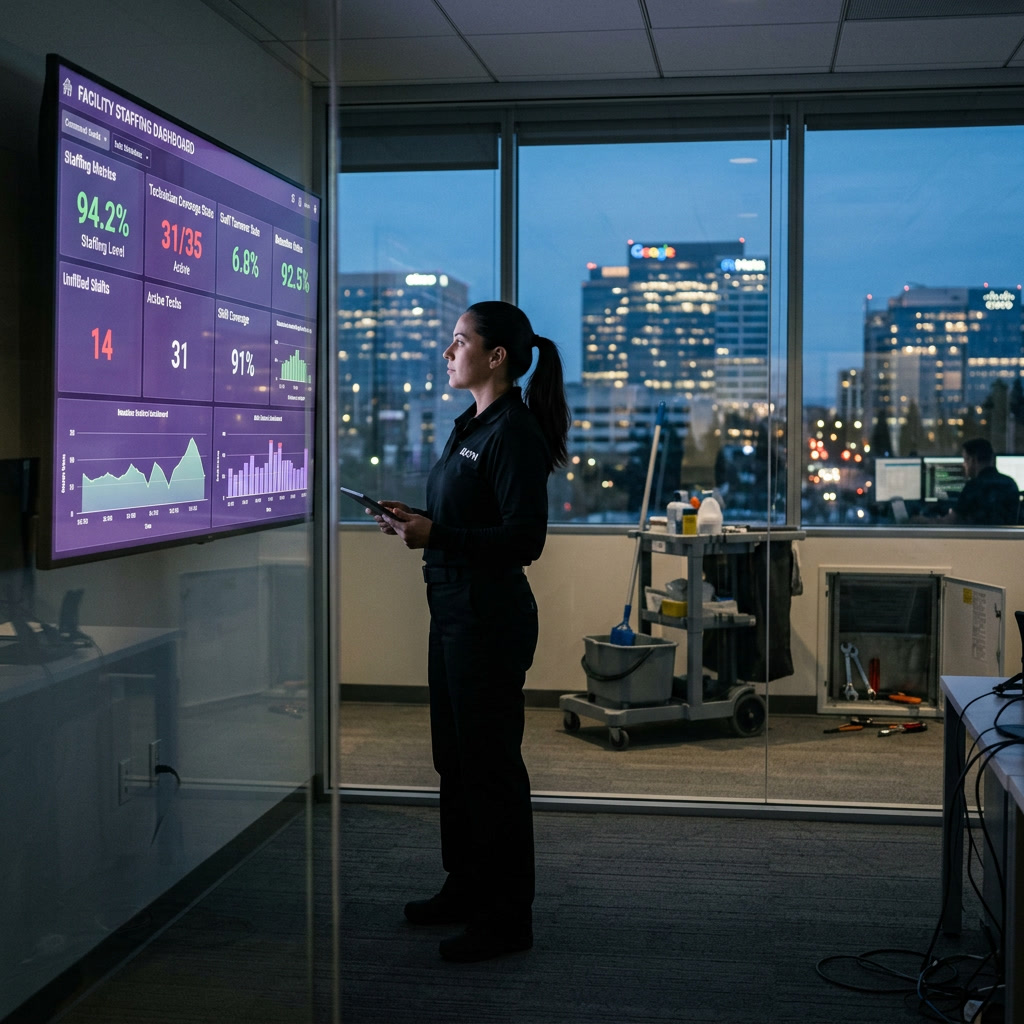
Staffing / Workforce
Why Your Facilities Team Keeps Quitting (And What Silicon Valley Building Owners Can Do About It)
July 13, 2026
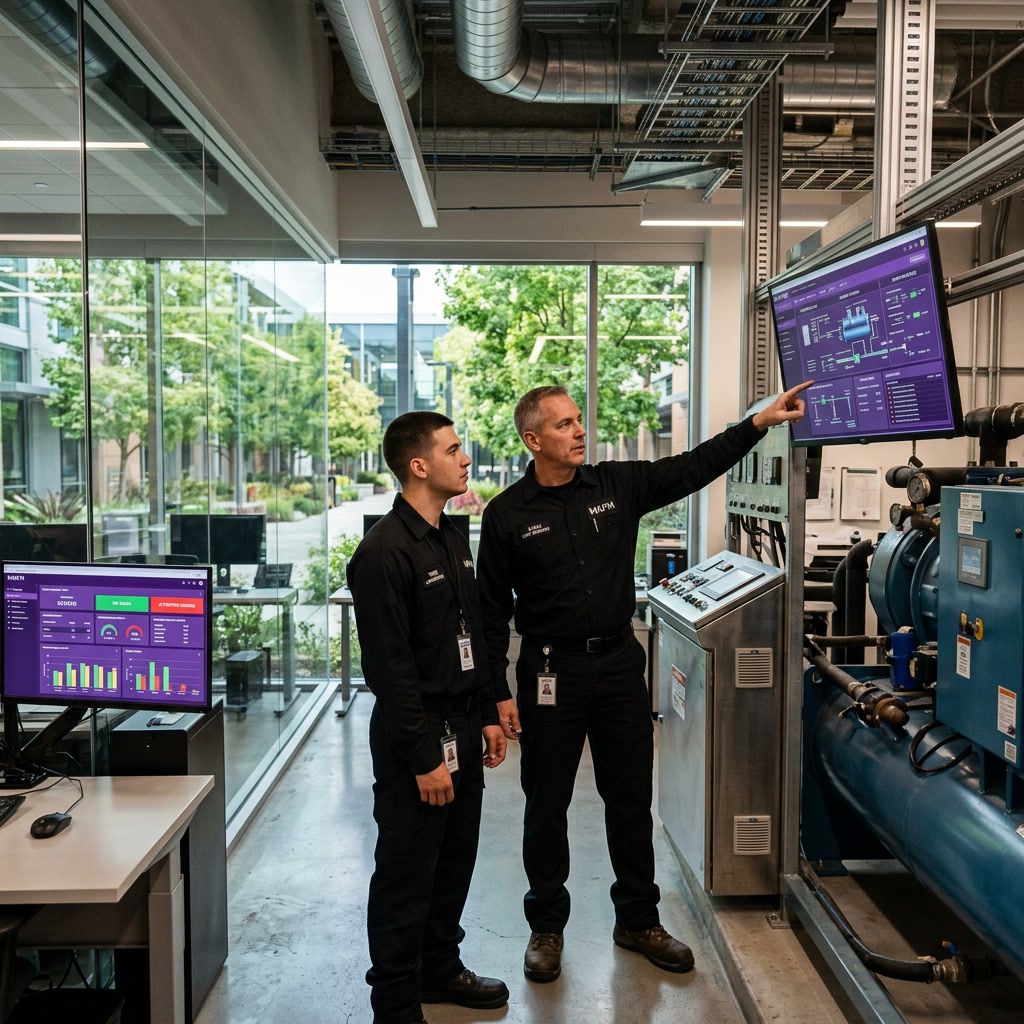
A mid-size R&D campus in Santa Clara lost its chief engineer in March. He'd been there eleven years, held the only Universal CFC certification and the only working knowledge of the campus's original 1998 BAS wiring diagrams, and when he left for a semiconductor fab down the road offering an 18% bump, the property manager realized there was no one behind him. The two journeyman technicians on staff had never been given BAS training, never shadowed a controls contractor, never been asked to take on a single supervisory task. The building spent four months running on a contract engineer at 2.5x the loaded cost of a staff hire, and two preventive maintenance cycles slipped because nobody internally had the authorization to sign off on chiller work orders.
This is not a rare story. It's the default outcome for facility teams that treat technician-to-chief-engineer progression as something that happens organically, if at all, rather than something built deliberately. In a labor market where HVAC technicians, controls specialists, and licensed engineers can get multiple competing offers inside Santa Clara County alone, "organic" progression means your best people get promoted by someone else's building.
This post is the third in our Workforce Development & Leadership series this week, and it tackles the piece most facility organizations skip: the actual mechanics of a promotion ladder, what tiers to define, what has to be true before someone moves up a rung, and how to fund the training without blowing the operating budget.
Ask most property managers what the path looks like from entry-level technician to chief engineer on their team, and you'll get a vague answer involving "experience" and "seniority." That's not a ladder, it's a queue. Seniority tells you how long someone has been present, not what they're qualified to do, and it gives ambitious technicians no visible reason to invest in additional certifications if tenure alone will eventually get them promoted.
The absence of a formal structure shows up in three predictable ways. First, technicians who want to move faster than the informal queue allows leave for competitors who offer a clearer title and pay bump, Silicon Valley's density of tech campuses, biotech sites, and data centers means there is always a nearby employer willing to poach a strong HVAC or electrical technician. Second, when a senior engineer does leave, there's no documented list of who's qualified to take over specific responsibilities (refrigerant handling, BAS programming, life-safety system testing) so the transition defaults to an expensive contract engineer or a rushed external hire who doesn't know the building's quirks. Third, without defined tiers, training investment becomes reactive: technicians get sent to a certification course only after a problem exposes the gap, not before.
A functioning ladder fixes this by making advancement criteria explicit, documented, and tied to specific competencies rather than years served. It doesn't mean removing judgment from promotion decisions, it means giving technicians a target to train toward and giving managers a defensible, consistent basis for who moves up when a slot opens.
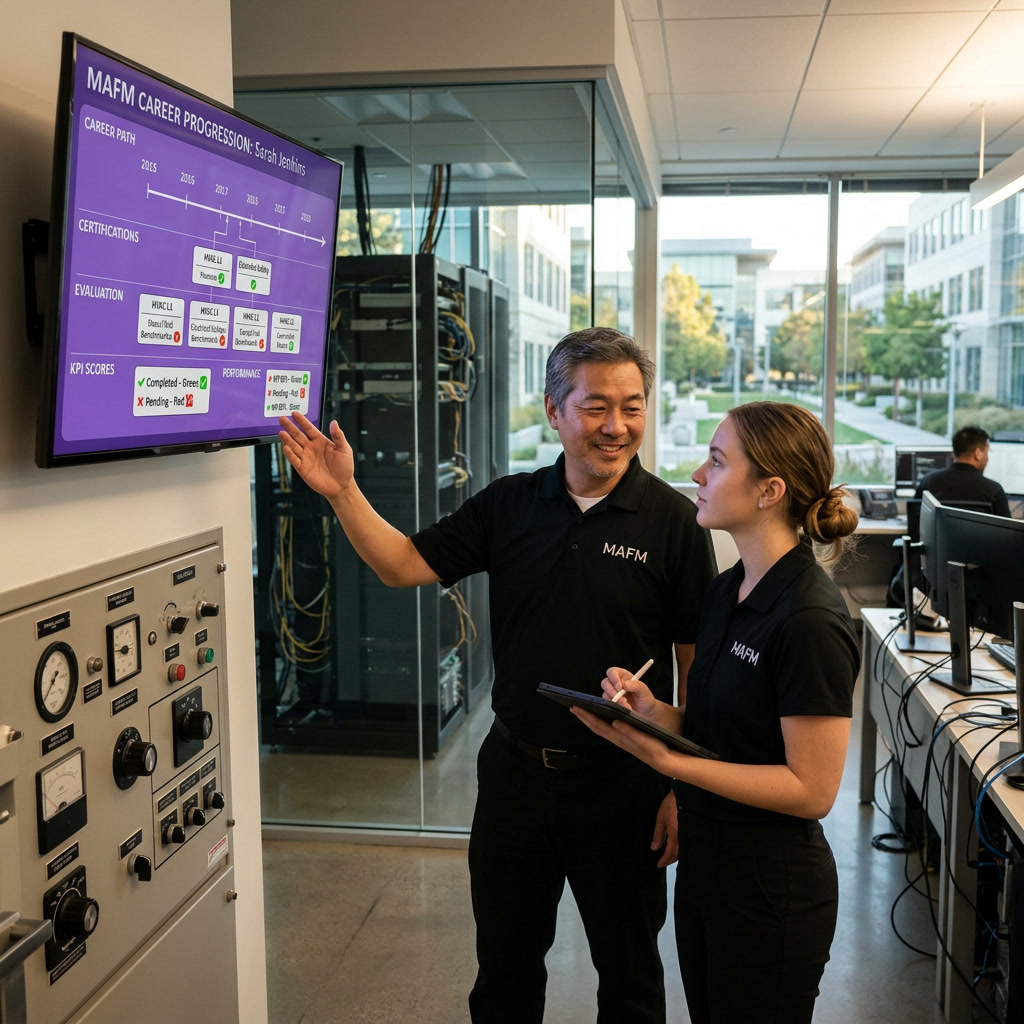
A workable structure for most commercial and campus facility teams in this region has four tiers: Apprentice/Junior Technician, Journeyman Technician, Senior Technician/Systems Specialist, and Chief Engineer (with an optional Assistant Chief Engineer step for larger campuses running multiple buildings).
Movement from Apprentice to Journeyman should be tied to completed EPA Section 608 certification, a documented set of supervised repair hours (commonly 2,000-4,000 depending on trade), and demonstrated ability to complete standard PM rounds without supervision. Movement from Journeyman to Senior Technician should require a specialty credential, BAS/controls certification (Niagara N4, Johnson Controls Metasys, or Siemens Desigo depending on your installed base), or a specific trade license such as a California C-20 HVAC contractor's card or a stationary engineer's license, plus documented lead-technician experience on at least one capital project or major system replacement.
The jump to Chief Engineer or Assistant Chief is the one most teams handle worst, because it requires competencies that have nothing to do with turning a wrench: budget management, vendor negotiation, OSHA and Cal/OSHA compliance documentation, staff scheduling, and the judgment to make shutdown and risk decisions under pressure. This tier should require a formal supervisory training component, even a 20-hour course through a local trade school or IFMA chapter, before someone takes on the title, because the cost of a chief engineer who can fix everything but can't manage a budget or handle a compliance audit is higher than the cost of the training itself.
Critically, each tier should have a published salary band attached to it, visible to the technician, not just to HR. Ambiguity about what promotion is worth in dollars is one of the fastest ways to lose someone to a recruiter with a specific number in hand.
The objection we hear most often from property owners is that structured training is expensive and time away from PM schedules is costly. Both are true, but the framing is backward, the real cost comparison isn't "training expense versus zero," it's "training expense versus contract engineer rates and emergency vendor callouts when nobody internal is qualified to handle a system fault."
Several funding paths keep this affordable. PG&E and other California utilities periodically offer rebates and training credits tied to energy-efficiency programs, and technicians certified in BAS optimization or VFD tuning can directly reduce a building's utility spend, often enough to cover the certification cost within a single billing cycle. Community college extension programs (De Anza, Mission College, and San Jose City College all run HVAC and building trades continuing education) charge a fraction of private certification bootcamps and can be scheduled around shift rotations. Manufacturer-sponsored training, Trane, Carrier, Johnson Controls, and Siemens all run technician certification programs, sometimes free or discounted if your building runs their equipment, is underused simply because nobody assigns a staff member to track which courses are available and when.
The other funding lever is sequencing: you don't need to train four technicians on BAS controls simultaneously. Staggering certifications one technician at a time, timed around PM cycles and tied to an actual open tier in your ladder, spreads the cost across the fiscal year and avoids the trap of training someone for a promotion slot that doesn't exist yet, which is its own retention risk, since a newly certified technician with no open path upward is a technician actively updating their resume.
A promotion ladder that lives only in a manager's head disappears when that manager leaves, which is the same single-point-of-failure problem the ladder is supposed to solve for engineering staff. The structure needs to be written down: a one-page document per tier listing required certifications, minimum documented hours, core competencies, and the associated pay band, distributed to every technician on staff and reviewed at least annually.
This document should live alongside your building's standard operating procedures and be part of new-hire onboarding, not something introduced only when someone asks about promotion. It should also specify who evaluates advancement, ideally a combination of the direct supervisor and one outside perspective, such as a controls vendor or MEP consultant who can verify technical competency objectively, since internal-only sign-off can drift toward favoritism or, just as damaging, excessive caution that stalls deserving technicians.
Finally, tie the ladder explicitly to succession planning. For every chief engineer or senior specialist role, name a designated backup and put that person on a visible development track toward the credentials that role requires, with target dates. This is the single most effective way to prevent the Santa Clara scenario from the introduction, if the campus in that story had designated and trained a backup engineer eighteen months before the chief's departure, the four-month contract-engineer gap and the missed PM cycles simply wouldn't have happened.
Losing a chief engineer or senior technician is expensive in ways that show up on multiple line items, contract labor markups, delayed capital work, compliance exposure, and the slower, harder-to-quantify cost of tenant confidence when building systems visibly falter during a transition. A documented, tiered promotion ladder doesn't eliminate turnover, but it converts an unpredictable staffing crisis into a plannable, budgeted transition, and it gives your best technicians a concrete reason to build their career inside your building instead of a competitor's.
Building this structure takes a few weeks of deliberate work (defining tiers, auditing current staff against them, and lining up training funding) but it's a fraction of the cost of the four-month scramble that happens without it.
MAFM helps Silicon Valley property teams design and implement staffing and succession structures for facility engineering staff, from certification pathway mapping to interim chief engineer coverage during transitions, contact us to audit your current team's promotion readiness.
Reference earlier this week's posts on the Workforce Development & Leadership theme, including Monday's introduction to the series and Tuesday's post on frontline staff retention strategies; link forward to Friday's synthesis roadmap post tying the week's staffing strategies together.
U.S. Bureau of Labor Statistics Occupational Outlook Handbook for HVAC/refrigeration mechanics and installers (bls.gov); California Division of Occupational Safety and Health (Cal/OSHA) training and certification requirements (dir.ca.gov/dosh).
July 13, 2026
July 14, 2026
July 16, 2026
MAFM offers comprehensive facility management solutions tailored to your business needs.
Get in Touch