Facility Maintenance
Commercial HVAC Maintenance for Silicon Valley Offices
February 12, 2026
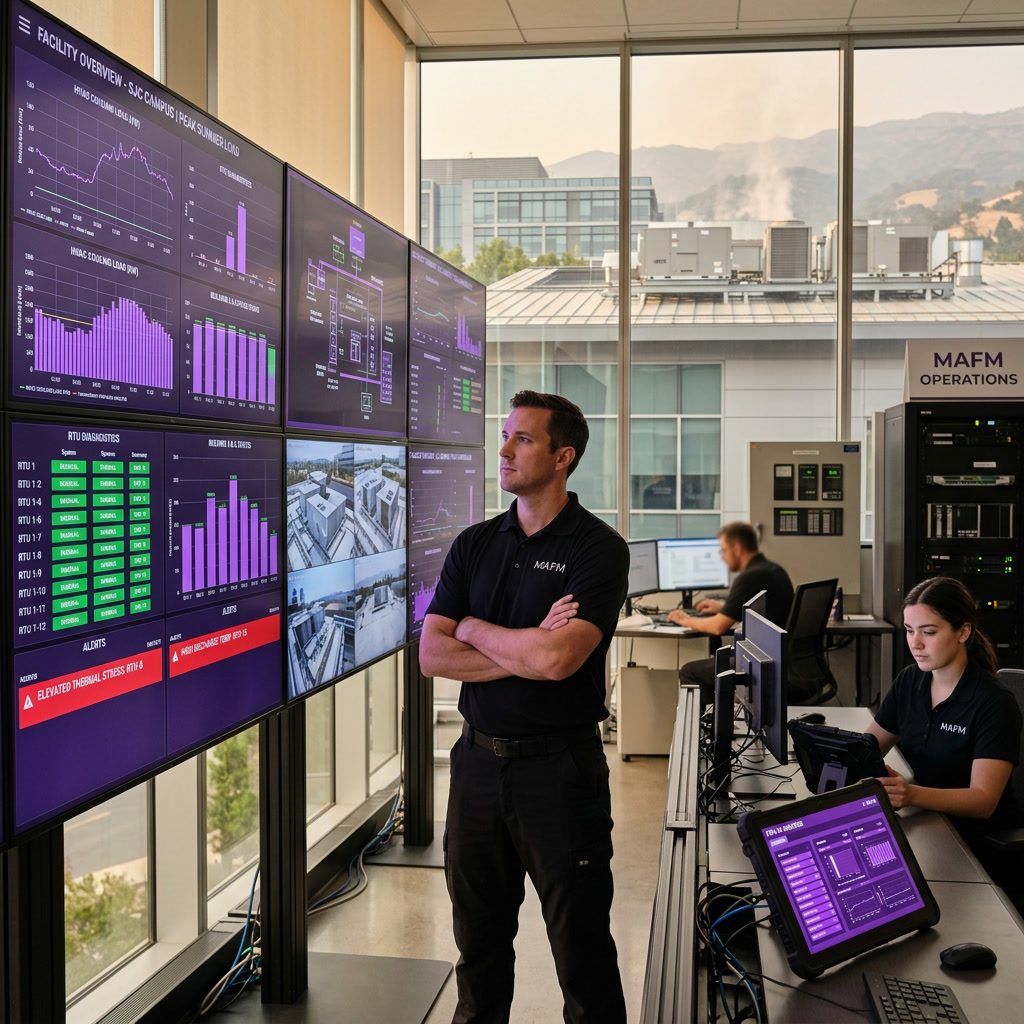
Summer peak operations means running July and August on a different plan than spring: confirm who covers every critical role during vacations, inspect cooling equipment and filters more often, check fire weather and power-shutoff notices daily, and watch indoor temperatures against California's heat rules. Buildings that do this well are not lucky, they have written the plan before the first hot week.
This playbook is for facility managers in the South Bay and the wider Bay Area. It covers staffing, cooling, heat-illness rules, wildfire and power-outage readiness, tenant communication and the budget lines that move in summer.
San Jose's normal summer is mild by inland California standards, but a heat wave can push a building well past what its cooling was tuned for. NOAA's 1991 to 2020 normals for the San Jose airport station show average daily highs of about 80.8°F in July and 81.4°F in August, and 79.1°F in June (NOAA NCEI U.S. Climate Normals).
Those are averages. Plan for the days well above them, because that is when a marginal system gives out. Pull your own building's work order history for last July and August and mark the hot days; that record tells you more about your equipment than any regional figure.
Build a coverage map before summer starts, then test it. List every critical role, such as building engineer, lead cleaner or supervisor, vendor contact, security and after-hours on-call, and mark where vacation requests leave a gap.
Fix gaps in three ways:
Then check the on-call list. A phone number that rings to someone on vacation is the most common reason a Saturday problem becomes a Monday problem. Test the list by calling it.
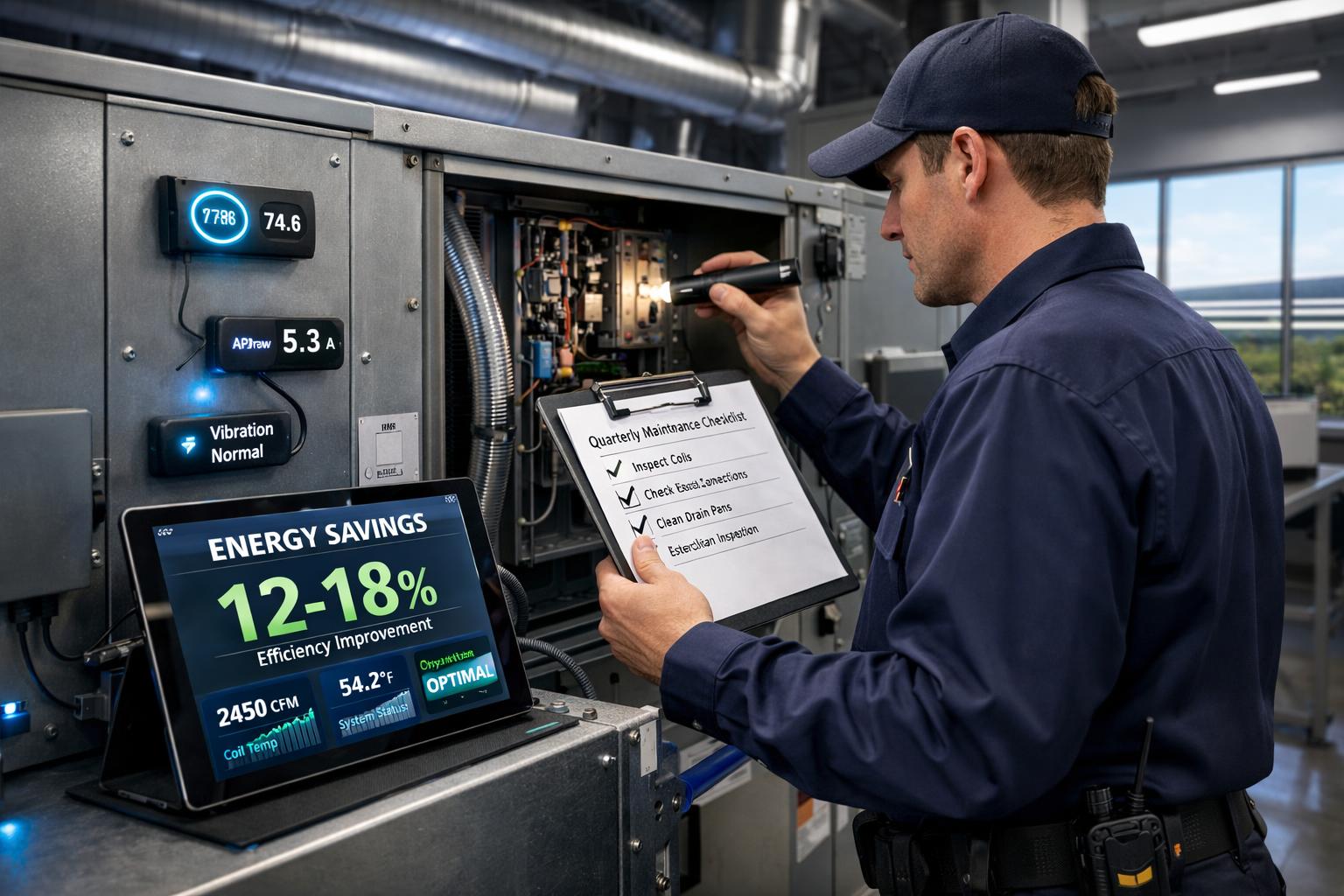
Check the equipment more often, and look for slow changes, not only failures. Your HVAC contractor knows your equipment, so ask them to set the summer visit schedule, but you can add a few simple checks of your own:
MAFM plans and coordinates this work with the building's HVAC vendors. The repairs themselves belong to licensed HVAC contractors.
They apply indoors and outdoors, and your own staff and your vendors' crews are covered. California's indoor heat illness standard took effect on July 23, 2024, and applies to most workplaces where the indoor temperature reaches 82°F (Cal/OSHA, Heat Illness Prevention Guidance and Resources).
Cal/OSHA's summary lists what the indoor rule asks of employers: free, fresh and suitably cool drinking water, access to a cool-down area kept below 82°F, a written indoor heat illness prevention plan, training, and measuring and recording the temperature or heat index whenever it reaches 87°F, or 82°F for workers in clothing that restricts heat removal or in high-radiant-heat areas. Employers must put feasible engineering controls in place first. The full text is in Title 8, section 3396. Outdoor work, such as grounds crews, falls under section 3395.
For a building team, that means a few concrete tasks:
Check the forecast each morning and have a written plan that triggers on set conditions. The National Weather Service's Storm Prediction Center publishes daily and multi-day fire weather outlooks (NOAA Storm Prediction Center, Fire Weather Outlooks), which is a simple thing to add to the morning walkthrough.
Power shutoffs are the other half. PG&E asks business customers to review their emergency plan, update contact information so they get alerts, and prepare backup power for key devices (PG&E, Prepare your business for safety outages). The guide also asks whether employees can work without heating, cooling, elevators or lighting, which is the question to answer for your building.
A short summer readiness list:
For the vendor side, see our guide to emergency vendor networks.
Tell them early, plainly and in writing. A short note when a hot week is forecast, saying what the building is doing and how to report a problem, prevents most of the angry calls that follow.
If your cooling cannot hold temperature above a certain outdoor heat, say so honestly. Tenants take a stated limit better than a silent one. Include where to report a problem after hours, and update the note if the situation changes.
Energy, overtime and emergency calls are the three to watch weekly. Compare your utility bills with last summer's, and look at overtime where vacation gaps are being covered. Count the after-hours service calls.
A building with many emergency calls in July is telling you something about spring preparation or equipment age, and that belongs in your capital planning conversation. For the larger picture, see our mid-year budget review.
When does California's indoor heat rule apply?
Cal/OSHA says the indoor standard applies to most workplaces where the indoor temperature reaches 82°F. Employers must then provide cool drinking water, a cool-down area and a written plan, among other requirements.
How often should I check HVAC filters in summer?
There is no single interval that suits every building. Check them more often than in spring, set the interval by how loaded they look, and ask your HVAC contractor for a recommendation for your equipment.
What should I do before a planned power shutoff?
Confirm that your utility contact details are current, test emergency lighting and generators, and review how elevators, security and cooling behave without power. PG&E provides business preparedness checklists on its site.
Who can fix a failed rooftop unit?
A licensed HVAC contractor. A facility management company coordinates the response, keeps tenants informed and tracks the repair, but does not perform HVAC repairs.
If you want a facility management team to plan your summer coverage, vendor schedule and tenant communication, see MAFM's facility management service or contact us.
MAFM offers comprehensive facility management solutions tailored to your business needs.
Get in Touch