Emergency Vendor Networks: How Silicon Valley Facility Managers Secure Priority Response When Every Building Needs Help Simultaneously
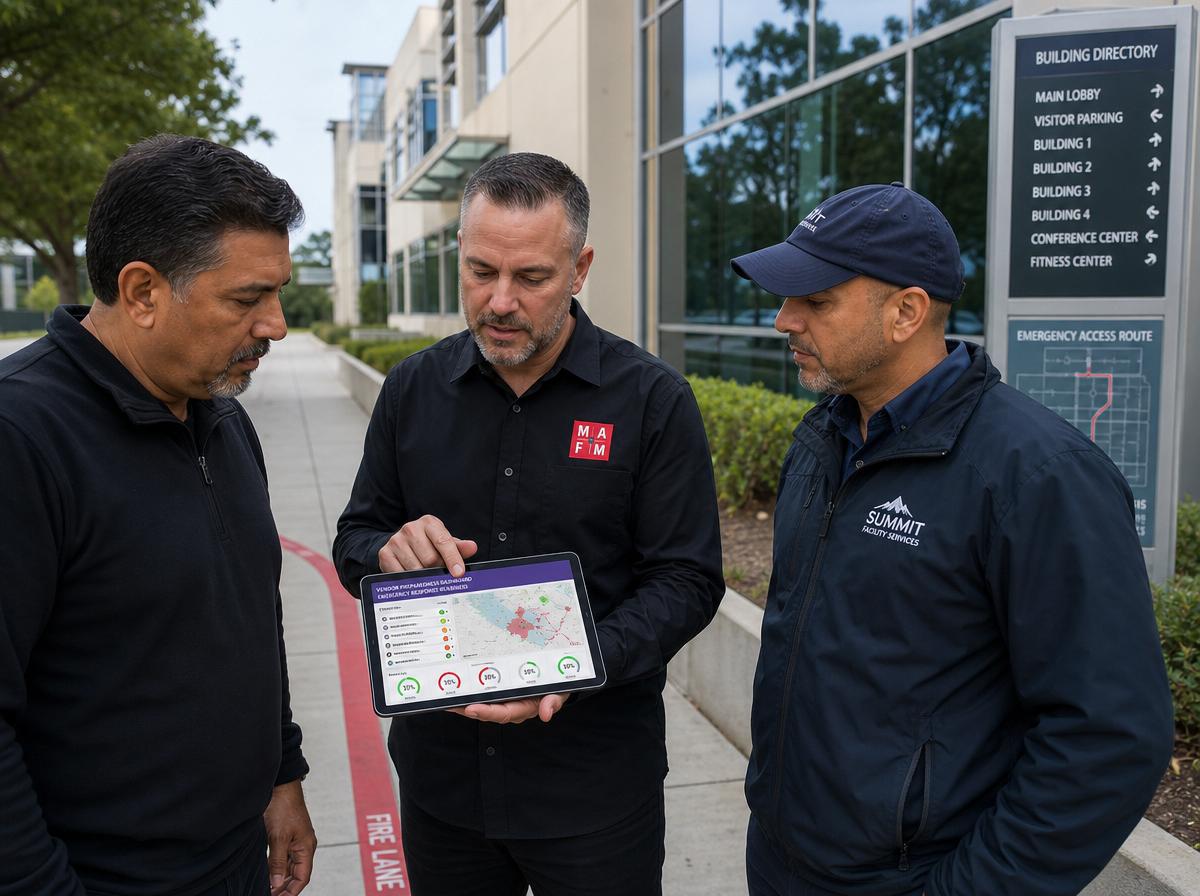
Emergency Vendor Networks: How Silicon Valley Facility Managers Secure Priority Response When Every Building Needs Help Simultaneously
The defining characteristic of regional emergency events (wildfire smoke, PSPS outages, earthquake aftermaths, and major storm damage) is that they affect many buildings simultaneously. The roofing contractor who can patch a storm-damaged roof in a week becomes unavailable for months when fifty roofs in the same area need attention. The water extraction company that responds within four hours on a normal Tuesday requires a three-day wait when twelve other commercial buildings are managing concurrent water damage events.
For Silicon Valley facility managers, this vendor scarcity dynamic transforms pre-season vendor relationship building from a business development courtesy into a critical operational risk management function. The buildings that receive priority response during regional emergencies are not simply the ones with the largest contracts or the most urgent needs, they are the ones that established documented priority response relationships before the emergency, when vendors had the negotiating capacity to commit to specific response terms.
Here is the framework for building the emergency vendor network that positions your building at the front of the response queue when regional demand overwhelms available capacity.
The Priority Response Agreement Structure
Priority response agreements differ from standard vendor contracts in three specific ways that matter enormously during emergencies: response time commitments, resource allocation provisions, and rate structure.
Response time commitments establish maximum elapsed time between notification and on-site response for specific emergency categories. For water extraction, the commitment might specify two-hour maximum response for active water loss events during business hours and four-hour response for after-hours events. For roofing emergency tarping after storm damage, the commitment might specify same-day response. These specific commitments are meaningless unless they are in writing and accompanied by consequences for non-performance.
Resource allocation provisions establish that your building receives priority access to the vendor's resources when regional demand creates scarcity. The specific language matters: "best efforts" to respond provides no enforceable commitment. "Priority allocation from available resources, with your building classified as Tier 1 priority ahead of non-agreement customers" provides a meaningful advantage.
Rate structure during emergencies is the provision that most buildings neglect. Emergency work performed without pre-agreed rates is billed at emergency pricing, typically 50–150% above standard rates, with no basis for negotiation after the work is complete. Priority response agreements should specify the rate structure that applies during emergency responses: either standard contracted rates, a defined emergency premium (e.g., 25% above standard rates), or time-and-materials at specified hourly rates.
The Essential Emergency Vendor Categories
Six vendor categories require priority response agreements before fire season. Each represents a distinct risk exposure that regional emergencies create and that pre-established relationships mitigate.
Water damage restoration companies provide emergency water extraction, structural drying, and mold remediation. The demand surge during regional storm events and PSPS-related system failures creates weeks-long response delays for buildings without prior agreements. Priority relationships with IICRC-certified restoration companies, established before any event, provide the two to four-hour response window that contains water damage rather than allowing it to multiply.
Emergency generator rental suppliers provide supplemental power capacity for extended PSPS events that exceed your building's on-site generator capacity or buildings without generators. Regional PSPS events create generator shortages within hours of notification. Priority rental agreements with specific unit sizes reserved for your building convert a potential crisis into a planned contingency.
Roofing contractors for emergency tarping and storm damage repair face the most extreme demand surge during weather events that affect multiple properties simultaneously. A priority agreement with a licensed California roofing contractor establishes your building's position in the response queue before any storm is forecast.
HVAC emergency service contractors are essential when fire season heat events damage cooling equipment that is operating at peak load. Priority service agreements with commercial HVAC contractors ensure your building is not waiting weeks for service during summer emergencies when equipment failures are most frequent.
Air quality monitoring and remediation companies provide the indoor air quality assessment, supplemental filtration, and building flush-out services that smoke events may require. Pre-season agreements ensure that qualified IAQ specialists are available when smoke events create widespread demand for their services.
Structural assessment engineers are needed immediately after seismic events to evaluate building safety for re-occupancy. The post-Loma Prieta and post-Northridge earthquake experiences demonstrated that structural engineers are overwhelmed immediately after major seismic events. Establishing a pre-season relationship with a licensed structural engineering firm, with a commitment that they will respond to your building within 24–48 hours of a significant seismic event, provides the rapid re-occupancy authorization that many post-earthquake situations require.
Building Your Vendor Network
Constructing an effective emergency vendor network requires deliberate outreach that differs from standard vendor solicitation.
Start with your existing vendor relationships. Your current HVAC contractor, roofing contractor, janitorial provider, and restoration company are the starting point for priority agreement conversations. These vendors already know your building and your team, which reduces the response friction that unfamiliar vendors face. Vendors who value your ongoing relationship are typically willing to commit priority response terms as part of that relationship.
Fill gaps with qualified alternatives. For vendor categories where your current providers do not offer priority response agreements or lack the capacity to make meaningful commitments, conduct targeted outreach to alternatives. Request references from other commercial property managers and verify that candidates have Bay Area emergency response experience, not just general commercial experience.
Verify licensing and insurance for every vendor in your emergency network. Emergency response contractors sometimes operate without proper licensing or with inadequate insurance because they are capitalizing on disaster demand. Emergency work performed by unlicensed contractors creates both quality risks and liability exposure that properly licensed contractors avoid.
Document every priority agreement in writing with signatures from both parties. Verbal commitments made in good faith during calm periods evaporate under the pressure of a regional emergency when a vendor has more demand than capacity. Written agreements, even simple letter agreements, create accountability that informal understanding cannot.
Mutual Aid Networks
Beyond vendor relationships, building-to-building mutual aid networks provide resources that vendors cannot, shared equipment, temporary space, operational support, and real-time information exchange during regional events.
Identify the commercial properties within two to three blocks of your building and establish informal mutual aid relationships with their facility managers. These relationships work most effectively when they are personal (when you know your counterpart's name, phone number, and general building profile) rather than organizational.
Equipment sharing agreements within a mutual aid network can cover generators, portable lighting, dehumidifiers, and emergency supplies that individual buildings stock in quantities insufficient for extended events but that multiple buildings collectively have in adequate supply.
Information exchange during active events allows neighboring buildings to share real-time observations about local conditions: which streets are accessible to emergency vehicles, where utility crews are working, when block-level power restoration is occurring. This real-time local intelligence is more immediately useful during an active event than official communications that cover broader geographic areas.
Testing and Maintaining the Network
An emergency vendor network that has never been tested is an untested emergency vendor network, which is meaningfully different from a reliable one.
Annual contact verification confirms that your priority agreement contacts are still at the same organizations, that organizations have not changed ownership or operating areas, and that the specific commitment terms remain current. Vendor business conditions change, and a priority agreement with a company that has reduced its Bay Area operations is worth less than the paper it is on.
Tabletop exercises with your operations team should walk through regional emergency scenarios and identify where the vendor network would be needed. These exercises surface gaps, vendor categories that are not covered, agreements that lack specific terms, or contact lists that are outdated, before an event creates urgency.
Annual agreement renewal should coincide with your fire season preparation calendar. Renewing vendor agreements as part of your June preparation routine ensures that agreements are current at the beginning of each fire season without requiring separate calendar management.
Conclusion
The difference between a building that weathers regional emergencies and one that scrambles through them comes down to relationships established during calm conditions. Emergency vendor networks are not built in the 24 hours after a red flag warning is issued, they are built in June when vendors have capacity, flexibility, and motivation to make commitments they will honor when the season tests them.
Build your priority vendor agreements this month. Start with the six essential categories. Fill the gaps with qualified alternatives. Document everything in writing. Test the network annually. When regional emergency demand overwhelms available supply, your building's position in the response queue will reflect the preparation you invested today.
MAFM maintains active priority response vendor networks across Silicon Valley to ensure our clients' buildings receive service when regional demand is highest. Contact us to discuss your emergency vendor strategy.
Schedule your consultation: Contact MAFM.PRO
Ready to Optimize Your Facilities?
MAFM offers comprehensive facility management solutions tailored to your business needs.
Get in Touch