Office Moves & Workplace
Tenant Satisfaction Surveys: How to Measure and Act
February 18, 2026
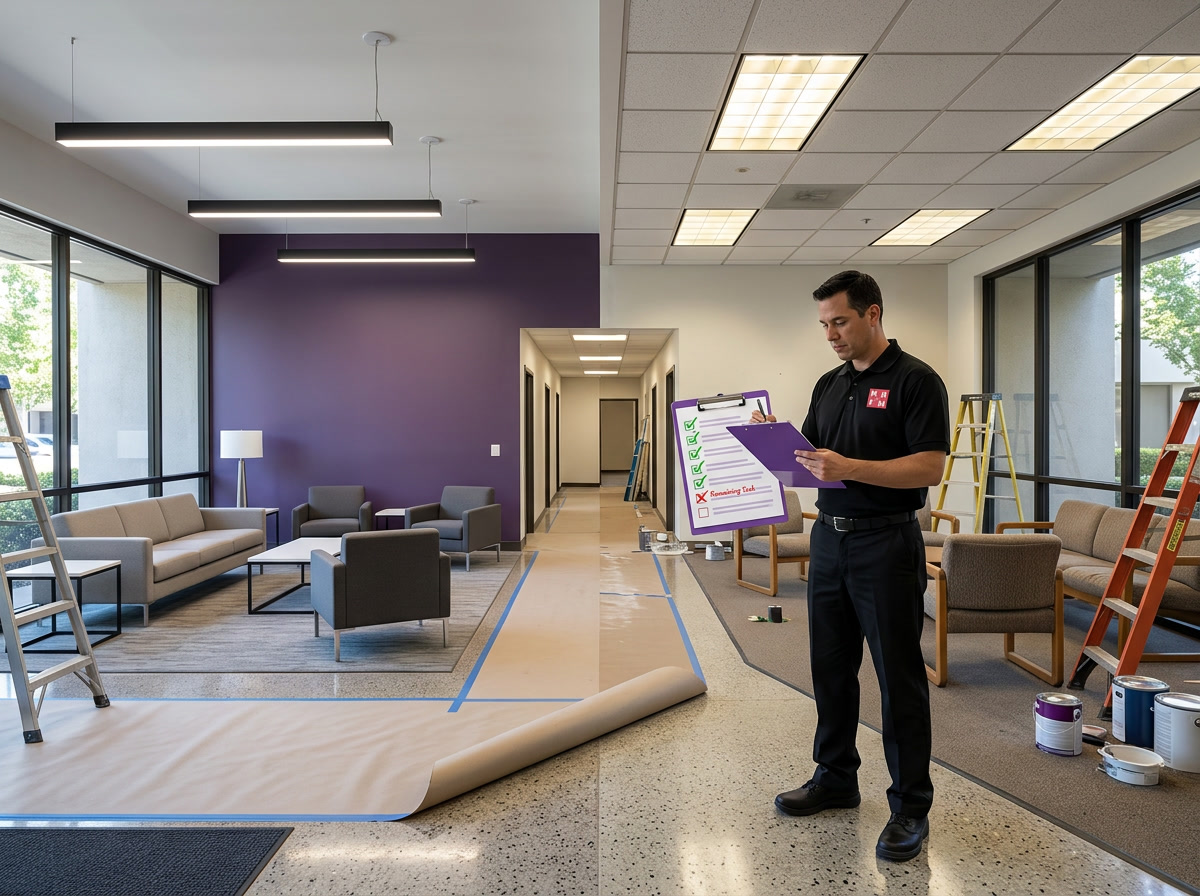
A lobby refresh is a targeted update of lighting, seating, paint, floors and signage that makes a tired entrance look current without gutting it. If the structure, the layout and the building systems still work, a refresh is usually the right call. If the layout fails, the floor is past saving or the entrance does not meet access requirements, you are looking at a renovation, and the refresh money is better spent on a proper design.
Most of what a visitor reads as "old" is surface: dim or mismatched light, worn seating, scuffed walls and a floor that has lost its finish. Those are the items a facility team can plan, sequence and finish in stages, often outside business hours.
A refresh beats a renovation when the bones are sound and the problem is condition, not design. Start with a walkthrough at the busiest time of day and again at night, and write down what you see rather than what you remember.
Sort the findings into three piles:
Condition and most function items belong in a refresh. Layout problems rarely do. If layout is the main complaint, a refresh will freshen a space that still does not work.
Do not put a dollar figure on the plan until you have quotes for your own building. A per-square-foot number from another property is a guess.
Lighting first, seating second, paint third. They are the items occupants notice every day, and they are the least invasive to install.
Lighting. Linear fluorescent tubes are not just dated; they are being phased out. California's AB 2208, as described in its Senate Environmental Quality Committee analysis, bars the sale of compact fluorescent lamps from January 1, 2024 and of linear fluorescent lamps from January 1, 2025, with narrow exemptions such as medical, photocopying and sunlamp uses. A lobby still running tubes is on a shrinking supply of replacements.
The same analysis notes that LED output fades slowly over time, and that, according to ENERGY STAR, thermal management is the single most important factor in how well an LED performs over its life. In practice that means buying complete fixtures from a reputable maker rather than the cheapest retrofit lamp.
Lighting work also triggers the energy code. Under the 2022 Title 24 rules, as summarized by the utilities' Energy Code Ace, an alteration that touches 10 percent or more of the luminaires serving an enclosed space must meet the indoor lighting alteration requirements, including a lighting power limit and control requirements. A lobby relamp can cross that line, so have your electrician or lighting designer confirm the path before anything is ordered.
Seating and furniture. Replace what is worn, not everything. Choose pieces that are easy to wipe down and re-clean, and keep the scale right for the room.
For upholstered seating in a public lobby, ask the vendor to document which California flammability standard the product meets. The state's furniture bureau repealed the older open-flame test for public seating, Technical Bulletin 133, and relies on Technical Bulletin 117-2013, which the bureau says addresses both home and public occupancies (its 2018 final statement of reasons). Confirm any local requirement with your fire marshal.
Paint and wall surfaces. Fresh paint in a calmer palette resets a room faster than almost anything else. Choose scrubbable finishes for the lower wall where carts, luggage and chairs do the damage, and ask for low-VOC products so the space can be reopened quickly.
Restore first, replace only when restoration cannot reach an acceptable result. Flooring is the largest surface in the room and the costliest to replace, so get an assessment before you assume the answer.
Whatever you choose, protect it at the door. A refreshed lobby floor fails quickly if the entrance has no matting system; our post on entryway matting systems explains how to size one.
Yes for atmosphere and use, no for air cleaning. A small seating or waiting area, good artwork and clear signage make a lobby feel managed. Plants add warmth, but do not sell them to tenants as an air quality upgrade.
Iowa State University Extension, reviewing the research in 2024, says that houseplants have little effect on air quality in a home or office. It reports the EPA's conclusion that there is no evidence a reasonable number of houseplants remove significant quantities of pollutants, and explains that the well-known NASA result came from sealed test chambers. Ventilation and filtration do the real work.
If you add plants, treat them as a maintenance item: someone has to water, rotate and replace them, and overwatered soil is a mess on a lobby floor. Faded directories and inconsistent suite signs also undo a good paint job.
Cosmetic finish work generally does not need a permit, but anything that changes wiring, exits or access routes can. The adopted California Building Code lists "painting, papering, tiling, carpeting, cabinets, counter tops, and similar finish work" among work exempt from permit, as reproduced in the Town of Los Gatos summary of 2022 CBC section 105.2. The same section says an exemption does not authorize work that violates the code. Cities adopt local amendments, so check with your own permit center before you rely on it.
Accessibility is the quiet trap. Under the ADA regulation for places of public accommodation, painting and normal maintenance are not alterations unless they affect the usability of the building. But an alteration that does affect usability of an area can bring the path of travel to that area into scope. The path of travel rule has a cap: the cost of accessibility work is disproportionate once it exceeds 20 percent of the cost of the alteration to the primary function area.
For a lobby refresh, that means checking door hardware, thresholds, clear widths at the reception position and furniture placement against the accessible route before the work starts. Get an access review from a qualified consultant if the scope grows.
Phase by zone, work off-hours where you can, and finish each zone before opening the next. Tenants forgive a short disruption that ends in a finished space; they do not forgive three half-finished areas for a month.
A workable sequence:
This is where a facility management partner earns its keep. MAFM does not hang the drywall or pull the wire, but it can sequence the trades, coordinate access, stage the night crew's cleaning and keep the building running while the work happens. For buildings around the south bay, see our San Jose facility management page.
Measure against the problems you wrote down before the work. Take dated photos of each zone before and after, using the same walkthrough route.
Then look at the signals you already collect:
None of this isolates the effect of one lobby on a lease decision, so do not claim a return you cannot show.
How much does a lobby refresh cost? No honest number applies to every building. Get itemized quotes for lighting, furniture, paint and flooring from vendors who have walked your space, and decide which items to phase.
Do I need a permit to repaint and re-floor a lobby? Cosmetic finish work is generally exempt under the California Building Code, but exemptions do not excuse code violations and cities amend the code. Lighting, wiring, exits and accessible routes can change the answer, so confirm with your city's permit center before the work is scheduled.
Are fluorescent lobby lights still allowed in California? AB 2208 restricts the sale of new linear fluorescent lamps from January 1, 2025, with narrow exemptions, so replacement tubes are getting harder to buy. Plan an LED conversion, and confirm with an electrician which energy code requirements the retrofit triggers.
Do plants improve air quality in a lobby? Not measurably at normal quantities, according to Iowa State University Extension's review of the research. Use plants for appearance and keep ventilation and filtration maintained for air quality.
A refresh goes better when someone owns the schedule, the vendors and the day-to-day condition of the space. MAFM plans and coordinates common area work for office buildings, from sequencing trades to night cleaning and floor care once the work is done. Talk to us about facility management.
MAFM offers comprehensive facility management solutions tailored to your business needs.
Get in Touch