Maintenance / Technology
Beyond the Boiler: Reprogramming Your Building Automation System for Fall in Silicon Valley
August 26, 2026
Over the past four posts, we walked through the mechanical components, controls systems, airflow pathways, and compliance checkpoints that belong on an annual HVAC inspection before Silicon Valley's winter weather arrives. That's a lot of ground — rooftop package units, economizer dampers, BMS sensor calibration, ductwork leakage, refrigerant handling under California's F-gas rules. If you've been reading along, you likely have pages of notes and a growing list of findings from your own buildings.
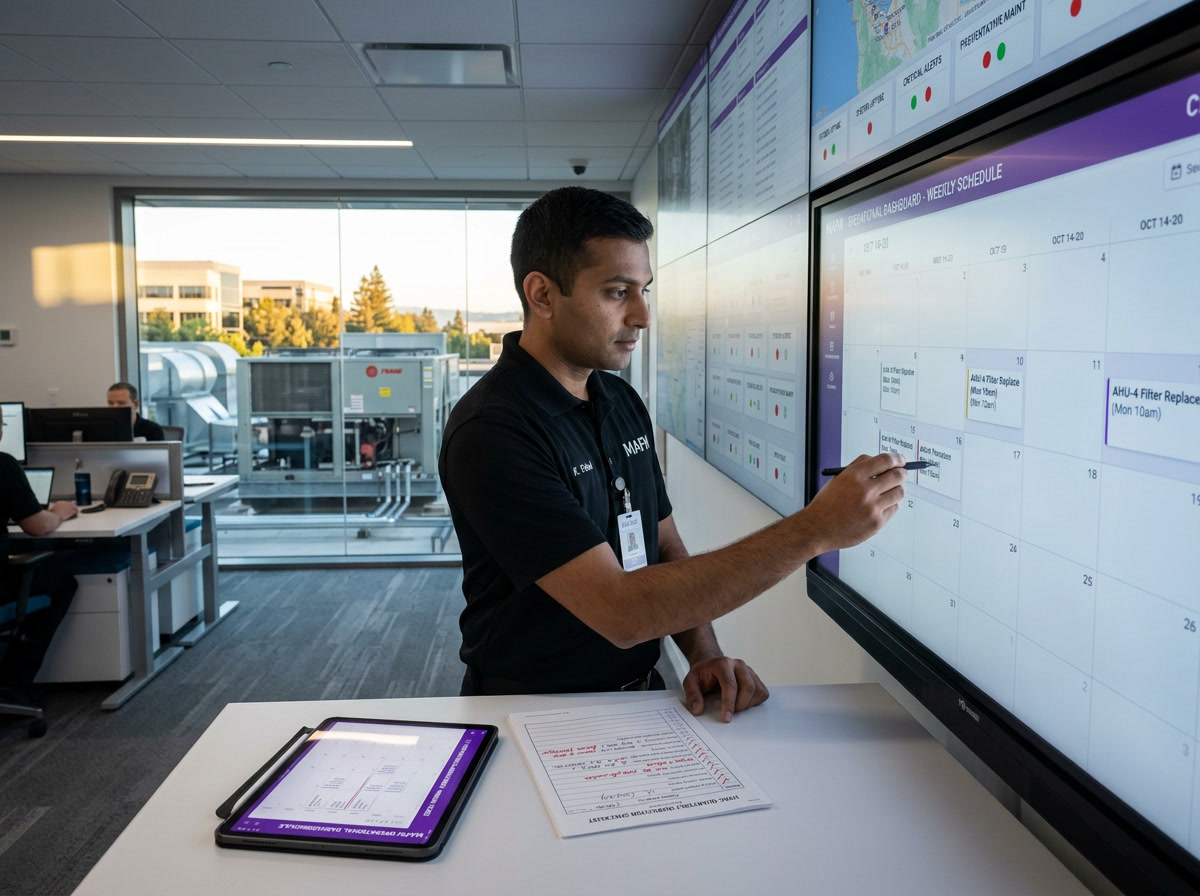
The gap we see most often at this stage isn't knowledge — it's execution. A facility director in Santa Clara might know exactly what an economizer fault code means, but without a dated plan, a budget line, and a vendor on the calendar, that knowledge sits in an inbox until a cold snap in December forces the issue. With roughly ten weeks left before sustained low-50s overnight temperatures and the first atmospheric river systems hit the Peninsula, now is the window to convert this week's inspection content into an actual schedule.
This closing post is a synthesis: how to sequence the inspection work, how to triage what you find, how to budget for it realistically given current trade labor availability, and how to document everything so your 2027 capital planning conversation starts from data instead of guesswork.
Each of this week's posts covered a slice of the inspection — but your technicians shouldn't run four separate visits. A well-run annual inspection on a Silicon Valley commercial property bundles mechanical, airflow, controls, and compliance checks into a single rooftop and mechanical-room walkthrough per unit, typically 45 to 90 minutes per RTU depending on tonnage and accessibility.
Build the field checklist in this order: refrigerant pressures and compressor amp draw first (catches the failures that will actually leave tenants cold), economizer and damper operation second (the item most specific to our climate, since Bay Area buildings rely on free cooling far more than Midwest or East Coast equivalents), belt and bearing condition on air handlers third, then filter and coil cleanliness, then controls — t-stat calibration, BMS setpoint schedules, and sensor drift — and finally the compliance items: refrigerant log entries, CalOSHA-relevant electrical panel clearances, and combustion safety checks on any gas-fired heating equipment.
Running it in this sequence matters because mechanical failures found early often change what controls technicians need to check later. A compressor that's short-cycling, for instance, will throw off your economizer changeover logic even if the dampers themselves are mechanically sound — so you want the refrigeration data in hand before your controls contractor starts troubleshooting what looks like a sensor problem.
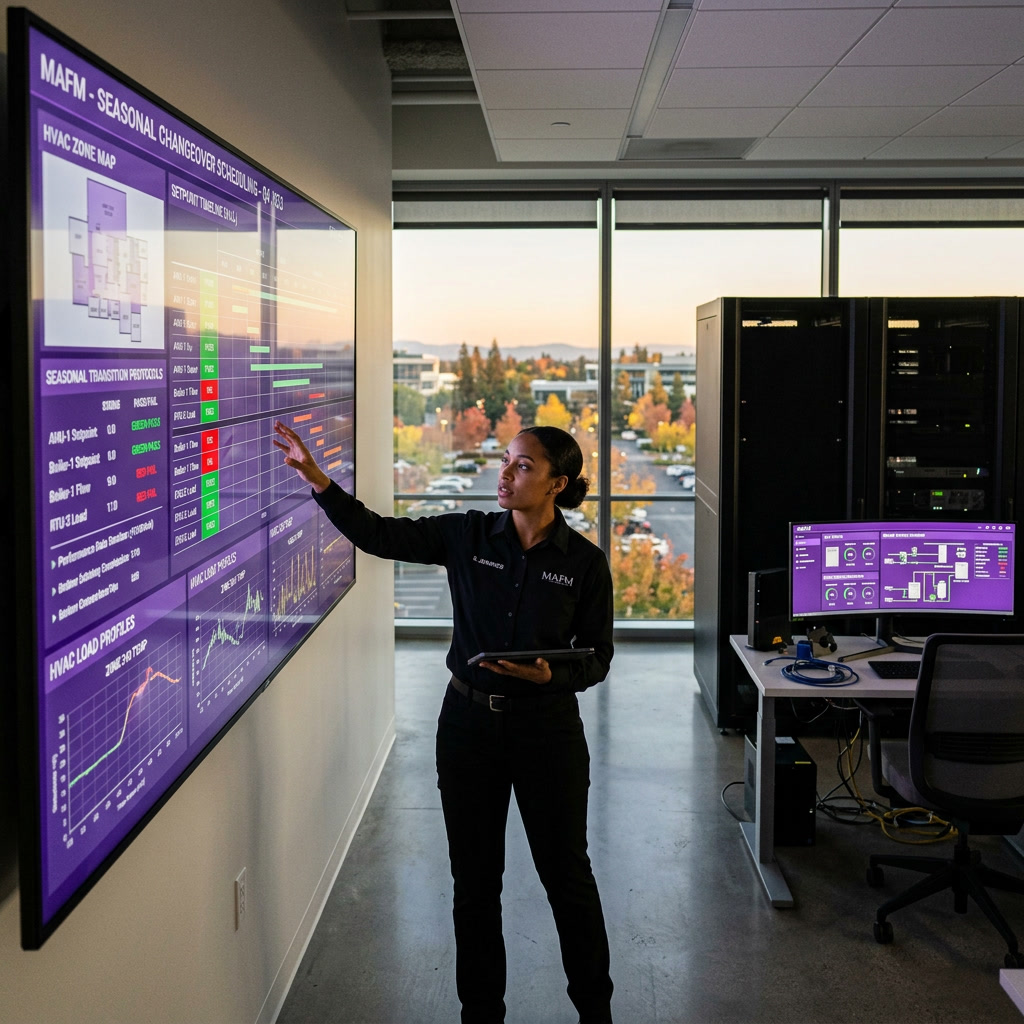
Work backward from the weather, not forward from your current to-do list. Silicon Valley's shoulder season — mild days, cold nights, occasional early rain — typically arrives in late October and intensifies through November. That gives you a realistic eight-to-ten week runway, which should be allocated roughly as follows: weeks one and two for the physical inspection across your portfolio, weeks three and four for parts ordering and specialty subcontractor scheduling (controls programmers and refrigeration techs book up fast once the first cold weather alerts hit Bay Area news), weeks five through seven for repair execution, and the final stretch reserved as buffer for anything that slips — because something always slips.
Vendor availability is the real constraint here, not labor cost. Controls technicians certified on major BMS platforms (Johnson Controls, Siemens, Honeywell) are in short supply across the South Bay, and the firms that service life sciences campuses in South San Francisco and Redwood City often prioritize those contracts over standard office-park work. If your buildings run older pneumatic controls or a DDC system nearing end-of-life, get that technician on your calendar in the next two weeks, not the next two months.
For multi-building portfolios, stagger the inspection schedule by building type rather than by address. Inspect buildings with the oldest equipment first — units installed before 2015 are statistically more likely to surface a failure that needs ordering a part, which adds lead time you don't have if you wait until November.
Not every finding from this week's inspection checklist warrants an emergency work order, and treating every item as urgent will blow your fourth-quarter maintenance budget without improving tenant comfort. Sort findings into three tiers.
Tier one is anything that threatens heating capacity or life safety before winter: a cracked heat exchanger, a failed gas valve, non-functioning carbon monoxide detection near combustion equipment, or a compressor that's clearly failing. These get scheduled immediately, regardless of cost, because the alternative is an emergency no-heat call during a January cold snap — which costs more in after-hours labor and tenant relations damage than the planned repair ever would.
Tier two is efficiency and comfort-related: economizer faults, worn belts, dirty coils, uncalibrated sensors causing overheating or overcooling in specific zones. These should be fixed before winter but can tolerate a two-to-three week lag without creating a habitability problem. Batch these by trade to reduce truck rolls — if your controls contractor is already on-site recalibrating sensors, have them address every zone issue in the building that same visit.
Tier three is capital planning material: equipment approaching end of useful life (typically 15-20 years for commercial RTUs in our climate, shorter if coastal salt air or industrial exposure accelerates corrosion), systems that are technically functional but increasingly expensive to maintain, or anything requiring compliance upgrades tied to refrigerant phase-down schedules. Document these now with cost estimates, but don't force them into this year's operating budget. Feed them into your 2027 capital plan instead, where they belong alongside roof replacement, parking lot resurfacing, and other multi-year expenditures.
The single biggest missed opportunity in annual HVAC inspections is treating the resulting paperwork as a filing obligation instead of a planning asset. Every finding from this week's inspection should land in three places: your CMMS work order history, your refrigerant tracking log (required for leak-rate reporting on systems above the EPA and CARB thresholds for R-410A and higher-GWP refrigerants), and a running equipment condition report organized by asset tag.
That equipment condition report is what turns next year's budget conversation from a debate into a data review. When you can show ownership that a specific rooftop unit has needed three compressor-related service calls in eighteen months, versus an adjacent unit with zero unplanned visits in five years, the capital replacement decision makes itself. Property owners and asset managers across Silicon Valley's commercial portfolios are increasingly asking for exactly this kind of trend data before approving replacement spend, particularly as insurance carriers and lenders tighten expectations around documented preventive maintenance programs.
Keep photos. A dated photo of a corroded coil or a cracked belt, timestamped and tied to a work order, does more to justify a capital request than three paragraphs of description — and it protects you if a tenant or owner later questions why a repair was or wasn't made before a winter comfort complaint arrived.
This week's series walked through the mechanical, airflow, controls, and compliance dimensions of a proper annual HVAC inspection for Silicon Valley's specific climate and building stock. The value of that information depends entirely on whether it turns into scheduled work orders, budgeted repairs, and documented records before the weather changes. Facility managers who treat this as a calendar exercise rather than a one-time checklist walkthrough consistently head into winter with fewer emergency calls, lower after-hours labor costs, and tenants who never notice the work happened at all — which is the actual goal.
MAFM's HVAC preventive maintenance teams can run your complete pre-winter inspection, triage findings by urgency, and hand you a documented 2027 capital planning report — contact us to get on the schedule before vendor availability tightens further this fall.
Reference earlier in this week's series — the Monday post introducing the annual HVAC inspection series and rooftop/economizer specifics, the Tuesday post on ductwork and air handler inspection, the Wednesday post on BMS and controls calibration, and the Thursday post on refrigerant compliance and combustion safety checks.
California Air Resources Board (CARB) refrigerant management program guidance; U.S. Department of Energy's commercial building preventive maintenance guidelines for HVAC systems.
August 26, 2026
September 9, 2026
October 6, 2026
MAFM offers comprehensive facility management solutions tailored to your business needs.
Get in Touch