Staffing / Workforce
Why Your Facilities Team Keeps Quitting (And What Silicon Valley Building Owners Can Do About It)
July 13, 2026
This week, we've walked through the pieces of what it actually takes to build a facilities team that holds up under Silicon Valley's particular pressures, campuses with 24/7 uptime expectations, tenants who treat a two-hour HVAC outage like a five-alarm fire, and a labor market where a good HVAC technician can leave for a semiconductor fab's internal maintenance team for a 20% raise before your req even clears HR. We looked at the widening skills gap in building trades, the real cost of technician turnover on a multi-tenant campus, how cross-training reshapes coverage on thin crews, and what a defensible leadership pipeline looks like when your chief engineer is eyeing retirement in eighteen months.
None of those posts matter much in isolation. The value is in the sequence: you can't fix retention without understanding the skills gap driving it, and you can't build a leadership pipeline without cross-trained staff who are ready to step up. So today we're pulling the threads together into something a facility director can actually take into a Q3 budget meeting, not another framework, but a sequenced plan with rough timelines, cost ranges, and the specific decisions that tend to get punted until they become emergencies.
If you manage a single 150,000-square-foot office building or you oversee a portfolio of R&D and cleanroom space across three cities, the mechanics below scale differently, but the sequence doesn't change.
Earlier this week we broke down the skills gap in the trades pipeline, fewer apprentices entering HVAC, electrical, and controls programs, community college enrollment in facilities-adjacent trades down in the region, and a wave of senior engineers hitting retirement age over the next five years. That post wasn't abstract for a reason: it's the root cause underneath almost every staffing headache facility managers describe to us. Turnover isn't happening because people don't like the work. It's happening because there aren't enough qualified people to go around, and every employer in the Valley, from FM providers to in-house corporate real estate teams to the tech companies themselves, is bidding for the same shrinking pool.
Wednesday's post on turnover costs put numbers to that pressure: replacing a mid-level building engineer runs $28,000-$45,000 when you count recruiting, onboarding, lost productivity during the ramp-up period, and the overtime you pay remaining staff to cover the gap. On a campus running a BAS platform like Niagara or Metasys with site-specific programming quirks, that number climbs, because a new hire needs 60-90 days just to stop making change-order-worthy mistakes.
Thursday's cross-training piece and today's leadership-pipeline lens are really the same conversation from two angles: how do you make your existing team more resilient so fewer people need replacing, and how do you make sure the ones who stay have a reason to. That's the whole loop. Skills gap creates scarcity. Scarcity drives turnover cost. Cross-training and leadership development are the two levers that actually move the needle on both.
If you're starting from a standing stop, here's a sequence that doesn't require a new budget line the first month.
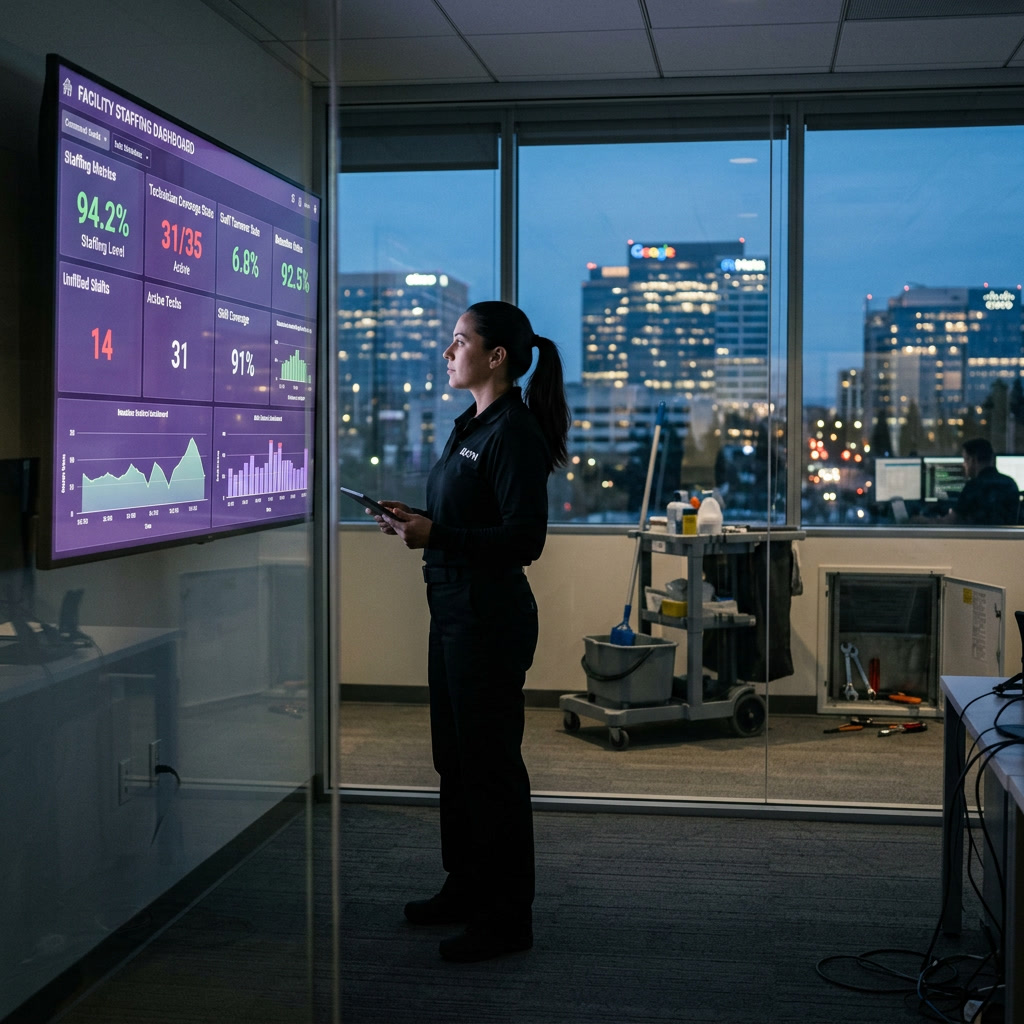
Days 1-30: Audit and triage. Pull your last 24 months of staffing data, turnover by role, time-to-fill for open reqs, overtime hours by technician. Most FM software (Corrigo, UpKeep, ServiceChannel) has this buried in reporting; if you're still tracking in spreadsheets, this is also your signal to fix that. Identify your single points of failure: the one person who understands your chiller plant sequencing, the one electrician certified on your emergency generator switchgear. That list is your real risk register, not your org chart.
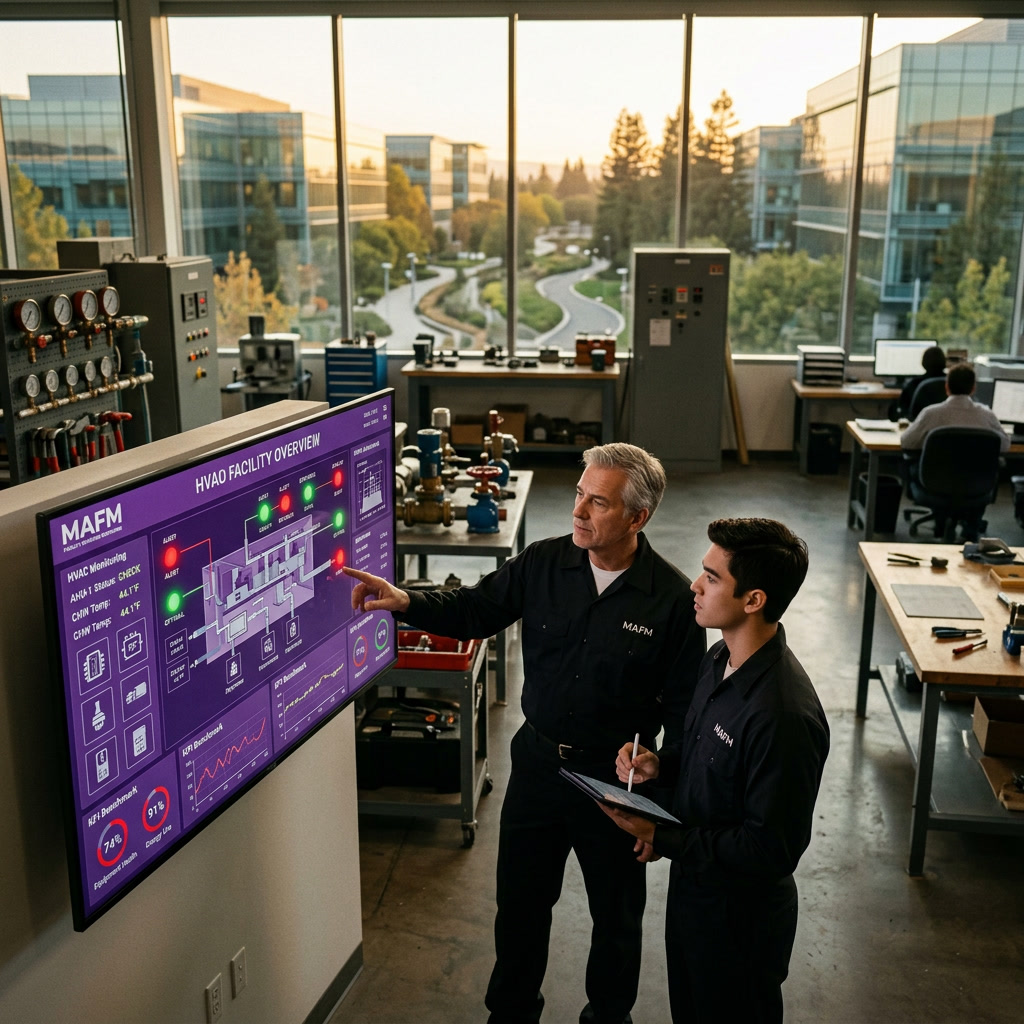
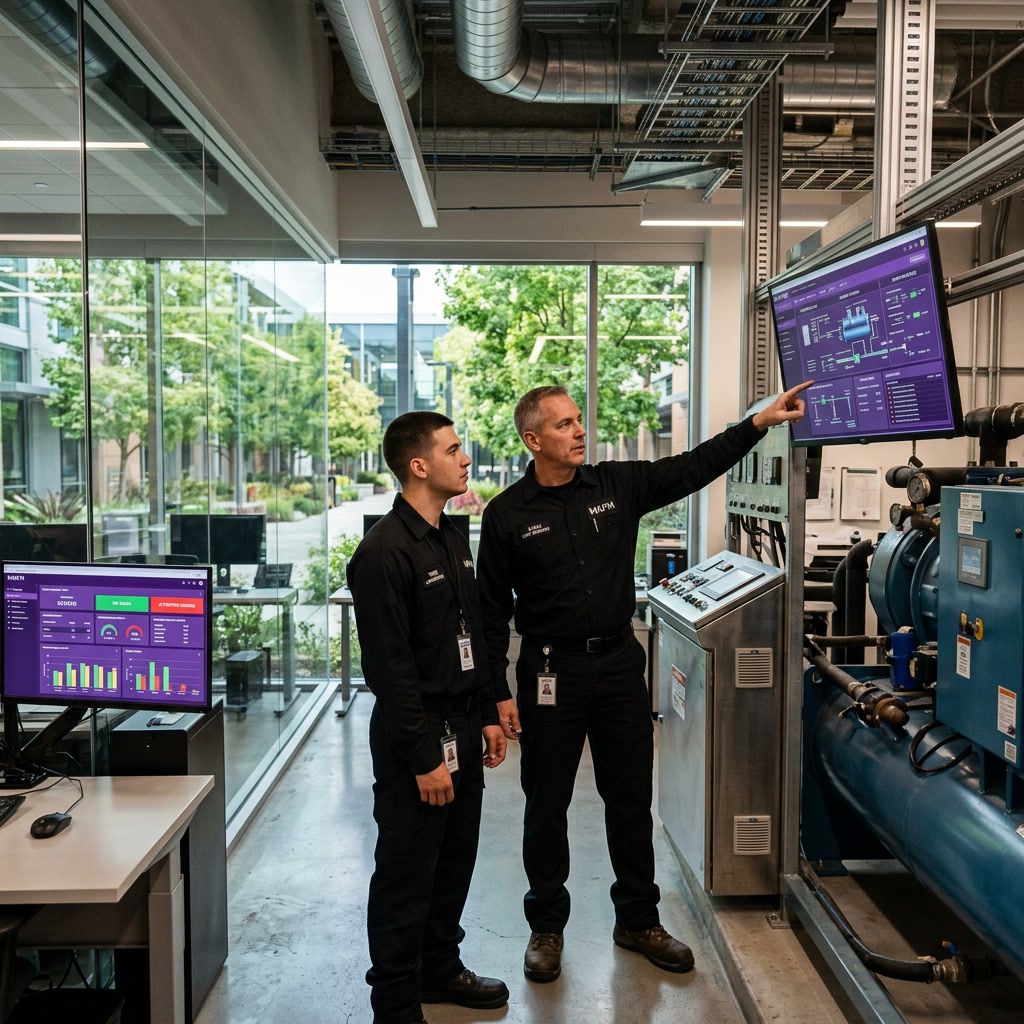
Days 31-60: Build the cross-training matrix. For each single point of failure identified above, assign a backup and a training timeline. This costs almost nothing beyond scheduled hours, pairing a junior tech with your controls specialist for four hours a week for six weeks closes more gaps than a formal course. Where certifications are required (EPA 608 for refrigerants, NFPA 70E for electrical work, boiler operator licensing depending on jurisdiction), start those enrollments now because backlogs at testing centers in the Bay Area can run 4-6 weeks.
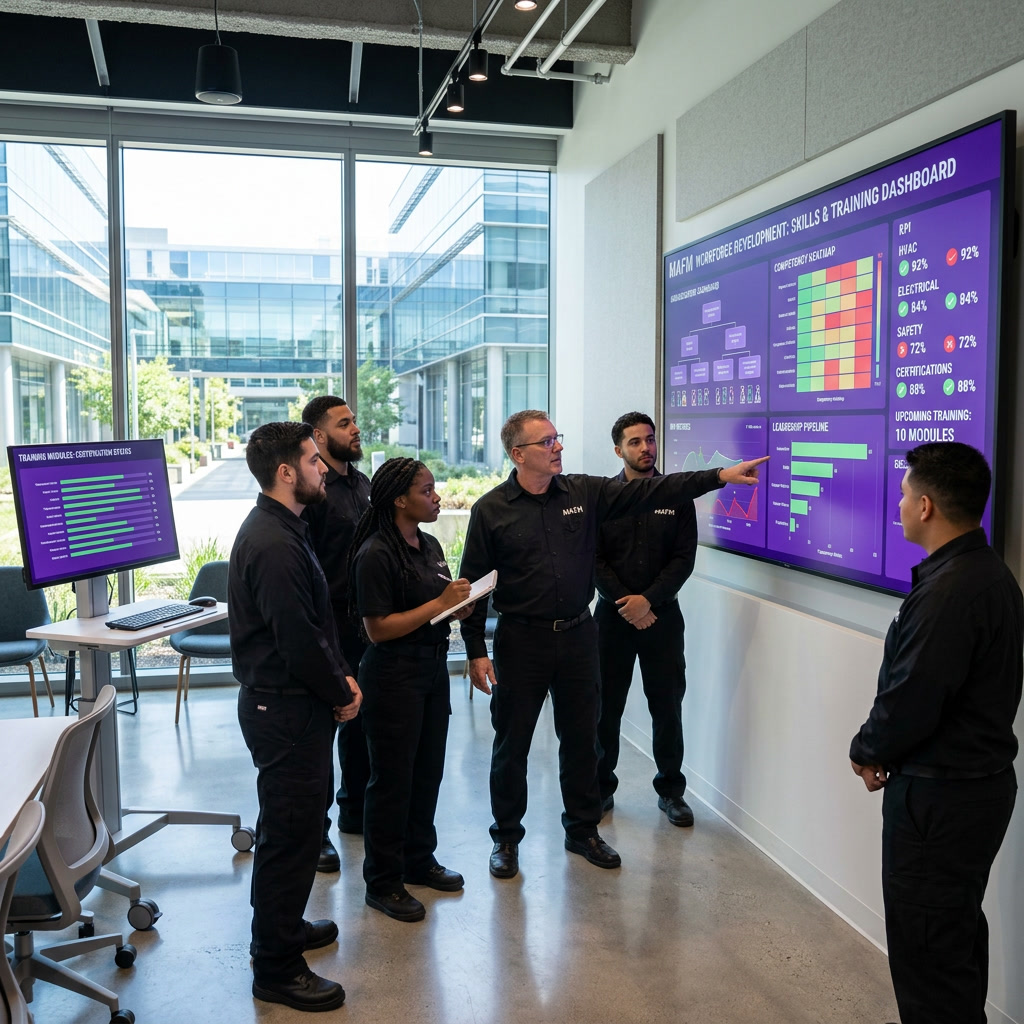
Days 61-90: Formalize the pipeline. Take your two or three highest-potential technicians and give them a written development plan, not a vague "we'll get you there," but specific milestones: shadow the chief engineer on vendor negotiations, take lead on the next tenant improvement walkthrough, complete a supervisory training module. Pair this with a compensation conversation. If you don't put a number next to the growth path, you're asking people to trust a promise, and in this labor market they don't have to.
Most facility budgets don't have a line item called "workforce development," which means these initiatives compete with capital repairs and vendor contracts for attention. The way around that is reframing the numbers you already have.
Overtime is the easiest lever. If your team is running 15-20% overtime to cover a staffing gap, that's often $40,000-$80,000 annually depending on headcount and wage rates, money already being spent, just inefficiently. Redirecting even a third of that toward structured training time or a retention bonus tied to certification completion is budget-neutral in the first year and produces a more capable team in year two.
Vendor training credits are underused. Equipment manufacturers (Trane, Johnson Controls, Siemens) often include training seats as part of service or controls contracts, and FM teams routinely leave them on the table. If you're not asking your BAS vendor for two free seats in their annual controls certification course, you're paying for a benefit you're not using.
Tuition or certification reimbursement doesn't need to be generous to work. A $1,500-$2,500 annual cap covering EPA certifications, OSHA 10/30, or a community college HVAC controls course signals investment without breaking a mid-size facility budget. Compare that to the $30,000+ cost of losing the person you didn't invest in, and the math isn't close.
A few regional and industry trends should shape how you sequence this over the coming year rather than treating it as a one-time project.
Union and prevailing wage pressure is increasing on projects tied to public funding or larger commercial developments in the South Bay, which affects how you structure contract labor versus in-house staff for specialized trades. If your portfolio includes any public-adjacent or larger mixed-use developments, get ahead of this with your legal and HR partners rather than discovering it mid-project.
The retirement wave we mentioned Monday isn't slowing down. Industry data consistently shows a significant share of skilled trades workers are over 55, and Silicon Valley's cost of living makes it harder to backfill locally, younger technicians are commuting from further out or leaving the trade for better-compensated adjacent industries like data center operations, which is drawing HVAC and electrical talent away from traditional commercial FM at a noticeable clip.
Data center and lab/R&D space growth in the region means more facilities work is shifting toward specialized, higher-stakes environments, critical infrastructure, cleanroom protocols, chemical handling certifications. If your team's skill set is built around standard office and retail portfolios, the leadership pipeline conversation needs to include whether your rising technicians are being developed toward the kind of specialized work that's increasingly where the job growth, and the pay premium, actually is.
None of this requires a reorganization or a consultant engagement to start. It requires an honest audit of where your single points of failure sit, a training sequence that uses hours you're probably already paying for in overtime, and a leadership pipeline that gives your best people a specific reason to stay rather than a general sense that things are fine. The facilities teams that hold together over the next five years in this market won't be the ones who paid the most in a bidding war, they'll be the ones who built the bench before they needed it.
If your facility team is running lean and you're not sure where the single points of failure sit, MAFM's staffing and operations assessment can map your risk exposure and build a workforce development plan tailored to your portfolio, reach out to schedule a consultation.
Link back to Monday's post on the regional skilled trades skills gap, Wednesday's breakdown of technician turnover costs, and Thursday's piece on cross-training strategies for lean facilities crews.
U.S. Bureau of Labor Statistics Occupational Outlook Handbook (building trades and facilities occupations data); IFMA (International Facility Management Association) workforce research and credentialing resources.
July 13, 2026
July 14, 2026
July 15, 2026
MAFM offers comprehensive facility management solutions tailored to your business needs.
Get in Touch