Technology & Operations
AI Facility Management: What It Can Do for Response Times
January 21, 2026
The expectation gap between how Silicon Valley tech employees experience consumer technology (frictionless, intuitive, always available) and how they interact with their commercial building has become a visible liability. Submitting a maintenance request by calling a phone number during business hours, receiving building updates through a printed flyer on the elevator wall, and booking a conference room through an email to the front desk feel anachronistic to employees who manage every other aspect of their professional and personal lives through a smartphone.
Building technology platforms (typically called tenant experience apps, building apps, or property management portals) close this gap by bringing the same digital experience quality that tenants expect from every other service provider to their commercial building interactions. The buildings that have deployed these platforms report 34% higher tenant satisfaction scores, 28% fewer phone-in service calls, and measurably higher engagement with building events and programs.
But technology adoption in commercial real estate is littered with expensive platforms that never achieved meaningful tenant usage, because selecting the right platform is only half the challenge. Getting tenants to actually use it is the other half. Here is how to do both.
The core functionality that drives genuine tenant value in building technology platforms falls into six categories.
Work order submission and tracking allows tenants to submit maintenance requests, upload photos, describe the issue in detail, and track the status of their request from submission through resolution, all from a mobile app. The transparency element is the critical differentiator from traditional phone-based service. Tenants who can see that their work order was received, assigned to a technician, and is scheduled for completion feel served even before the work is done.
Conference room and amenity booking through the app or portal eliminates the friction of phone or email reservation systems and provides real-time availability visibility that allows tenants to find and book appropriate spaces quickly. Integration with calendar platforms (Outlook, Google Calendar) that automatically adds confirmed reservations to the appropriate calendar converts the booking from a standalone action into a seamless workplace management experience.
Building communication and notifications deliver maintenance alerts, amenity announcements, building event invitations, and emergency communications through the channel that tenants have already opted into rather than through email that competes with dozens of other messages or physical signage that most people walk past.
Community features that allow tenants to connect with other building occupants, see upcoming events, and share building experiences create the community dimension that differentiates buildings with genuine culture from those that are simply collections of separate companies sharing a structure.
Building information access (parking validation, visitor registration, package notification, and building directory) consolidates the practical management tasks that currently require multiple contacts and channels into a single platform.
Food service and retail ordering integration with any building café, food service, or retail tenants creates the convenience amenity that hybrid workers specifically value.
The tenant technology platform market includes more than thirty commercial options ranging from purpose-built commercial real estate platforms to adapted property management software. Evaluating them effectively requires a structured framework.
Start with your tenant profile assessment. A building occupied primarily by large enterprise tech companies has different platform requirements than one serving a mix of startups, professional services firms, and boutique creative agencies. Enterprise tenants need security certifications, SSO integration, and API connectivity to their existing workplace platforms. Startups value mobile-first design, easy onboarding, and direct amenity booking. The platform that serves one profile optimally may serve the other poorly.
Must-have feature validation ensures that every platform you seriously evaluate delivers the specific functionality your building requires. Create a feature requirements matrix with your must-have items (typically work order management, conference room booking, and building communications) and your nice-to-have items. Evaluate each platform against your requirements list rather than being distracted by features you will never use.
Integration capability with your existing building management systems is a technical requirement that many buildings discover too late. If you use a specific CMMS for work order management, the tenant app's work order submissions must flow into that system rather than creating a parallel work order database. If your conference rooms use a specific booking system, the tenant app must connect to that system rather than creating a second calendar layer.
Implementation support and training resources determine whether deployment goes smoothly or creates months of frustrated tenants and facility staff. Request case studies from similar-sized properties the vendor has successfully deployed. Speak directly with at least two reference property managers before committing.
Pricing transparency over the contract term (including both the base platform fee and any per-user, per-feature, or integration fees) prevents the surprise cost escalation that characterizes some platforms with attractive entry pricing and significant add-on cost structures.
The most sophisticated tenant platform delivers zero value if tenants do not use it. Adoption is where most building technology implementations fail, not because the technology is bad, but because the change management surrounding its introduction is inadequate.
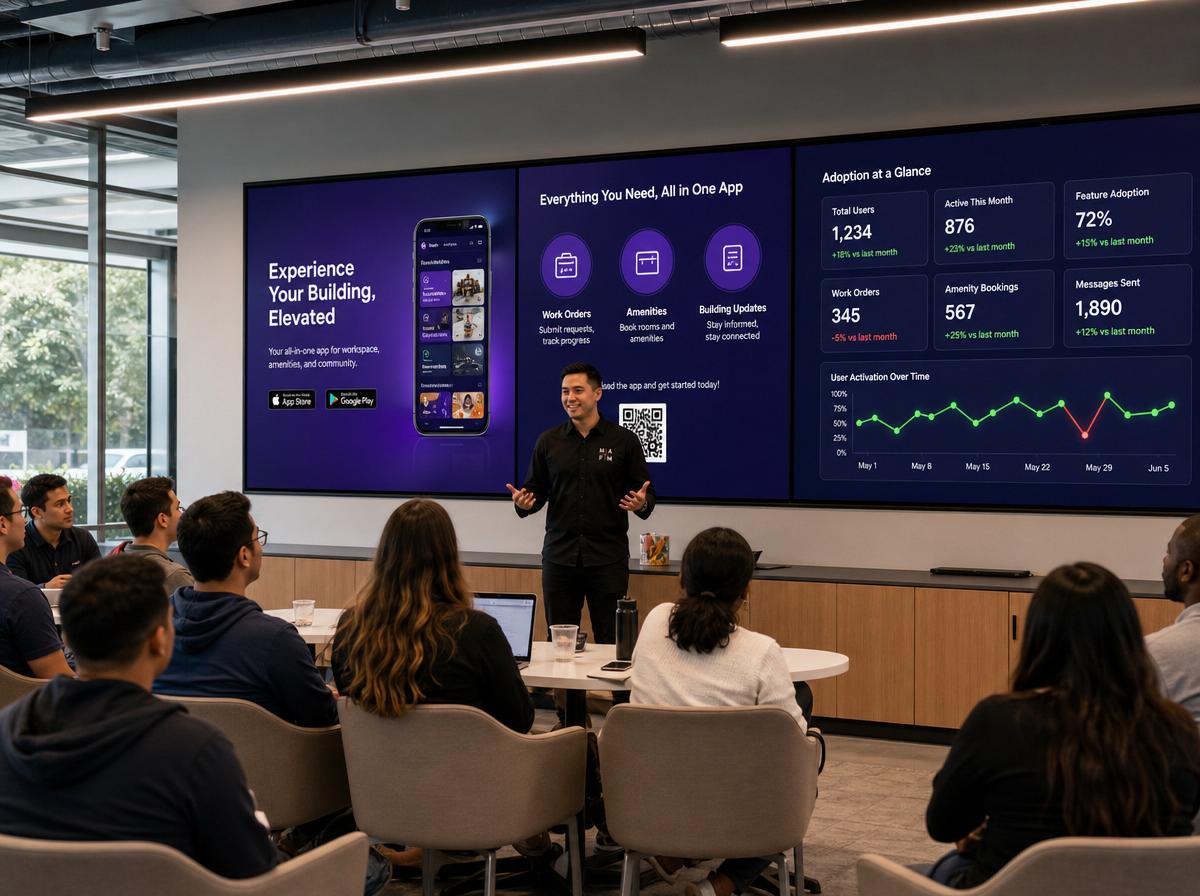
Tenant launch engagement requires an active campaign that exceeds the "we have a new app" email that most buildings send. Effective launch campaigns include in-person introduction events where tenants can download the app with building staff assistance available, incentives for early adoption such as complimentary conference room credits or parking validations for tenants who register and complete their profile, and floor ambassador programs where engaged tenant employees become internal advocates for the platform within their companies.
Specific value demonstration rather than general capability promotion drives adoption more effectively. Instead of communicating "our new app lets you manage everything about your building," show tenants a specific scenario: "Submit this week's broken AC work order through the app and see real-time status updates while we fix it." Concrete utility in a specific situation converts skeptical non-users more effectively than comprehensive feature marketing.
Friction elimination during the first interaction is critical because first experiences that require too many steps, unclear navigation, or technical difficulty create abandonment that is very difficult to reverse. The first time a tenant uses the platform, it must work smoothly, deliver obvious value, and require no more than three steps for the primary action they are attempting. Pilot testing with a small group of engaged tenants before the full building launch identifies and resolves friction points before they create a negative first impression at scale.
Tenant technology platforms only improve building operations when the facility management team is integrated into the platform workflow rather than managing a parallel system alongside it.
Work order workflow integration means that every work order submitted through the tenant app immediately appears in the facility management team's work queue with all the information needed to respond: tenant contact, location, description, photos, and priority level. The technician assigned receives notification on their mobile device and updates the status through the same platform so tenants see progress without requiring a separate communication.
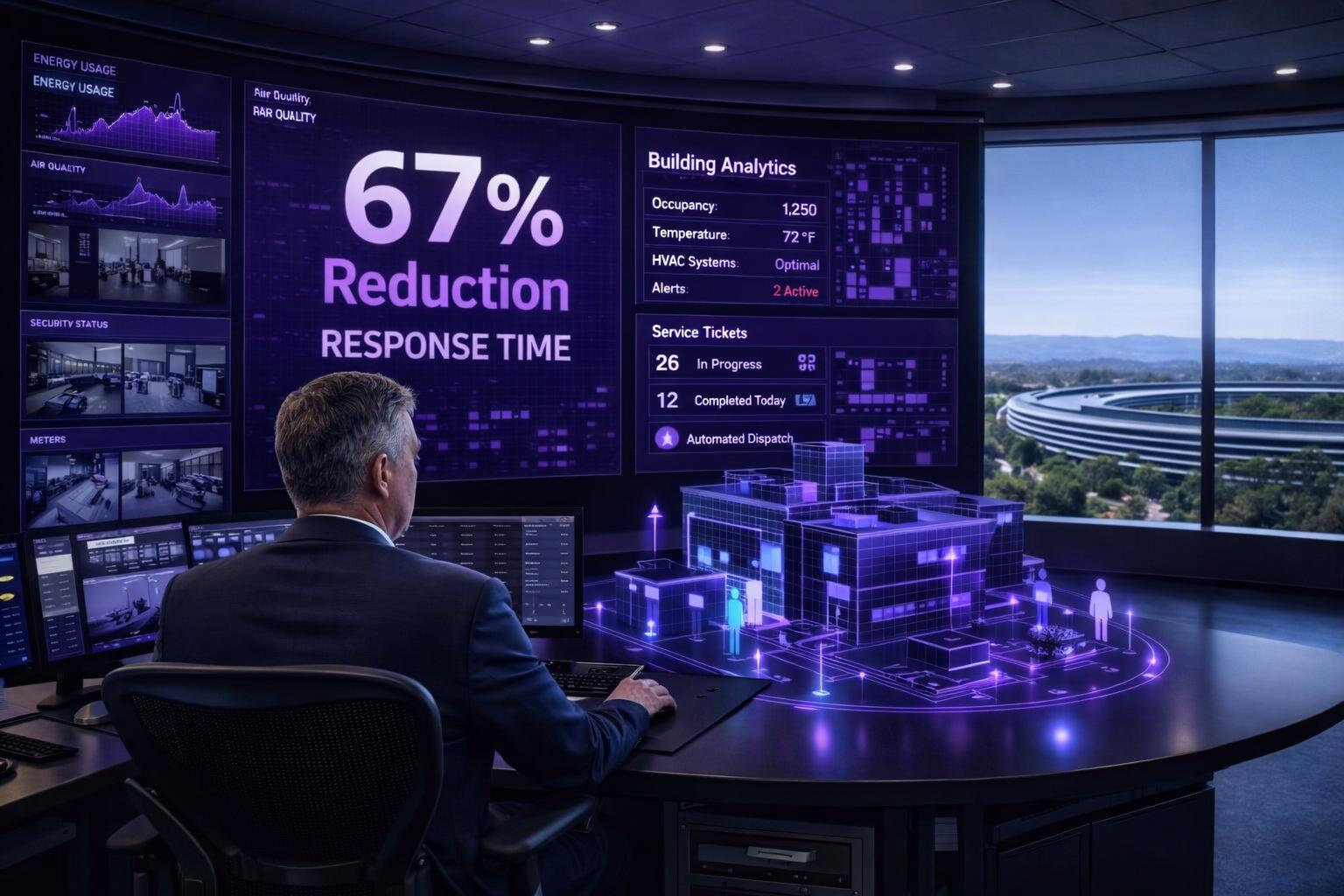
Response time standard enforcement through the platform provides automated escalation when work orders approach or exceed response time targets. This automated accountability removes the manual oversight burden from supervisors while ensuring that service level commitments are consistently met.
Communication scheduling through the platform calendar creates a systematic cadence for the building communications that tenant experience programs depend on. Rather than relying on the facility manager to remember to send a building update, the platform provides scheduled communication tools that maintain the regular touchpoint cadence.
Analytics and reporting from the platform usage data reveal which features tenants value most, which services generate the most work orders, which communication topics drive the highest engagement, and which amenities are most frequently booked. This data informs operational priorities and investment decisions with evidence that intuition cannot provide.
Building technology represents a real budget investment, typically $2-$8 per square foot annually for commercial platforms, that requires demonstrated return.
Satisfaction score improvement tracks the before-versus-after impact of platform deployment on tenant satisfaction survey scores. Buildings that launch tenant technology platforms with strong adoption report satisfaction improvements of 15-25% within the first year.
Service call volume reduction measures the decrease in phone and email-based service requests that the platform displaces. A 30% reduction in phone service calls represents meaningful facility management staff time savings that can be redirected to higher-value activities.
Event participation rates provide a community engagement metric that quantifies one of the platform's primary value propositions. Buildings with active tenant communities facilitated through the platform report event attendance rates three to five times higher than those relying on email invitations and lobby flyers.
The digital infrastructure for commercial building management is no longer optional for Silicon Valley properties competing for the tech tenants who set the market's expectations. Buildings without tenant technology platforms are managing with the tools of the previous decade while their tenants carry the digital experience expectations of this one.
Evaluate your current technology stack against tenant needs this quarter. If the gap is significant, begin your platform selection process. If you have a platform with adoption challenges, invest in the activation campaign that converts installation to utilization. The digital experience your building provides is increasingly inseparable from the physical experience tenants evaluate when they make their renewal decisions.
MAFM implements and manages tenant experience technology platforms as part of our comprehensive property management approach. Contact us to discuss your building's digital experience strategy.
Schedule your consultation: Contact MAFM.PRO
MAFM offers comprehensive facility management solutions tailored to your business needs.
Get in Touch