Office Moves & Workplace
Tenant Satisfaction Surveys: How to Measure and Act
February 18, 2026

A tenant retention roadmap works when it runs in a fixed order over about 90 days: audit open issues first, fix what is physically broken second, talk to tenants third, and only then sit down for the renewal conversation. Most renewals that go wrong do so because those steps happened in the wrong order, or all at once in the final weeks.
The case for putting service at the center is reasonable, with limits. A peer-reviewed study of office tenant surveys found that a 1-point rise in tenant satisfaction on a 5-point scale was associated with 8.6% greater willingness to renew and a 23.1% lower probability of moving out. It is an association, not a guarantee, but it tells you where effort pays.
Because it is the part of the renewal decision a building team can actually influence. Kingsley Associates, which runs a large tenant survey benchmark, argues that rent is set by the market and tenant space needs are outside the owner's control, so property management service is the highest-ranked renewal factor an owner can most effectively influence.
The 2025 Kingsley report adds a wrinkle. Management service delivery still ranks highest, but building-related factors such as HVAC and exterior appearance are catching up in influence. In practice, that means a responsive manager and a building that works are both on the scorecard now.
Price and business conditions still decide some departures. No roadmap saves a tenant whose headcount dropped by half. The goal is to make sure the tenants you could keep are not lost to something fixable.
Start with an honest inventory of every lease that expires inside the next year, set against what the building has delivered to that tenant. Pull open and recently closed work orders from your CMMS or ticketing system and line them up against renewal dates.
A tenant with an expiration far off but three unresolved temperature complaints is a bigger risk than a tenant renewing sooner with a clean history. Sort tenants into rough groups, using judgment rather than a formula:
Then walk every building with your engineering lead and the janitorial supervisor. Write down anything deferred: a rough-running unit, dim parking lighting, a sticking door reader, stained restroom fixtures, worn carpet at the elevator lobby. Equipment that visibly fails people each day undercuts every conversation that follows.
Close physical problems before you schedule relationship moves. A fixed suite temperature followed by a call reads as responsiveness. A call followed by a fix reads as damage control.
Sequence matters here, and so does scope. Prioritize by how often a tenant's people see the problem, not by what is cheapest to fix. Restrooms, lobbies, elevators and the entry sequence get noticed by every employee, every day.
A written planned maintenance schedule helps. The U.S. Department of Energy's older federal O&M guide, Release 3.0 from 2010, estimates that preventive maintenance can save 12% to 18% over a reactive program. It is a dated estimate, so treat it as direction rather than a promise, but the logic holds: fewer surprise failures means fewer angry tickets.
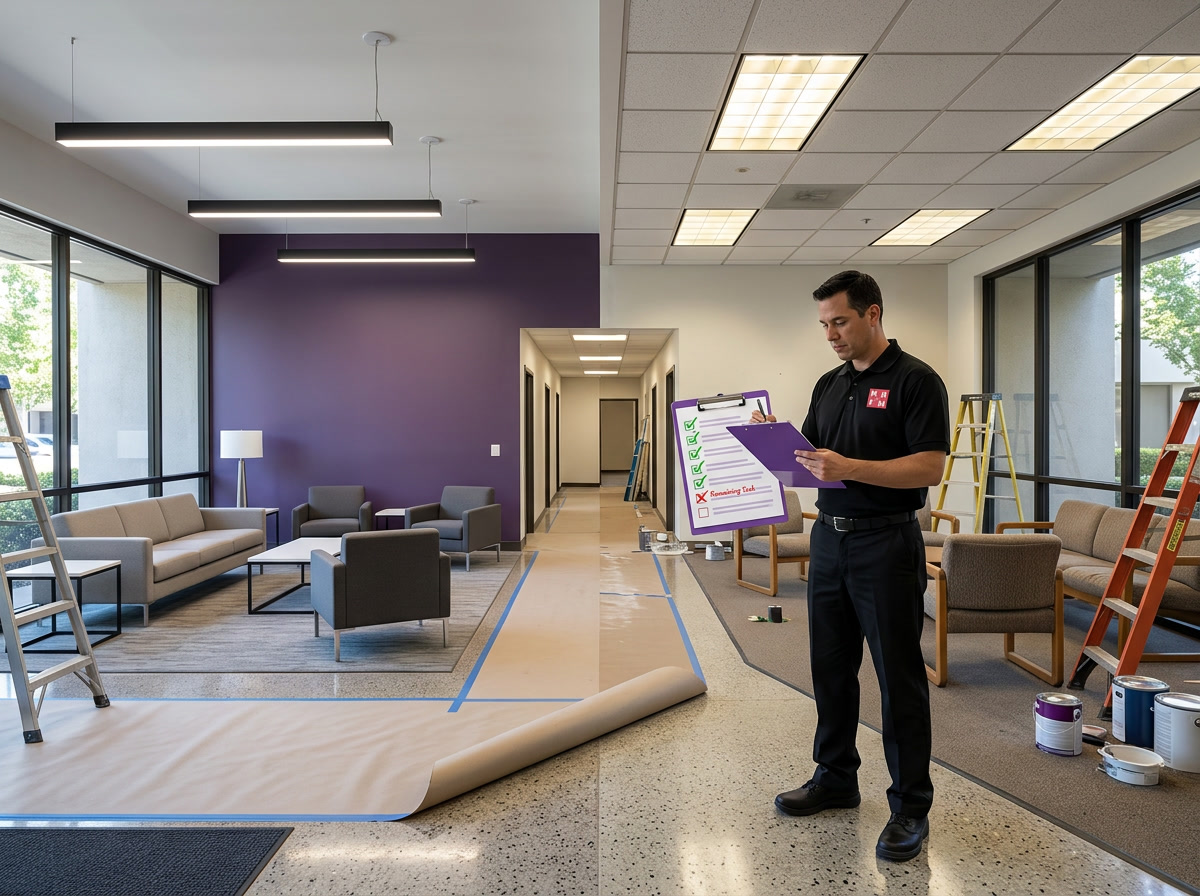
Finish projects you have already started instead of opening new ones. A lobby refresh left half finished while a tenant compares your building with another is worse than no project at all. If something cannot finish before the renewal conversation, give tenants a firm date and keep it.
When the fixes are underway, start the touchpoints: a manager check-in, a short survey, a walkthrough with the tenant's workplace lead. For survey design, see tenant satisfaction surveys: how to measure and act.
Bring facts, not reassurance. Facility management and leasing or ownership should be in the same room, because tenants do not separate "this building is well run" from "these lease terms are fair."
Kingsley's own published example is useful here: it reports that proactive check-ins at least once a quarter correlate with customer satisfaction rising from 74% to 94%. That is a vendor's benchmark from an older article, not a promise for your building, but a regular check-in cadence is cheap and gives you something concrete to point to.
Use your own records. "We rebalanced your floor's airflow in September, replaced the entry readers in October, and here is the work order history for your suite" is stronger than "we have been improving the building." Only quote numbers you can pull from your own system, and never round them in your favor.
Raise rent changes early, with the improvements and service record attached. A tenant who hears about an increase with plenty of time to respond negotiates differently than one who hears it with weeks left on the lease. For a broader look at renewal timing, see reviewing your lease renewal pipeline.
The final stretch is for closing loops. Get signed renewals recorded, update your tenant groupings against what actually happened, and capture what worked.
Useful questions for the debrief:
For tenants who decide to leave, run a real exit conversation. Price, space needs and business circumstances are common reasons, but a specific unresolved issue is the one you can fix for the next tenant. The 2025 Kingsley data shows tenants who were unsure about renewing most often pointed to lease terms and business conditions, so ask directly rather than guessing.
Better than most owners fear, though not static. In the 2025 Kingsley data, 70% of office tenants said they were likely to renew, about a quarter were unsure, and the office satisfaction score was 4.39 out of 5. Those are national survey figures, not a Silicon Valley forecast.
The useful reading is the unsure group. Those tenants have not decided, which means your next 90 days can still move them. For the practical side of building a program around this, see how facility management affects renewals.
When should a tenant retention roadmap start?
Start about 90 days before the renewal window opens for the tenants you most want to keep, and earlier for large or complex leases. The first three weeks are audit work, which costs little, so there is little reason to wait.
Does fixing maintenance issues really affect renewals?
Research suggests satisfaction and renewal intent move together, with the studies above finding a clear association. It is not proof that every fix saves a lease, but unresolved problems are the one factor you fully control.
Who owns tenant retention, leasing or facilities?
Both. Leasing owns terms and rent, and the facility team owns the daily experience, so they need shared records and one agreed set of messages before any renewal meeting.
What if a tenant is leaving for reasons you cannot change?
Document the reason and move on. Price, headcount cuts and corporate decisions are common, and a clean exit conversation still gives you information for the next prospect.
MAFM is a facilities management company, and we plan, schedule and coordinate the building work that tenants notice, including the vendors involved. If you want help turning a renewal calendar into a work plan, see our facility management service.
MAFM offers comprehensive facility management solutions tailored to your business needs.
Get in Touch