Business Development
How Facility Management Quality Became a Leasing Amenity in Silicon Valley
July 20, 2026
Yesterday we kicked off this week's series on property marketing by looking at how Silicon Valley owners are repositioning their buildings against a wave of new lab and hybrid-office construction. Today we're going deeper on one piece of that puzzle that gets overlooked constantly: the facilities management operation itself, and how it's quietly becoming a leasing tool rather than a back-office cost center.
Ten years ago, a tenant touring a building in Sunnyvale or Santa Clara cared about three things, rent, parking ratio, and proximity to 101 or 280. Today, the tenant rep is asking the leasing broker about generator runtime for the vivarium, whether the HVAC system can maintain positive pressure differentials for a BSL-2 lab suite, and what the building's mean-time-to-repair looks like on critical systems. Facility operations have moved from an afterthought to a line item in the RFP.
We work with owners across Palo Alto, Mountain View, San Jose, and Fremont who are realizing that their FM contract (the vendor behind the scenes, the response times, the preventive maintenance logs) is now something they need to be able to talk about in a tour, not just manage quietly. This post breaks down exactly how that shift plays out and what to do about it.
Five years ago, tenant due diligence on operations was mostly a formality, a certificate of insurance, a rent roll, maybe a Phase I environmental report. Now, especially for biotech, semiconductor, and AI-hardware tenants signing 7-to-10-year leases on lab or hybrid R&D space, the facilities audit is a real part of the deal.
We've sat in on tours where a prospective tenant's ops director asked for the building's UPS load testing schedule, the chiller redundancy configuration (N+1 versus N+2), and whether the loading dock generator has been tested under full load in the past 12 months, not just started and idled. These are questions that used to come up post-lease during commissioning. Now they come up before LOI.
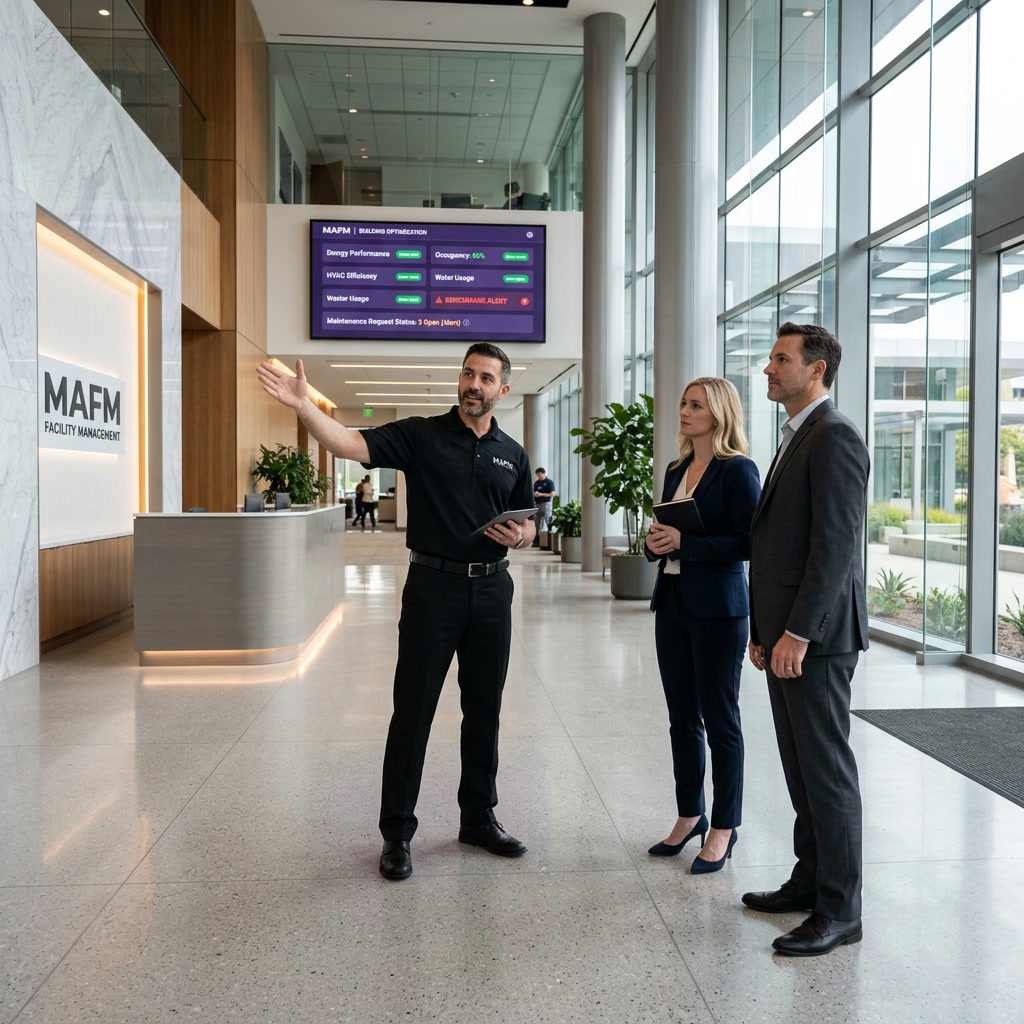
That means the owner needs answers ready, not a scramble to call three vendors and hope someone has records. A facilities management partner who maintains digital logs on PM schedules, equipment age, warranty status, and incident history isn't just running the building better; they're arming the leasing team with material that shortens the sales cycle. We've seen deals move two to three weeks faster simply because the owner could hand over a clean, current facilities condition report instead of promising to "get back to you" on generator specs.
Every broker deck in Silicon Valley right now features the same amenity photography: a renovated lobby, a tenant lounge with a cold brew tap, a fitness center, maybe a rooftop deck with outdoor seating and heat lamps. These are table stakes now, not differentiators, most competitive Class A product in the region has them.
What actually differentiates a building is whether those amenities work on the day a tenant's new hire tries to use them. We've walked buildings where the "state-of-the-art" fitness center had two of six cardio machines down for over a month because nobody owned the vendor relationship for equipment service contracts. We've seen conference room AV systems in "flagship" tenant lounges that failed during actual tours because nobody tested them regularly, which is about the worst possible moment for a broken projector.
This is where facilities management directly protects the marketing investment. A building that spent $2-4 million on lobby and amenity renovation needs an ongoing operational budget and a responsive vendor structure behind it, or that capital investment depreciates in the eyes of tenants within 18 months. We build preventive maintenance schedules specifically around high-visibility amenity spaces (fitness equipment, AV systems, water features, EV charging stations) with tighter response windows than back-of-house systems, because a broken water feature in the lobby during a tour costs more in perception than a broken HVAC unit in a mechanical room most tenants never see.
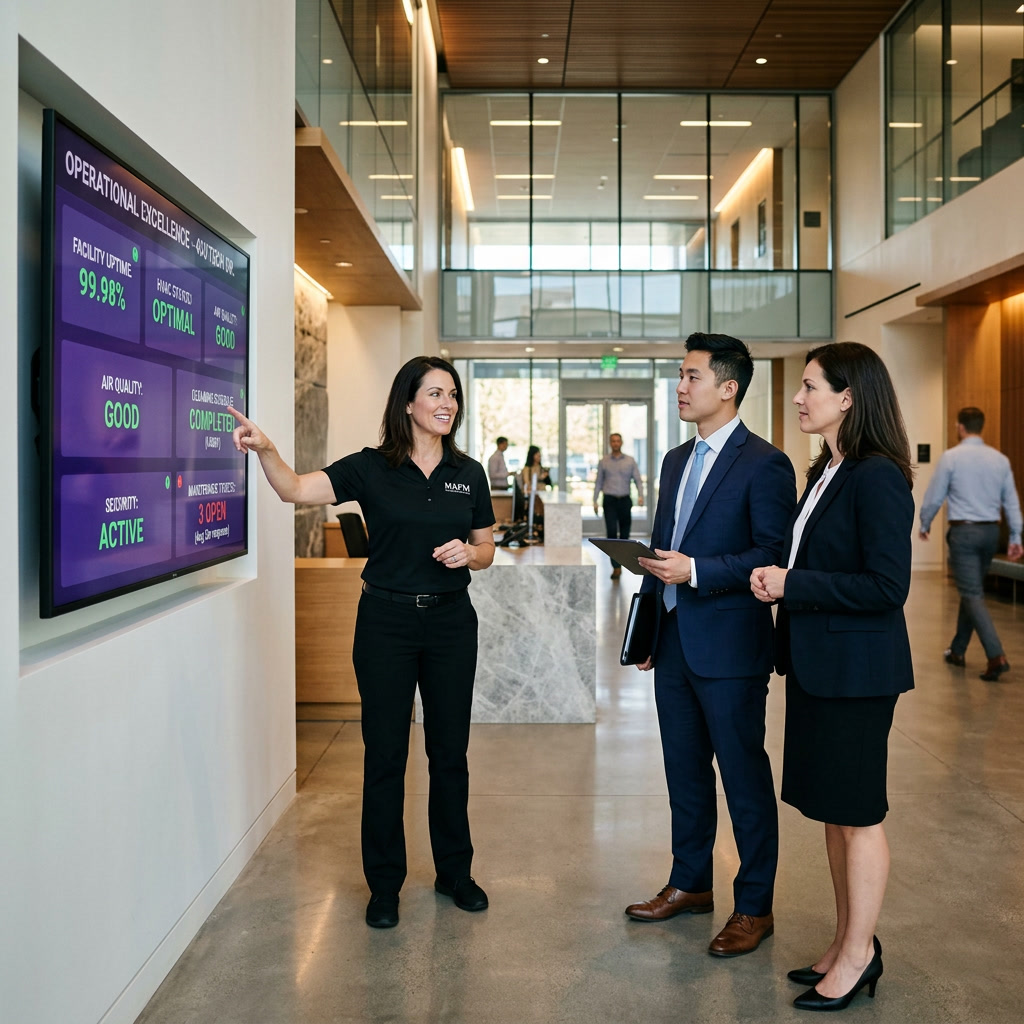
The practical move here is treating amenity uptime as its own KPI, tracked separately from general work order completion, and sharing that number with ownership monthly. If your fitness center or conference center has 96% uptime and your competitor down the street doesn't know their number at all, that's a conversation your leasing team can have with a straight face.
North San Jose and parts of Milpitas currently have enough vacant and soon-to-deliver lab space that tenants are comparing five or six buildings before signing anything. In that environment, two buildings with similar rent, similar TI allowances, and similar amenity packages will get differentiated on something else, and increasingly that something else is operational credibility.
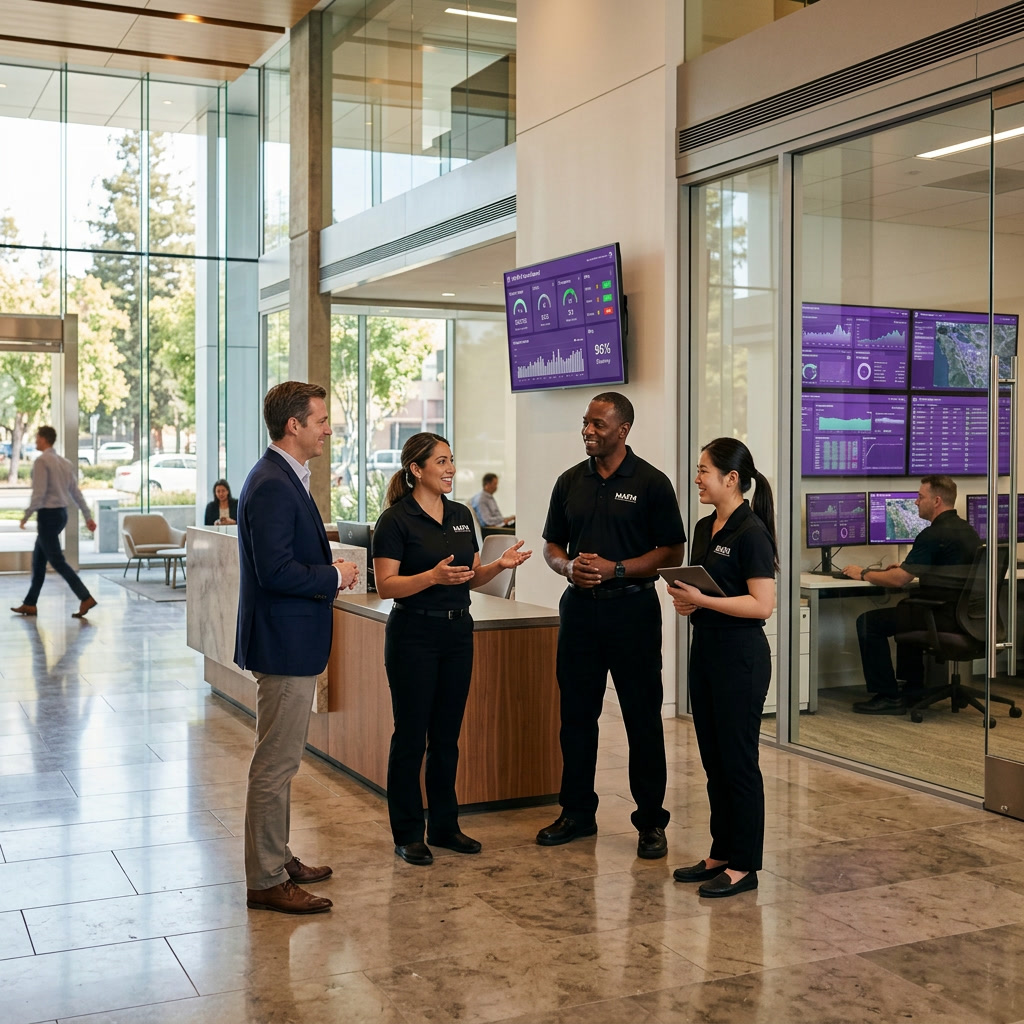
We've started recommending that owners build a one-page "facilities profile" as part of the marketing package, separate from the standard building specs sheet. This includes current staffing model (in-house engineer coverage, on-call structure, response time SLAs), critical system redundancy, a summary of the PM program, and recent capital improvements to infrastructure, not just cosmetic upgrades. It's a document most competing buildings don't have ready, and it signals a level of operational maturity that resonates with sophisticated tenant reps, particularly at companies that have been burned before by buildings that looked good and ran badly.
This matters even more for multi-tenant flex/lab buildings where shared infrastructure (central plant, emergency power, gas and specialty utility systems) is a genuine risk factor for tenant operations. A biotech tenant evaluating two comparable buildings will weight the one with documented, third-party-verified system redundancy and a named facilities engineer more heavily than the one where "the landlord handles it" is the extent of the answer.
We've also seen owners use FM transparency defensively, in renewal conversations. When a tenant threatens to leave for a shinier building nearby, a documented record of consistent response times, proactive system replacements before failure, and clear communication during any incidents becomes leverage against a competitor's unproven operational track record. Known-good beats promised-great, especially with tenants who have already lived through a bad building experience once.
If facilities operations are going to show up in the leasing conversation, the FM relationship needs to produce marketing-usable material, not just internal reports. Concretely, that means four things owners should be asking for right now.
First, a current equipment inventory with age, condition rating, and remaining useful life on major systems, chillers, boilers, generators, elevators, BAS controllers. This becomes both a due diligence answer and an input for capital planning conversations with prospective anchor tenants.
Second, documented response time performance, not aspirational SLAs, but actual historical data on average and 95th-percentile response times for critical and non-critical work orders over the past 12 months. Tenants increasingly ask for this, and "we aim for" answers land very differently than "here's our actual performance" answers.
Third, a sustainability and system efficiency summary, utility consumption trends, any retrocommissioning work, EV charging capacity and utilization, and progress against any Title 24 or local decarbonization ordinance requirements relevant to the building. Corporate tenants with ESG reporting obligations are asking landlords for this data now as a lease condition in some cases, not a nice-to-have.
Fourth, an incident and resolution log for the past 24 months, not to hide problems, but because owners who can say "here's what happened, here's how fast we fixed it, here's what we changed afterward" come across as far more credible than owners who claim nothing has ever gone wrong. Tenant reps who've been in the industry a while are skeptical of buildings with a suspiciously spotless record; they trust buildings that can show competent handling of real problems.
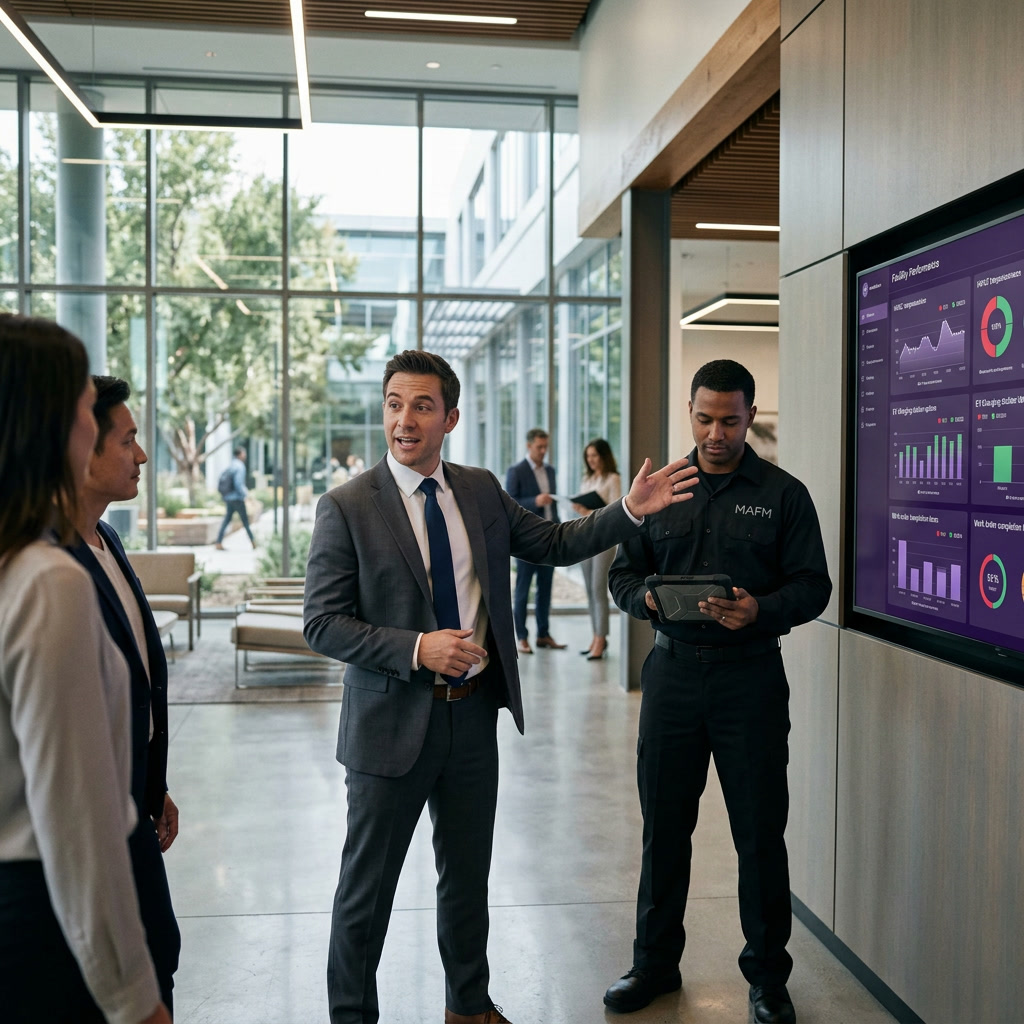
The buildings winning tenants in this market aren't necessarily the ones with the biggest amenity budgets, they're the ones where operations and marketing are finally talking to each other. Facility management data that used to live in a maintenance software dashboard is now showing up in leasing decks, LOI negotiations, and renewal conversations, and owners who haven't made that connection yet are leaving a competitive advantage on the table.
If your FM partner can't produce the four documents outlined above within a week of being asked, that's worth addressing before your next tour, not after you lose the deal to the building down the street that could.
MAFM builds facilities programs designed to hold up under tenant scrutiny, from documented response times to equipment condition reporting your leasing team can actually use. Contact us to get a facilities marketing-readiness assessment for your property.
Reference Monday's post introducing the Property Marketing & Competitive Positioning series and the broader competitive repositioning discussion; link forward to later posts in the week covering amenity investment ROI and tenant retention strategy.
BOMA International's Office Building Benchmarking Report on tenant amenity and operations expectations; CBRE's Silicon Valley/San Jose office and lab market research on submarket vacancy and tenant preferences.
July 20, 2026
July 22, 2026
July 23, 2026
MAFM offers comprehensive facility management solutions tailored to your business needs.
Get in Touch