Business Development
Why Your Building's Facilities Team Is Now Part of Your Leasing Pitch
July 21, 2026
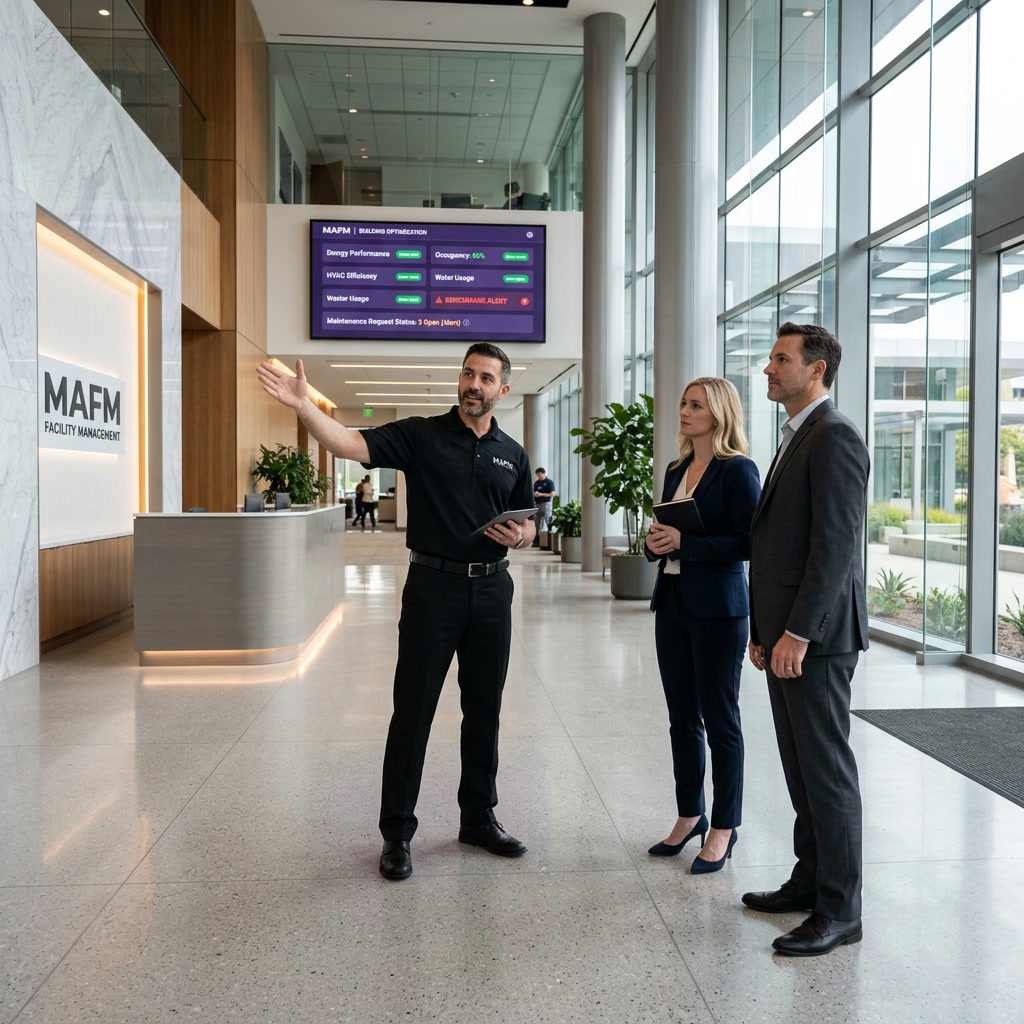
This week on the MAFM blog, we're digging into a shift that's changed how commercial properties compete in Silicon Valley: facility management has moved from a back-office cost center to a front-line marketing asset. Over the next five posts, we'll cover how operational quality shows up in leasing tours, how to benchmark your building against comparable Class A and Class B stock, how to package amenities and services for RFPs, and how smaller owner-operators can compete against REIT-backed portfolios with deeper marketing budgets.
We're starting here because the underlying premise needs establishing first: in a market where Sand Hill Road-adjacent office parks sit next to converted flex space in Sunnyvale and Santa Clara, the physical condition and daily operation of a building is doing marketing work whether an owner intends it to or not. A prospective tenant's broker walks the lobby, notices whether the HVAC hums or rattles, checks if the restrooms are stocked, and clocks how the security desk handles a walk-in. Every one of those moments is a data point feeding a leasing decision that used to be driven mostly by rent per square foot and proximity to Highway 101 or Caltrain.
For facility managers and property owners, this means the operational choices you make (vendor selection, preventive maintenance cadence, janitorial staffing levels) are no longer purely internal decisions. They're competitive positioning decisions. This post lays out why that's true and what it means for how you think about your FM program.
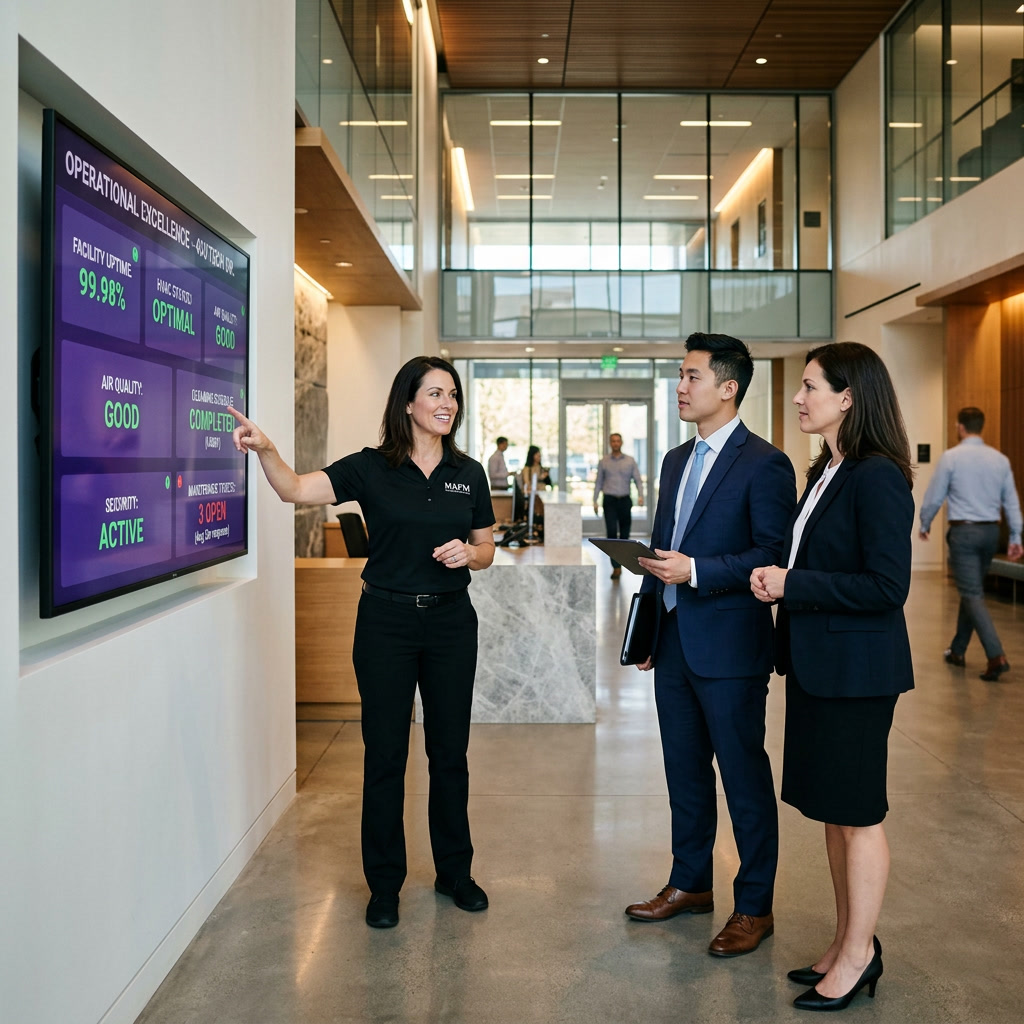
In residential-style thinking, marketing happens before the tour: photos, listings, virtual staging. In commercial leasing, especially for the 10,000-50,000 square foot tenants that dominate Silicon Valley's office and R&D leasing activity, the tour itself is the primary conversion moment. A broker representing a growing biotech or AI-adjacent startup typically shortlists three to five properties, then walks each one within a single week. What happens during that 45-minute walkthrough determines which building gets the term sheet.
Facility management quality is on display constantly during that walkthrough. Lobby air quality and temperature consistency register within the first 90 seconds. Elevator wait times get mentally logged by anyone who's worked in a building with a slow bank of cars. Landscaping condition, loading dock organization, and even how quickly a facilities tech responds if paged during the tour, these are all read as proxies for how the building will perform once a tenant signs a five-year lease.
We've seen this play out directly with clients. One Milpitas flex-space owner had comparable rent and comparable square footage to a competing property two miles away, but consistently lost tenants to the competitor until an audit revealed the issue: their HVAC zones were poorly balanced, so conference rooms ran 4-6 degrees warmer than open floor areas. Brokers noticed on every single tour. After MAFM rebalanced the system and tightened the PM schedule on the rooftop units, the property closed three leases in the following two quarters that had previously gone to the competitor.
It helps to be specific about what "facility quality" means in a leasing context, because it's not an abstract impression, it's a checklist, even if an informal one. Tenant reps in this market are trained to look for signs of deferred maintenance: water stains on ceiling tiles, inconsistent lighting temperature between fixtures, visible rust on exterior stairwells, or landscaping that looks maintained on a quarterly rather than weekly basis.
They're also evaluating responsiveness infrastructure that they can't see directly but can ask about: What's the average work order response time? Is there an on-site engineer or is everything dispatched from a regional office? What's the after-hours HVAC request process, since many Silicon Valley tenants run extended hours across time zones with Asia-Pacific or European teams? A property manager who can answer these questions with actual data (average response time of 22 minutes for emergency calls, for example, rather than "pretty quick") is signaling operational maturity that translates directly into tenant confidence.
Life science and R&D tenants add another layer entirely. Lab space tenants are evaluating backup power configuration, generator run-time under load, and whether critical environments have documented temperature and humidity logs. A facilities program that can produce six months of clean compliance data on a walk-through is worth more in that negotiation than almost any cosmetic upgrade to the lobby.
Owners sometimes treat facility management upgrades as discretionary spending that competes with capital improvement budgets for signage, lobby renovation, or parking lot resurfacing. That framing misses the actual math. In this market, average time-to-lease for vacant Class A office space has stretched well beyond historical norms, and every additional month of vacancy on a 30,000 square foot suite at Silicon Valley asking rents represents a real, calculable carrying cost, before you even get to the concessions a landlord ends up offering to close a hesitant tenant.
Facility management deficiencies are a common, quiet driver of that extended vacancy. A building that requires a tenant improvement allowance bump because the HVAC system needs supplemental cooling for a server room, or because the electrical panel can't support the tenant's planned equipment load without an upgrade, is losing negotiating leverage before the lease even gets to redline. Conversely, a building with documented electrical capacity, a recently serviced chiller plant, and a clean fire/life safety inspection history gives ownership room to hold firm on rent instead of buying the deal with extra allowance dollars.
There's also a retention dimension that's easy to underweight. Renewal decisions, particularly for tenants in the 3-7 year range who've built out expensive improvements, hinge heavily on whether the building has been a good operational partner. Tenants who've experienced slow response times, recurring HVAC complaints, or inconsistent janitorial service are primed to look elsewhere at renewal even if rent is competitive. Facility management quality, in other words, isn't just a marketing tool for new leasing, it's a retention tool that reduces the far more expensive cycle of re-marketing, re-tenanting, and re-improving a space.
The properties winning tours in this market have typically done one specific thing: they've turned their facility management program into a documented, presentable profile rather than leaving it as institutional knowledge in a property manager's head. That means having current data ready, recent HVAC service records, generator load test results, elevator maintenance logs, energy usage benchmarking against comparable properties, and janitorial staffing ratios per square foot.
This documentation serves two audiences simultaneously. For touring brokers and prospective tenants, it answers questions before they're asked and signals an owner who runs a tight operation. For internal underwriting and refinancing purposes, the same data supports valuation conversations with lenders and appraisers who increasingly factor operational quality into cap rate assumptions, particularly for properties competing for life science or advanced manufacturing tenants with stringent facility requirements.
Getting to this point usually requires an honest audit first. Most owners we work with underestimate the gap between what they assume is happening operationally and what's actually documented and verifiable. A facilities partner who can run that audit, flag the gaps, and then build the reporting cadence that keeps the profile current is doing marketing work as much as operational work, even though the invoice says "preventive maintenance" rather than "marketing services."
The properties that will out-lease their competitors in Silicon Valley over the next several years won't necessarily be the ones with the newest lobby renovation or the flashiest amenity deck. They'll be the ones where the facility management program is tight enough, documented enough, and responsive enough that it survives scrutiny from a broker who's seen forty buildings this quarter. That's a shift in how owners need to think about their FM spend, not as maintenance overhead, but as a direct input into leasing velocity and rent performance.
Later this week, we'll get more tactical: benchmarking your building against comparable properties, packaging your facilities data for RFPs and tours, and how smaller independent owners can compete against institutionally-backed portfolios without matching their marketing budgets dollar for dollar.
If you're not sure whether your building's operational profile would hold up under broker scrutiny, MAFM offers a facilities audit built specifically for leasing readiness, contact us to schedule a walkthrough before your next tour.
Reference later posts this week on benchmarking building performance against comparable properties, packaging facilities data for leasing RFPs, and competitive strategies for independent owners versus institutional portfolios.
BOMA International's commercial real estate benchmarking resources (boma.org); CBRE or JLL Silicon Valley market reports on office leasing velocity and concession trends.
July 21, 2026
July 22, 2026
July 23, 2026
MAFM offers comprehensive facility management solutions tailored to your business needs.
Get in Touch