Business Development
How Facility Management Quality Became a Leasing Amenity in Silicon Valley
July 20, 2026
Walk any tenant tour in Sunnyvale, Santa Clara, or Mountain View right now and you'll notice something: brokers spend less time talking about rent and more time talking about the building itself. HVAC responsiveness. EV charging uptime. How fast a work order gets closed. That shift isn't cosmetic. With vacancy rates still elevated across large blocks of Silicon Valley office and R&D space, tenants have leverage, and they're using it to compare buildings on operational quality, not just base rent and TI allowance.
This is the piece of "Property Marketing & Competitive Positioning" that gets overlooked because it doesn't live in the marketing deck. Earlier conversations in this space tend to focus on curb appeal, signage, and leasing collateral. But the actual differentiator, the one that shows up in tenant satisfaction surveys and renewal decisions, is whether the facility runs like it's supposed to. A building can have a beautiful lobby and a broken chiller, and prospective tenants will hear about the chiller before they ever tour the lobby.
For owners and asset managers, that means facilities management has quietly become a leasing tool. Not an operating cost line item to minimize, but a positioning asset to invest in deliberately. This post looks at how that plays out in practice across four areas where FM performance directly shapes competitive standing: response time as a sales pitch, amenity uptime, sustainability credentials tenants now ask about by name, and how to actually market operational quality without sounding like every other listing.
Ask any facility director who's been through a renewal cycle in the last two years: the question that comes up most from tenant reps isn't about rent escalations, it's "what's your average work order response time?" Tenants, especially tech companies with in-house facilities coordinators of their own, have gotten sophisticated about evaluating operational reliability before they sign.
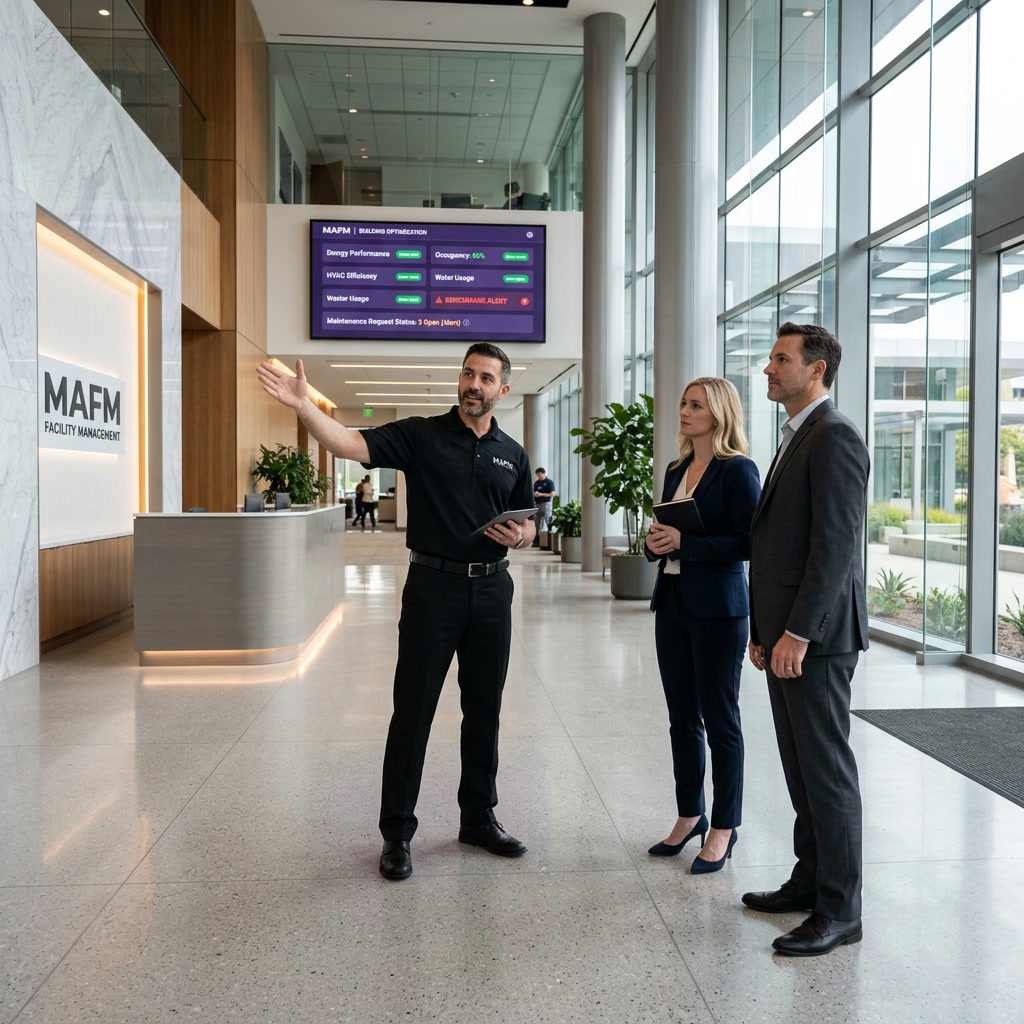
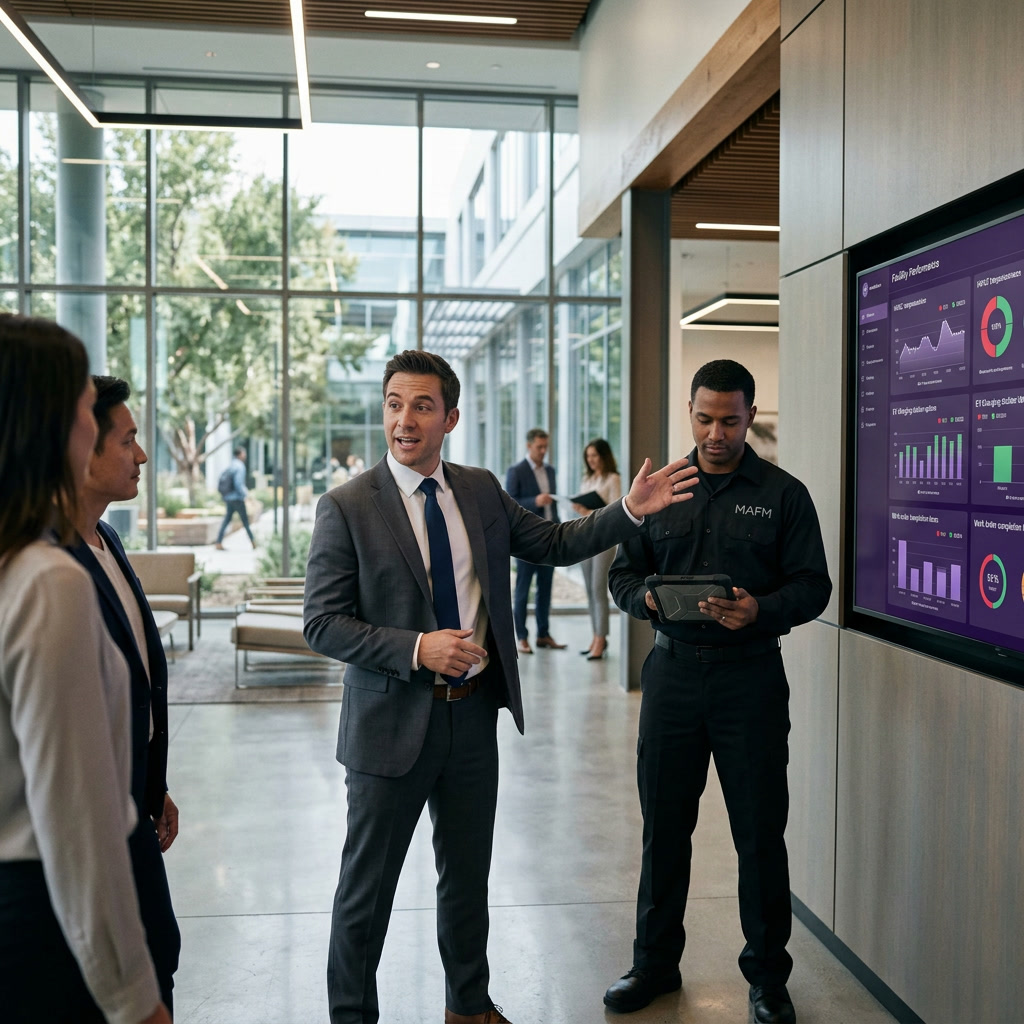
That's a measurable, comparable metric, and it's one most property teams can't answer with confidence. If your CMMS (computerized maintenance management system) isn't tracking mean time to acknowledge and mean time to resolve by category (HVAC, electrical, plumbing, life safety) you're not able to make the case that separates your building from the property three exits down the 101. A generic "we respond quickly" doesn't hold up against a competitor who can show a dashboard with 92% of non-emergency requests closed within four business hours over the trailing twelve months.
We've seen this data point directly influence a Sunnyvale R&D tenant's renewal on a 65,000 square foot lease last year, not because rent was lower, but because the ownership group could produce twelve months of response-time data broken out by system, alongside a preventive maintenance schedule for the rooftop units serving their specific suite. The tenant's facilities lead told the broker directly that the reporting made the difference. That's the standard now: quantified reliability, not reassurance.
Silicon Valley office marketing has spent a decade adding amenities, fitness centers, bike rooms, EV chargers, tenant lounges, conferencing suites. The next competitive layer isn't adding more amenities, it's proving the ones you have actually work when tenants need them. A fitness center that's dark half the time because the access control system glitches, or EV chargers that show "offline" on the app three days a week, does more damage to a property's reputation than not having the amenity at all.
EV charging specifically has become a flashpoint. With more Silicon Valley employers mandating or incentivizing EV commuting, charger uptime is now a line item tenants track. If your facility has eight Level 2 chargers and typically two are non-functional at any given time because of a maintenance contract gap, that's a 25% effective capacity loss that shows up in employee complaints to the tenant, which then becomes the tenant's complaint to you. Properties that maintain uptime logs and can guarantee, contractually, a repair window (say, 48 hours for charger faults) have a marketing claim competitors without that operational discipline simply cannot make.
The same logic applies to conferencing tech in shared tenant lounges, badge access systems, and building app functionality. Tenants aren't grading you on the amenity list in the leasing brochure. They're grading you on whether what's listed actually functions on a random Tuesday in March. That gap between promised and delivered is where renewals are won or lost, and it's entirely an FM execution question, not a marketing one, even though it ends up being the marketing.
Silicon Valley tenants, particularly ones with public ESG commitments or investors who track Scope 3 emissions, increasingly ask for specific documentation during site selection and renewal: Energy Star scores, LEED or WELL certification status, water usage data, waste diversion rates, and increasingly, embodied carbon disclosures on any recent capital improvements. This isn't a checkbox anymore, tenant real estate teams are building these metrics into their own sustainability reporting, which means your building's numbers become their numbers.
Properties that can hand over a current Energy Star Portfolio Manager score, a summary of recent retro-commissioning results, and a clear breakdown of recycling and organics diversion rates have a documentation advantage that turns into a leasing advantage. We've supported ownership groups preparing exactly this kind of package for RFP responses on build-to-suit and renewal negotiations, and the pattern is consistent: buildings with real-time or near-real-time energy dashboards close these conversations faster because they're not scrambling to produce a year-old utility bill summary when the tenant's sustainability team asks for verified data.
This also means the FM team's metering and monitoring infrastructure (submeters by tenant suite, BMS trending data, water submetering for irrigation versus domestic use) isn't just an operations investment. It's the raw material for every sustainability claim the leasing team wants to make in a pitch. A leasing brochure that says "energy efficient building systems" without a verifiable Energy Star score attached reads as unsubstantiated to any tenant sustainability officer who's seen a real data package before.
The disconnect at most properties isn't that the facility performs poorly, plenty perform well. It's that the operational data proving strong performance never makes it into the hands of the leasing and marketing team. Facility directors track uptime, response times, and PM completion rates in the CMMS. Leasing brokers build pitch decks with photos and floor plans. The two datasets rarely meet.
Closing that gap starts with a quarterly operational summary that facilities produces specifically for leasing use: work order response benchmarks, amenity uptime percentages, sustainability metrics, and any recent capital improvements (chiller replacements, roof recoating, elevator modernization) framed in terms of remaining useful life and reduced disruption risk for tenants. This isn't a maintenance log, it's a one-to-two page document written for a tenant audience, translating FM performance into leasing language.
The properties doing this well treat it as a standing process, not a one-off request when a big lease is up for renewal. They build the dashboard once, update it quarterly, and hand it to leasing on a schedule. That way, when a broker is mid-tour and a prospective tenant asks a pointed question about HVAC reliability or EV charger uptime, the answer is a printed page with real numbers, not a promise to "check and get back to you." In a market where tenants are comparing three or four buildings before signing, that page can be the deciding factor.
The competitive positioning conversation in Silicon Valley commercial real estate has moved past finish quality and amenity lists, tenants are evaluating operational reliability with the same rigor they apply to rent comparisons, and the buildings that can prove performance with data are winning renewals and new leases that otherwise would have gone to a cheaper but less reliable building down the street. Facilities management isn't supporting the leasing pitch anymore. It is the leasing pitch.
For owners and property managers, the action item is straightforward even if the execution takes real work: get your FM data organized, verified, and translated into a format your leasing team can actually use in front of a tenant.
MAFM helps Silicon Valley property owners build the operational reporting and reliability programs that turn facility performance into a leasing advantage, contact us to set up a quarterly FM performance package your leasing team can put in front of tenants.
Reference earlier posts this week on curb appeal and building marketing collateral (Post #1) and tenant experience programs as a leasing differentiator (Post #2); tease Friday's synthesis post pulling together the full competitive positioning roadmap for the week.
EPA Energy Star Portfolio Manager (energystar.gov/buildings) for benchmarking methodology; BOMA International's Office Building Experience reports for tenant satisfaction and amenity benchmarking data.
July 20, 2026
July 21, 2026
July 23, 2026
MAFM offers comprehensive facility management solutions tailored to your business needs.
Get in Touch