Maintenance
The 12-Point Fall Maintenance Checklist Every Silicon Valley Building Needs (Series Kickoff)
August 17, 2026
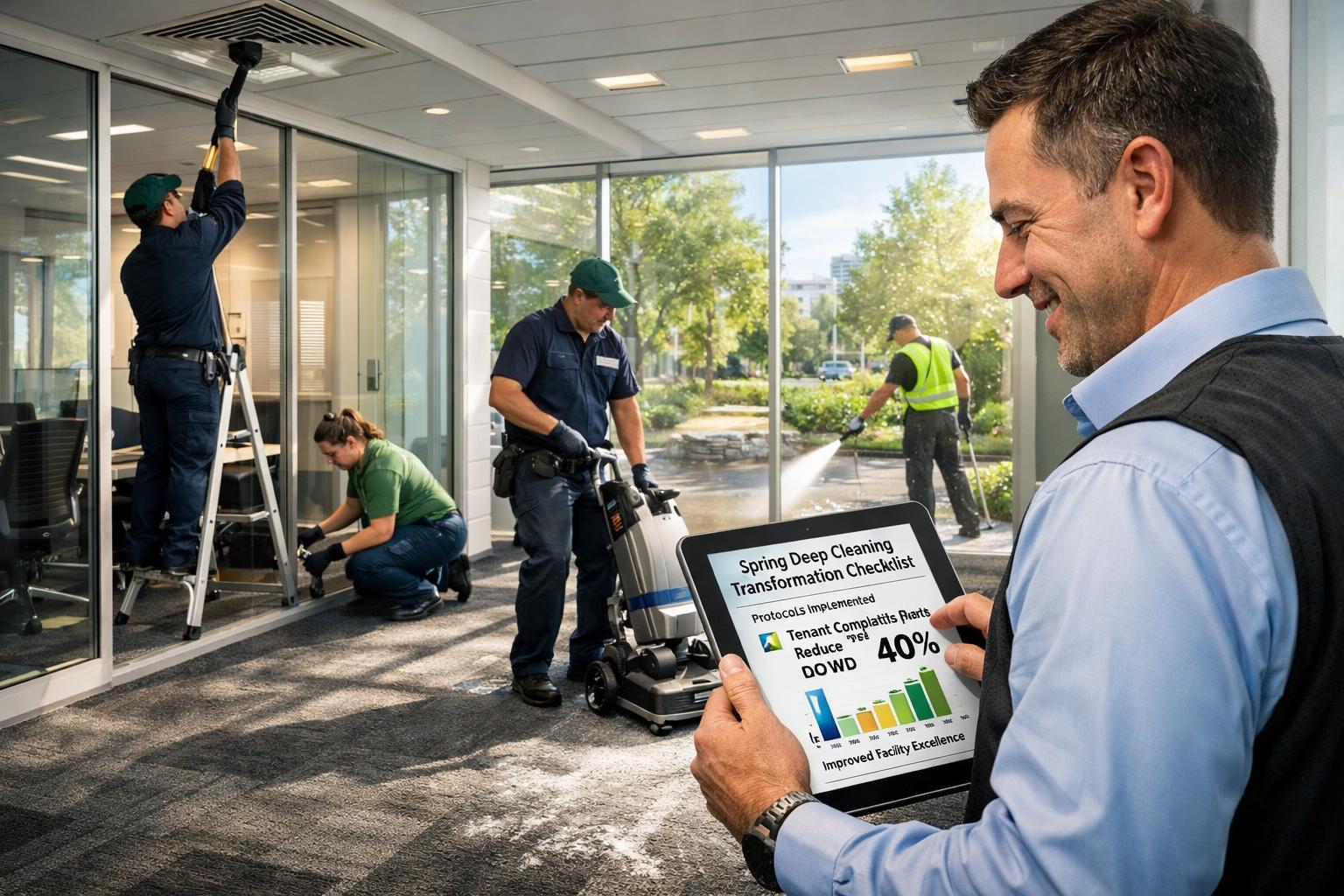
March in the Bay Area signals more than just warmer weather. For facility managers across Silicon Valley, it marks the single best window to execute a comprehensive deep cleaning that resets your building for the remaining three quarters of 2026.
The difference between facilities that maintain premium tenant satisfaction scores and those constantly fighting complaints often comes down to one thing: a structured spring deep cleaning program executed with precision. Properties that invest in systematic spring cleaning see measurable results, fewer maintenance emergencies, longer asset life, and tenants who actually notice the difference.
Here is the complete framework that top-performing Silicon Valley facilities use to transform their buildings every spring.
Silicon Valley commercial properties face unique challenges during the winter-to-spring transition. The Bay Area's mild but wet winter months create conditions that quietly degrade building systems if left unaddressed.
Moisture accumulation in HVAC ductwork, pollen infiltration through aging weather seals, and months of tracked-in debris from rainy walkways all compound into a building that looks and feels tired by March. Tech tenants especially notice air quality shifts, carpet wear patterns, and restroom conditions because their employees spend 8-10 hours daily in these spaces.
A comprehensive spring deep clean addresses what routine nightly cleaning cannot. It reaches the hidden surfaces, neglected systems, and accumulated grime that daily janitorial crews are not scoped to handle.
Properties that skip this annual reset typically spend 25-35% more on reactive maintenance calls between April and December compared to buildings with documented spring cleaning programs.
Rather than tackling spring cleaning as a single overwhelming project, the most effective programs break the work into four distinct zones. Each zone gets dedicated attention, specialized equipment, and measurable completion criteria.
This is the highest-impact starting point. After months of heating cycles and closed-window operation, HVAC systems carry accumulated dust, biological growth, and filter degradation that directly affects occupant health and energy costs.
Start with a complete filter replacement across all air handling units. Inspect coils for biological growth and schedule professional coil cleaning where needed. Test and calibrate thermostats and zone controls that may have drifted during winter operation. Clean all supply and return vent covers, these visible components signal cleanliness to every person walking through your building.
For Silicon Valley data centers and server rooms, this zone takes on even greater importance. Particulate contamination in controlled environments accelerates equipment degradation and increases cooling costs.
Winter foot traffic creates wear patterns, ground-in soil, and finish degradation that regular mopping cannot reverse. Spring is the ideal time for restorative floor care.
Strip and refinish VCT and vinyl flooring in high-traffic corridors and lobbies. Schedule professional carpet extraction for all carpeted areas, with special attention to elevator lobbies, reception areas, and conference rooms. Power wash exterior concrete, parking structures, and loading docks where months of vehicle traffic and weather have left visible deterioration.
For properties with polished concrete or natural stone, bring in specialists for honing and sealing. These premium finishes degrade invisibly until they suddenly look dull, and restoration costs triple once deterioration passes a certain threshold.
These high-moisture, high-use spaces require deep cleaning that goes well beyond daily service. Spring deep cleaning in restrooms means addressing grout lines, exhaust fans, fixture hardware, partition surfaces, and plumbing access panels.
Descale all fixtures and flush valves. Clean and reseal grout lines that have darkened over winter. Inspect and clean exhaust fan assemblies for lint and dust accumulation that reduces ventilation efficiency. Replace any cracked or yellowed light covers that make restrooms feel dated.
Break rooms and kitchen areas need similar attention: deep clean behind and under appliances, descale coffee equipment, sanitize refrigerator interiors, and clean overhead lighting.
The building's exterior and common spaces create first impressions that influence tenant satisfaction and prospective tenant tours.
Clean all interior and exterior glass, including entrance vestibules and stairwell windows that often get missed in regular cleaning scopes. Pressure wash building entrances, sidewalks, and patio areas. Detail elevator cabs including ceiling panels, tracks, and threshold plates. Deep clean lobby furniture, planters, and decorative elements.
Inspect and clean parking garage stairwells, which tend to accumulate debris and develop musty odors over wet winter months.
The biggest challenge in Silicon Valley facilities is executing deep cleaning in buildings that operate nearly around the clock. Tech companies, biotech firms, and professional services tenants often have employees working irregular hours, which limits traditional weekend-only deep cleaning windows.
The most effective approach is a rolling zone schedule executed over two to three weeks. Assign each zone a dedicated window, communicate the schedule to all tenants at least two weeks in advance, and provide daily progress updates.
Night shifts handle the most disruptive work, floor stripping, carpet extraction, and power washing. Weekend windows cover areas that require extended drying times or strong chemical off-gassing periods. Daytime touch-ups address any areas that need follow-up after overnight work.
Critical scheduling rule: never deep clean multiple floors simultaneously. Stagger the work so tenants on unaffected floors experience zero disruption while one floor undergoes transformation.
A spring deep cleaning program without measurable outcomes is just extra spending. Establish clear metrics before the work begins and track them through Q2.
Pre-cleaning baseline: Photograph every zone before work begins. Document current tenant complaint frequency, maintenance request volume, and any existing damage or wear.
Post-cleaning verification: Walk every completed zone with a standardized 50-point inspection checklist. Photograph the same angles for comparison documentation. Log any areas requiring follow-up or specialized treatment.
Ongoing tracking: Monitor tenant satisfaction scores, complaint frequency, and maintenance request volume for 90 days post-cleaning. Properties that execute thorough spring deep cleaning programs typically see tenant complaints drop 35-45% during the following quarter.
A comprehensive spring deep cleaning for a typical 50,000 square foot Silicon Valley office building runs between $8,000 and $15,000 depending on current conditions and scope. That investment typically prevents $25,000-$40,000 in reactive maintenance, premature asset replacement, and tenant-driven repairs over the following nine months.
The math consistently favors proactive spring cleaning. Carpet replacement costs 8-12 times more than annual deep extraction. Floor refinishing that could have been prevented by timely strip-and-recoat runs four to six times higher. HVAC coil replacement from neglected biological growth costs five to eight times what professional coil cleaning would have.
Spring deep cleaning is not an expense, it is the single highest-ROI maintenance investment you make each year. The facilities that command premium rents, retain tenants through renewal cycles, and avoid costly emergency repairs are the ones that treat March as transformation month.
Start your four-zone assessment this week. Document current conditions, build your rolling schedule, and execute with the same precision you bring to every other aspect of property management. Your tenants will notice. Your budget will thank you. Your building will perform better through the end of 2026.
MAFM delivers comprehensive facility management services across Silicon Valley, including spring deep cleaning coordination and facility transformation programs.
Schedule your consultation: Contact MAFM.PRO
August 17, 2026
September 3, 2026
October 5, 2026
MAFM offers comprehensive facility management solutions tailored to your business needs.
Get in Touch