
Janitorial & Cleaning
Winter Lobby Floor Protection for Silicon Valley Buildings
January 19, 2026
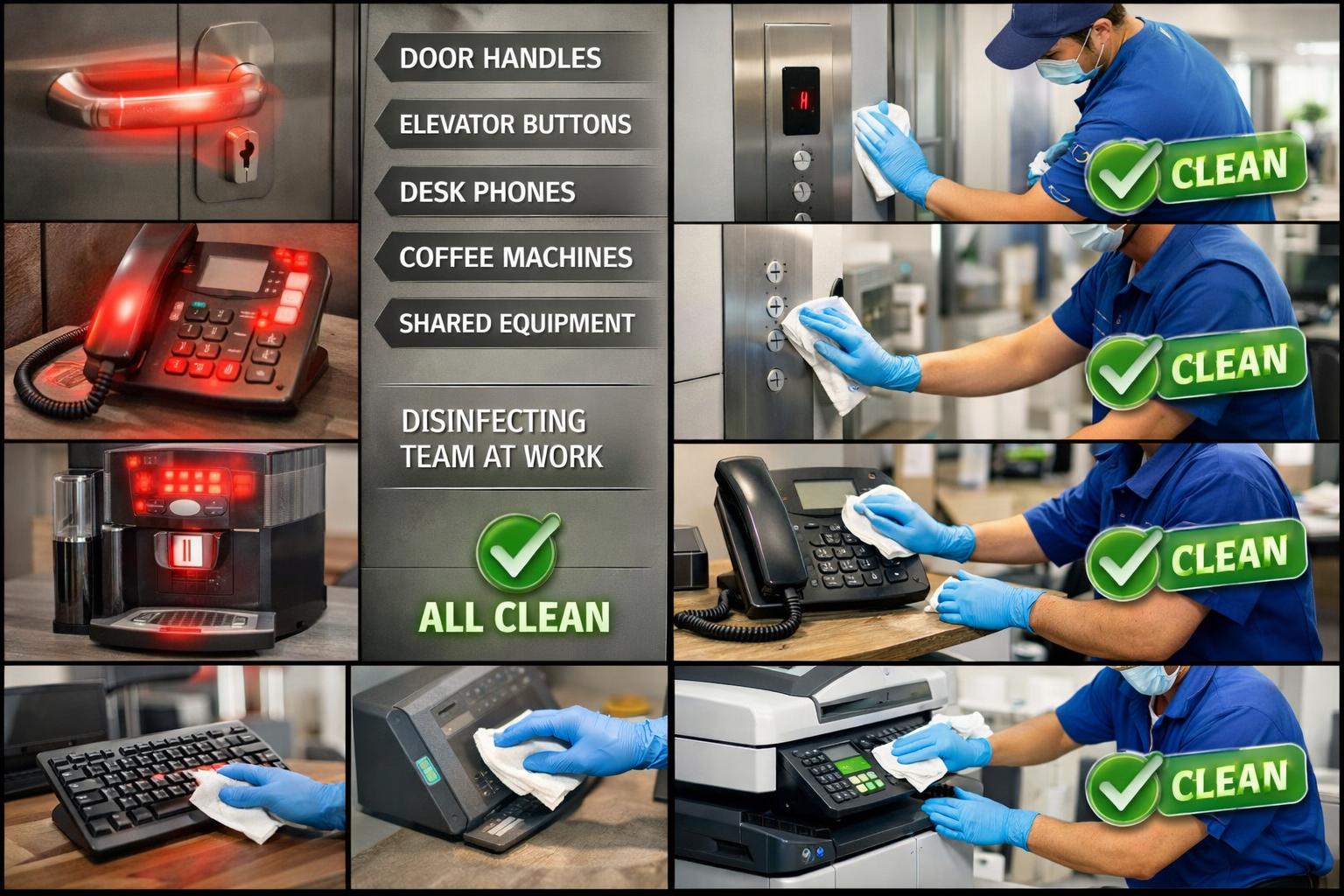
Flu season cleaning works best as one layer of a plan, not a promise to cut sick days by a fixed amount. In an office building, the layers that matter are frequent cleaning of the surfaces people touch, restrooms and entrances stocked so hand washing is easy, disinfectant used the way its label says, and air that is moving and filtered. A cleaning crew controls the first three and helps the facilities team with the fourth.
It also pays to be clear about what cleaning can and cannot do. The CDC says influenza viruses spread mainly by droplets made when people with flu cough, sneeze or talk, and less often when someone touches a contaminated surface and then touches their mouth, nose or eyes. Cleaning addresses the second route. Staying home, vaccination and air quality address the first.
It helps, but the evidence is more modest than most cleaning marketing suggests. A review of nonpharmaceutical measures in non-healthcare settings, published in the CDC's journal Emerging Infectious Diseases, said that although the authors found no evidence that surface and object cleaning could reduce influenza transmission, the measure "does have an established impact on prevention of other infectious diseases."
Office-specific trials point the same way. A randomized cluster trial of office employees that combined a training video, hand sanitizer and posters found a 31% relative reduction in self-reported respiratory, flu-like and stomach infections, but only a 21% reduction in lost work days that was not statistically significant (Stedman-Smith and colleagues, Journal of Occupational and Environmental Medicine, 2015). It was a small pilot with self-reported outcomes.
The practical reading: clean and disinfect because it is sound hygiene and tenants expect it, put real effort into hand washing and ventilation, and be skeptical of anyone who quotes you an exact percentage of sick days saved.
Ramp up before the peak, not during it. The CDC says flu season usually occurs in the fall and winter, and most of the time flu activity peaks between December and February. Across the 1982-1983 through 2023-2024 seasons the single most common peak month was February.
A sensible rhythm for a commercial building:
The ones many hands touch in a day. The CDC advises routinely cleaning frequently touched objects and surfaces, including doorknobs, keyboards and phones to help remove germs. In an office building that translates to a short, specific list:
During the winter months, a day porter or a midday pass is the most practical way to keep these surfaces cleaned between overnight visits. Keep the list on a written checklist so the frequency is visible and nobody guesses.
For how the broader cleaning versus disinfecting distinction plays out in a building, see our post on commercial disinfection standards.
By the label, every time. A disinfectant only works if it is the right product, applied to a clean surface and left wet for the contact time printed in its directions. The EPA's one-page guide to safe and effective disinfectant use gives the sequence:
The common failure is spray and wipe in one motion. That cleans the surface but does not give the product time to work. If a product's contact time is several minutes, a crew cannot treat a whole floor of doors in a few seconds each, and the plan has to reflect that.
EPA also publishes lists of registered products by pathogen. Its List M page for avian influenza shows the method to follow for any pathogen claim: find the registration number on the label, search it exactly as printed, and confirm the label has directions for the pathogen you care about.
Chemical safety is part of the job. OSHA's hazard communication standard requires workplaces with hazardous chemicals to have labels and safety data sheets for exposed workers and to train them to handle the chemicals appropriately. Any contractor using disinfectants in your building should be able to show you both.
Supplies that are always there, and fixtures that work. The CDC's workplace advice includes making sure the workplace has an adequate supply of tissues, soap and paper towels, and it recommends washing hands often with soap and water. An empty soap dispenser quietly defeats the whole program.
Some specifics worth getting right:
Quite a lot, and it is a facilities decision, not a cleaning one. The EPA says increasing the amount of outdoor air coming indoors is one of the most important ways to reduce the spread of viruses. For recirculated air it recommends upgrading HVAC filters to MERV 13, and for areas that are hard to ventilate or crowded, placing portable air cleaners. Where possible it suggests aiming for 5 air changes per hour using outdoor air alone, or an equivalent 5 effective air changes with filtration and other air treatment.
Whether your system can take a MERV 13 filter, or can bring in more outdoor air without overloading heating and cooling, is a question for your HVAC contractor and your building engineer. Higher-rated filters add resistance to airflow, so confirm the equipment can handle them before swapping. Our post on choosing the right MERV filter grade walks through that decision.
The CDC makes the same point from the individual side: you can improve air quality by bringing in fresh outside air, purifying indoor air, or gathering outdoors.
Send them home and clean the places they used. The CDC says that if you begin to feel sick at work, go home as soon as possible, and that people can return to normal activities once symptoms are improving overall and they have been fever-free for at least 24 hours without fever-reducing medication.
For the building, a simple response routine works better than an improvised one:
Policy matters as much as procedure. People come to work sick when staying home costs them. In California, employers must generally provide 5 days or 40 hours of paid sick leave under the rules in effect since January 1, 2024, and a local ordinance can require more. A manager who tells people to use it is doing more for flu control than any extra wipe-down.
If you can offer it, an on-site vaccination clinic also removes a barrier. The CDC says everyone 6 months and older should get a flu vaccine every season.
Does disinfecting surfaces stop the flu from spreading in an office?
It lowers one route of spread, but the CDC says flu spreads mainly through droplets from coughing, sneezing and talking, with surfaces a less common route. Cleaning works best alongside hand hygiene, ventilation, vaccination and sick people staying home.
How often should high-touch surfaces be cleaned during flu season?
There is no regulatory number for office buildings, so set the frequency by traffic and risk. Entrance doors, restroom fixtures, elevator buttons and break room surfaces warrant a midday pass in winter on top of the overnight clean, and the frequency should go on a written checklist.
Is hand sanitizer enough, or do people need to wash their hands?
Wash with soap and water first, as the CDC advises, scrubbing for at least 20 seconds. Sanitizer with at least 60% alcohol is the backup when soap and water are not readily available, and the CDC says it is meant for hands that are not visibly dirty or greasy.
Do we need a day porter during flu season?
Not always. A day porter is the most direct way to keep high-touch surfaces and restrooms stocked between overnight cleanings, so it makes sense for busy buildings with many visitors. A smaller office may do fine with a scheduled midday pass.
MAFM is a facilities management company, and our janitorial crews can build a winter high-touch schedule, a restroom supply routine and a clear disinfectant procedure into your cleaning scope, and coordinate with your HVAC vendor on filtration. Talk to us about janitorial services or contact us to walk your building with a supervisor.
MAFM offers comprehensive facility management solutions tailored to your business needs.
Get in Touch
