Health & Safety
Slip and Fall Prevention for Bay Area Commercial Buildings
January 24, 2026
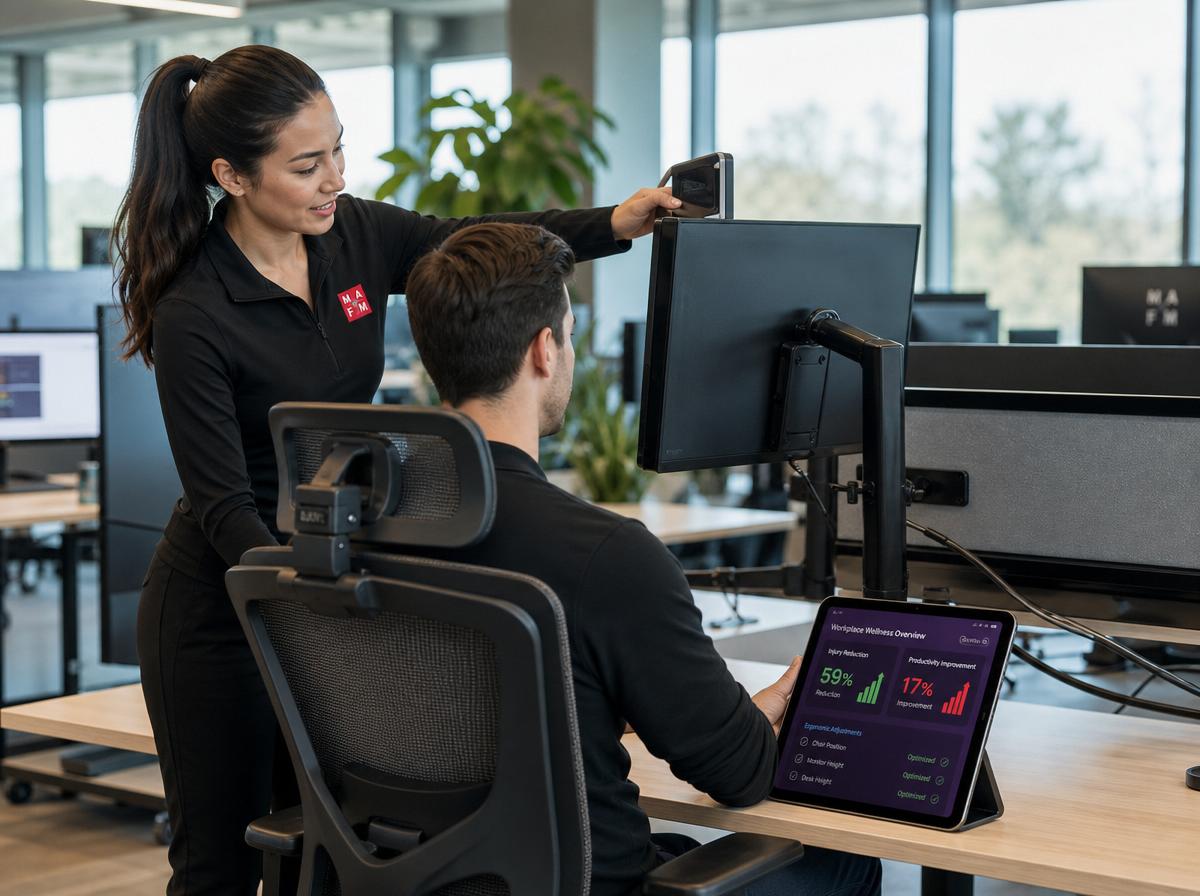
Ergonomics in facility management means shaping the parts of the building you control, such as lighting, floors, temperature, entrances and common areas, so they do not add strain to people's bodies. It does not mean buying every employee a new chair. Most desk ergonomics belongs to the tenant or the employer, but the space around the desk belongs to the facility team.
That split matters because it tells you where to start. NIOSH defines ergonomics as the design of work tasks and job demands to fit the capabilities of the working population, and names lighting among the elements of the work environment to design around. This guide covers what a facility manager can do, what to leave to the employer, and how to keep the effort simple and documented.
Your scope is the environment, not the individual workstation. NIOSH lists the physical factors behind musculoskeletal disorders as work tasks such as pushing, pulling or lifting, and its workplace risk list includes awkward postures, cold temperatures and the intensity, frequency and duration of activity.
Translated to an office building, the conditions a facility team controls include:
The tenant or employer controls chairs, desks, monitors and keyboards. A good facility team makes it easy for them to do that well, and does not take the job over.
California has a specific ergonomics rule, but it is narrower than most people assume. Cal/OSHA Title 8 section 5110 applies where a repetitive motion injury has occurred to more than one employee doing identical work activity, and it names word processing as an example of such a task. The injuries must be musculoskeletal conditions that a licensed physician objectively identified and diagnosed, and they must have been reported to the employer in the last 12 months.
When it applies, the employer must run a program with three parts: a worksite evaluation, control of the exposures that caused the injuries, and training. The control step says the employer shall consider engineering controls, such as workstation redesign and adjustable fixtures, and administrative controls, such as job rotation, work pacing or work breaks.
Separately, every California employer needs an Injury and Illness Prevention Program under section 3203. It must include procedures for identifying and evaluating workplace hazards, including scheduled periodic inspections, and for correcting unsafe or unhealthy conditions in a timely manner. A walkthrough that looks for ergonomic problems fits inside that program.
Whether section 5110 applies to a given tenant is a legal question for the employer. Treat this post as general information, not legal advice.
Walk the space the way an occupant uses it, and ask people. OSHA's ergonomics overview describes the process as identifying problems before they result in musculoskeletal disorders, implementing solutions to control hazards, and making sure workers understand why reporting early symptoms matters.
A facility walkthrough for ergonomics can be short. A crew lead or facility coordinator checks:
Keep the notes on one sheet. A repeated complaint from the same corner of the floor is more useful than a general survey, and it gives you something concrete to fix or hand to the tenant.
Small, steady conditions cause most of the problems, and each one has a plain fix.
None of this needs a consultant. It needs a regular look, a log of what was found and a short list of who fixes what.
Anything tied to one person's body or one job's tasks. Chair fit, desk height, monitor placement and keyboard setup are the employer's call, and in California a repeated pattern of injuries from one task may trigger the section 5110 program described above.
What you can offer is support:
If a tenant brings in a specialist to assess workstations, give them access and keep the building details they ask for, such as lighting layouts, close at hand.
Fold it into routines you already run. Add the checklist above to the regular building walkthrough, log findings in the same system as other work orders, and review the log at your regular operations meeting. The IIPP inspection requirement in section 3203 gives you a ready-made reason to do this on a schedule.
For many offices, a facilities management partner is the practical way to make that routine reliable. MAFM's facility management service plans the walkthroughs, tracks the work orders and coordinates the vendors who fix lighting, flooring and building systems, so findings turn into completed work instead of an open list.
Is the facility manager responsible for desk ergonomics?
Usually not. Chairs, desks and monitors are the employer's responsibility, while the facility manager controls the building conditions around them, such as lighting, temperature and floors. The two should coordinate, especially when a layout changes.
Does California require an ergonomics program?
Only in specific cases. Section 5110 applies when repetitive motion injuries have occurred to more than one employee doing identical work and meet the medical and reporting conditions in the regulation. Every employer also needs an IIPP under section 3203, and the employer should confirm with counsel or Cal/OSHA which rules apply.
What is the cheapest ergonomic improvement a building can make?
Fix what you already know is wrong: burnt-out or glaring lights, drafty vents, curled mats and heavy supplies stored out of reach. A recorded walkthrough finds these without any new spending.
How often should the building be walked for ergonomic issues?
Fold it into your normal periodic inspection and use the same schedule. Section 3203 calls for scheduled periodic inspections, so choose a rhythm you will actually keep and write it down.
If you want ergonomic checks built into your building's regular routine, talk to MAFM about facility management. We will help you set up the walkthrough, the log and the vendor follow-up.
MAFM offers comprehensive facility management solutions tailored to your business needs.
Get in Touch