Compliance
This Week: Cracking Open California's 2026 Compliance Landscape for Silicon Valley Facilities
July 27, 2026

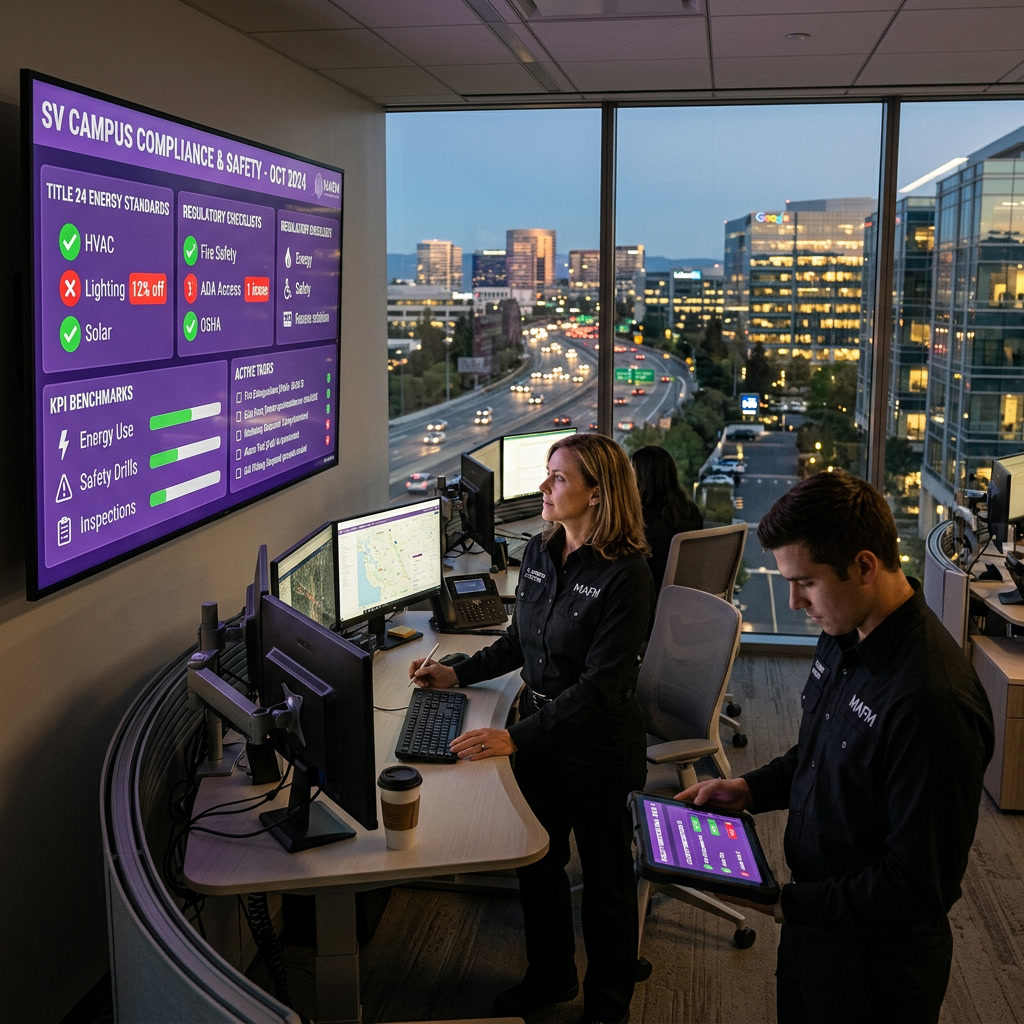
California continues to lead the nation in environmental regulation, and 2026 brings a new wave of requirements that directly impact how commercial buildings operate across Silicon Valley. From updated building performance standards to tighter chemical use restrictions, these regulations demand attention from every facility manager and property owner in the state.
The good news is that compliance often drives operational improvements that pay for themselves. The challenge is understanding which regulations apply to your specific property type, what the deadlines look like, and where to prioritize your compliance efforts.
Here is a practical breakdown of the regulatory changes that matter most to Silicon Valley facility operations this year.
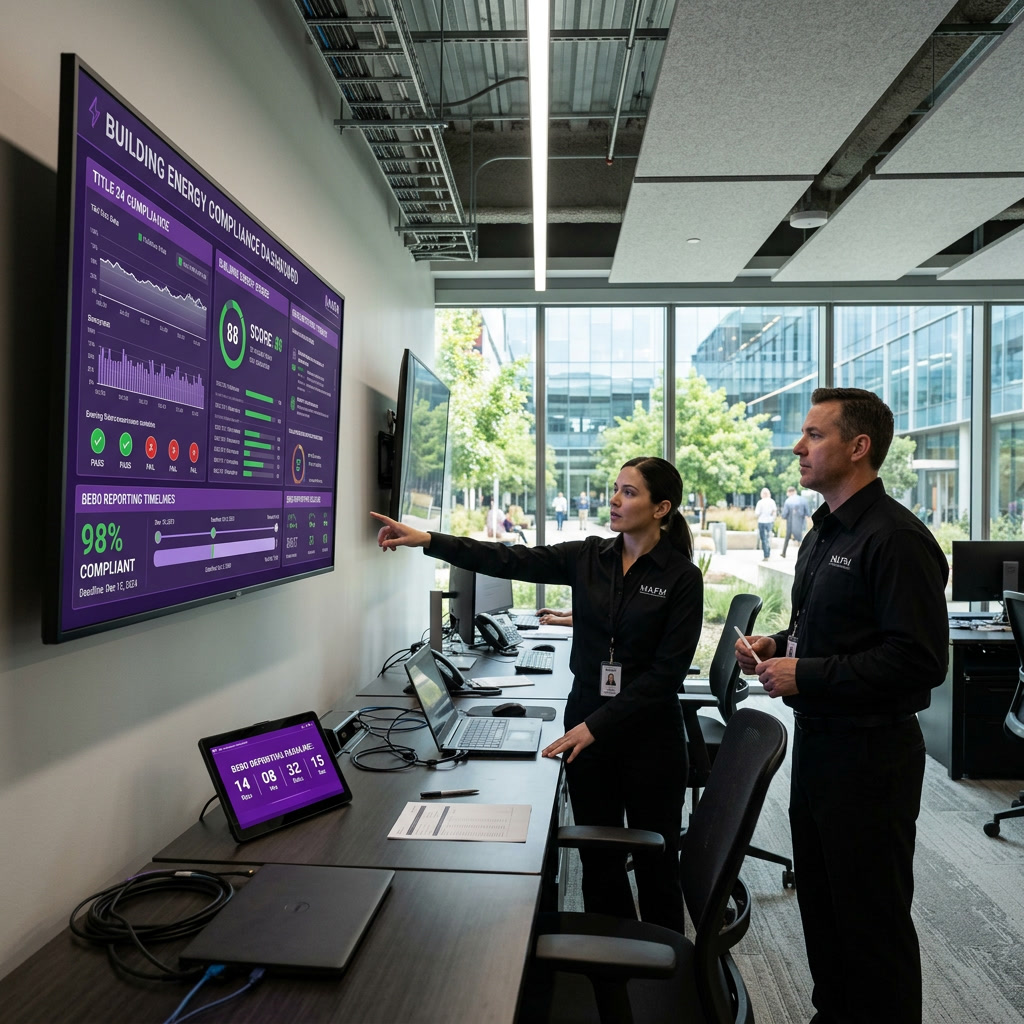
California has progressively tightened building energy performance requirements, and 2026 marks an important compliance checkpoint for many commercial properties. The state's benchmarking and disclosure requirements now cover a broader range of building sizes, pulling more mid-size Silicon Valley office buildings and mixed-use properties into mandatory reporting.
If your property falls within the reporting threshold, you are required to benchmark energy and water usage through the ENERGY STAR Portfolio Manager platform and disclose performance data annually. Properties that have been benchmarking for several years are now facing performance improvement requirements, not just reporting obligations.
What this means practically: facility managers need to demonstrate year-over-year improvement in energy use intensity or provide documentation explaining why improvement was not achieved. Buildings that consistently underperform without documented remediation plans face escalating penalties.
For Silicon Valley properties, the most immediate action items include verifying your building's reporting status, ensuring your Portfolio Manager data is current and accurate, and reviewing your energy use intensity trend over the past three years to identify whether you are on a compliant trajectory.
California's approach to chemical safety in commercial buildings has expanded significantly. Regulations now restrict the use of certain cleaning chemicals and require facility managers to maintain documentation of all chemical products used in building operations.
The practical impact for janitorial and facility management operations is substantial. Several widely used cleaning products that were compliant two years ago no longer meet California's updated volatile organic compound (VOC) limits and ingredient disclosure requirements. Facility managers need to audit their current chemical inventory against the updated restricted substance list and transition any non-compliant products.
This transition is not just a purchasing decision, it affects cleaning protocols, staff training, and vendor contracts. If your janitorial service provider has not proactively communicated their compliance strategy, that is a conversation you need to initiate now.
Green Seal and UL ECOLOGO certified products generally meet California's updated requirements, but certification alone does not guarantee compliance with every provision. Review the specific product formulations rather than relying solely on certification logos.
Indoor air quality monitoring is also expanding in scope. More building types are now expected to maintain documentation of ventilation rates, air quality testing results, and filtration maintenance schedules. While not every provision carries immediate penalties, the trend is clearly toward mandatory indoor air quality standards for commercial occupancies.
Water regulations continue tightening across the Bay Area, and 2026 brings updated landscape water budgets and irrigation efficiency standards that affect virtually every commercial property with exterior landscaping.
The Model Water Efficient Landscape Ordinance (MWELO) updates now apply to a broader set of existing landscapes, not just new installations. If your property's landscape irrigation exceeds the updated water budget, you may be required to submit a landscape retrofit plan demonstrating how you will achieve compliance.
For Silicon Valley facilities, the most common compliance gaps include irrigation systems running on fixed timers rather than weather-based smart controllers, turf areas exceeding the updated maximum percentage for non-recreational landscapes, and irrigation overspray onto hardscapes.
Smart irrigation controllers that adjust watering based on local weather data and soil moisture sensors are essentially becoming mandatory equipment for commercial landscapes in California. The upfront investment typically runs $2,000-$5,000 per property but generates water savings that cover the cost within 12-18 months.
SB 1383 organic waste diversion requirements are now fully in enforcement mode, and compliance audits are becoming more frequent across Santa Clara County and surrounding jurisdictions.
Commercial properties must provide organic waste collection service to all tenants, maintain contamination rates below specified thresholds in their organic waste stream, and keep records of waste hauling and diversion rates that are available for inspection.
The enforcement mechanism has real teeth. Properties found non-compliant face escalating penalties, and jurisdictions are increasingly using waste hauler data to identify buildings with suspicious diversion rates.
For facility managers, the operational requirements include maintaining clearly labeled three-stream waste stations (landfill, recycling, and organic waste) in all common areas and tenant break rooms, conducting regular contamination checks on organic waste bins, and providing annual tenant education on proper waste sorting.
The most common compliance failure is contamination in organic waste bins. One bag of conventional trash in an organic waste container can cause the entire load to be diverted to landfill, which wrecks your diversion metrics and can trigger an audit.
California's refrigerant regulations continue advancing, with 2026 bringing updated requirements for high-global-warming-potential (GWP) refrigerants used in commercial HVAC and refrigeration systems.
Facility managers need to review their HVAC equipment inventory and identify any systems using refrigerants that face phasedown or prohibition under the updated schedule. While existing equipment with legacy refrigerants is generally grandfathered, any new equipment installations or major system replacements must use compliant low-GWP alternatives.
Leak detection and repair requirements have also tightened. Properties with larger HVAC systems must maintain refrigerant tracking logs, conduct regular leak inspections, and repair identified leaks within specified timeframes.
The practical implication for capital planning is significant. If you have aging HVAC equipment that uses high-GWP refrigerants, the cost of maintaining and servicing those systems will increase as refrigerant availability decreases. Building a replacement timeline into your capital budget now avoids emergency replacement costs later.
The volume of regulatory requirements can feel overwhelming, but a structured approach makes compliance manageable.
Start with an inventory of which regulations apply to your specific property based on building size, type, location, and use. Not every regulation affects every building, and knowing your specific obligations prevents wasted effort on requirements that do not apply.
Next, assess your current compliance status against each applicable requirement. Identify gaps and categorize them by urgency: immediate action needed, action needed within 90 days, and action needed before year-end.
Finally, budget for compliance. Most compliance costs are modest individually but add up when multiple regulations hit simultaneously. Building compliance line items into your facility budget ensures you are not scrambling for unplanned expenditures.
California's environmental regulations are not optional, and they are not slowing down. For Silicon Valley facility managers, staying ahead of compliance requirements protects property owners from penalties while simultaneously improving building performance, reducing operating costs, and maintaining the kind of healthy, sustainable work environments that Bay Area tenants expect.
The smartest approach is treating compliance as an operational advantage rather than a burden. The regulations are pushing buildings toward practices that save money and improve occupant experience. Facilities that embrace this reality outperform those that resist it.
Start your compliance audit this month. Identify your gaps, prioritize your actions, and build a roadmap that keeps your property ahead of the regulatory curve through 2026 and beyond.
MAFM stays current on every compliance requirement affecting Silicon Valley properties. Let us help you navigate California's complex facility regulations with confidence.
Schedule your consultation: Contact MAFM.PRO
July 27, 2026
July 28, 2026

July 29, 2026
MAFM offers comprehensive facility management solutions tailored to your business needs.
Get in Touch