Technology & Operations
How AI-Powered Facility Management Reduces Response Times by 67%
January 21, 2026
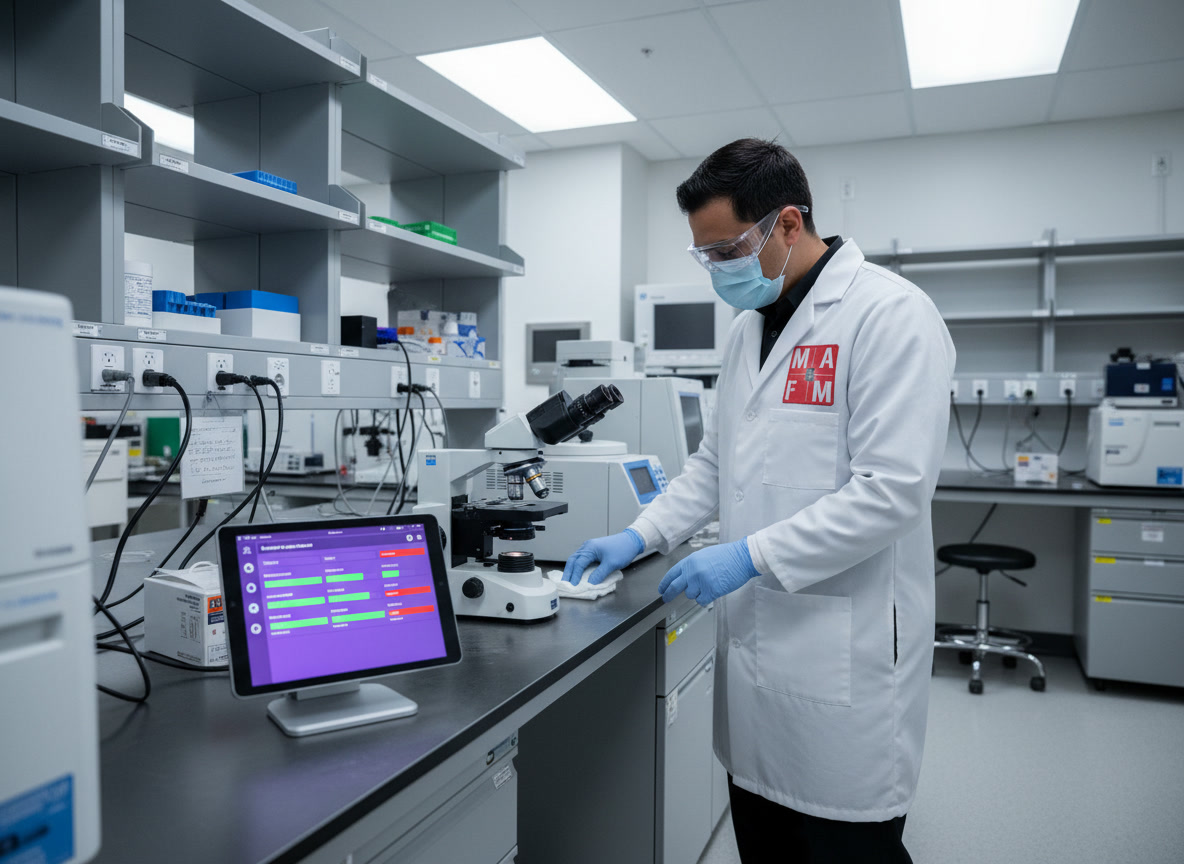
Silicon Valley's life science and biotech sector has expanded dramatically, and with it has come a growing inventory of specialized buildings that demand facility management expertise far beyond standard commercial office cleaning and maintenance. Laboratory environments, cleanrooms, vivarium-adjacent spaces, and GMP-regulated facilities operate under requirements where the consequences of facility management failure extend beyond tenant complaints into regulatory violations, contaminated research, and compromised product integrity.
The gap between what standard commercial facility management provides and what life science buildings require is substantial. Facility management companies that attempt to serve biotech tenants with standard commercial protocols consistently fail, creating risk for both the building owner and the tenant operations that depend on properly maintained environments.
Here is what facility managers need to understand about the specialized requirements of Silicon Valley's fastest-growing building category.
Life science facilities operate across a spectrum of environmental control requirements. Understanding where your building falls on this spectrum determines the appropriate facility management approach.
Standard laboratory space requires enhanced cleaning protocols but not cleanroom-level contamination control. Lab cleaning differs from office cleaning in chemical selection, surface material handling, equipment avoidance, and safety protocols. Staff must understand which surfaces they may clean, which equipment they must never touch, and which areas require specific PPE for entry.
Cleanroom environments rated ISO Class 5 through ISO Class 8 require contamination-controlled cleaning using specialized materials, gowning protocols, and particle-conscious techniques. Cleaning in these environments must reduce rather than redistribute particles, which means conventional mops, brooms, and dusting tools are prohibited. Cleanroom-rated wipers, tacky mats, HEPA-filtered vacuums, and contamination-controlled cleaning chemicals replace every standard cleaning tool.
GMP-regulated spaces where pharmaceutical or medical device manufacturing occurs add documentation requirements to the cleaning protocol. Every cleaning event must be recorded with date, time, operator, chemicals used, and verification of completion. This documentation becomes part of the facility's regulatory compliance record and is subject to FDA audit.
BSL-2 and higher biosafety level laboratories require cleaning protocols that protect the cleaning staff from biological hazards while maintaining the environmental conditions necessary for research operations. Standard janitorial staff cannot work in these environments without specialized training, medical clearance, and ongoing health monitoring.
The specific differences between standard commercial cleaning and life science facility cleaning affect every aspect of operations.
Chemical selection in life science environments must consider both cleaning effectiveness and research compatibility. Residues from standard cleaning chemicals can interfere with sensitive instruments, contaminate cell cultures, and compromise experimental results. Lab-compatible cleaning chemicals, typically specified by the tenant's EH&S department, replace the facility manager's standard product lineup.
Cleaning sequence matters in ways it does not in commercial offices. Lab cleaning follows a clean-to-dirty progression that prevents cross-contamination between spaces of different classification levels. Staff clean the highest-classification spaces first, progressing to lower-classification areas, and never return to previously cleaned high-classification spaces after working in lower-classification zones.
Waste handling in life science facilities involves regulated waste streams that standard commercial cleaning staff are not trained or authorized to manage. Biohazardous waste, chemical waste, sharps containers, and radioactive waste each follow distinct disposal protocols with specific regulatory requirements. Facility cleaning staff must understand the boundaries of their waste handling authority, general trash and recycling only, and never handle regulated waste containers.
Equipment interaction protocols define which surfaces and equipment cleaning staff may touch and which they must avoid entirely. Laboratory instruments worth hundreds of thousands of dollars can be damaged or decalibrated by well-intentioned cleaning. Establish explicit equipment zones with the tenant's laboratory manager and train staff to recognize and respect these boundaries.
Life science buildings place demands on HVAC systems that exceed standard commercial requirements by significant margins.
Pressure relationships between spaces, which rooms maintain positive pressure and which maintain negative pressure relative to adjacent areas, are critical to contamination control and containment. Facility maintenance that affects building air balance, including filter changes, damper adjustments, and ductwork modifications, must be coordinated with the tenant's facilities team to prevent disrupting established pressure relationships.
Air change rates in laboratory and cleanroom spaces typically run four to twenty times higher than standard office spaces, creating proportionally higher HVAC energy consumption and maintenance demands. Filter change frequencies in lab HVAC systems may be two to four times the standard commercial schedule.
Temperature and humidity control in lab environments often requires precision that standard commercial HVAC cannot achieve. Tolerances of plus or minus one degree Fahrenheit and plus or minus 5% relative humidity are common requirements for sensitive research areas. HVAC systems serving these spaces require more frequent calibration and monitoring than standard comfort cooling systems.
Emergency power for laboratory HVAC systems is often a critical requirement. Research specimens, cell cultures, and temperature-sensitive materials can be lost if environmental conditions deviate for even brief periods. Verify that your emergency power system provides adequate capacity for all critical lab HVAC loads and test this capability during your annual generator load test.
Life science facility management carries safety requirements that significantly exceed standard commercial building operations.
Chemical exposure risk for cleaning staff working in and around laboratory spaces requires hazard communication training that goes beyond standard GHS/SDS awareness. Staff must understand the specific hazards present in the laboratories they service, the emergency procedures for spill response, and the locations of safety showers, eyewash stations, and first aid equipment.
Vaccination and medical surveillance may be required for cleaning staff who work in or adjacent to certain laboratory environments. Hepatitis B vaccination is commonly required for staff with potential bloodborne pathogen exposure. Tuberculosis screening may be required for staff serving vivarium-adjacent spaces. These requirements should be addressed during onboarding and maintained through periodic compliance verification.
Security and access control in life science buildings often includes protocols beyond standard commercial badge access. Select agent program compliance, ITAR restrictions, and proprietary research protection may limit which staff can enter certain areas and may require background investigations beyond standard employment screening.
Regulatory inspection readiness is an ongoing facility management responsibility. FDA, OSHA, EPA, and state regulatory agencies conduct inspections of life science facilities, and the facility's physical condition and maintenance documentation are part of the inspection scope. Cleaning logs, chemical inventories, waste disposal records, and environmental monitoring data must be current and accessible at all times.
The staffing model for life science facility management differs fundamentally from standard commercial cleaning operations.
Dedicated staff assignment is essential. Rotating different cleaning personnel through laboratory environments prevents the development of the building-specific knowledge that safe, effective lab cleaning requires. Assign permanent staff to life science buildings and resist the temptation to use these buildings as overflow assignment for general commercial cleaning teams during staffing shortages.
Training requirements for life science cleaning staff include general laboratory safety orientation, building-specific hazard communication, cleanroom gowning and behavior protocols where applicable, specialized equipment operation including HEPA vacuums and cleanroom mopping systems, proper waste segregation and handling limitations, and emergency response procedures specific to laboratory environments.
This training investment is substantial, typically 40 to 60 hours of initial training compared to eight to sixteen hours for standard commercial cleaning staff. The investment is justified by the reduced risk, higher service quality, and regulatory compliance that properly trained staff deliver.
Compensation for life science cleaning staff should reflect the additional training, knowledge, and responsibility their roles require. Positions requiring cleanroom certification, hazmat awareness, and lab safety training command a 15 to 25% premium over standard commercial cleaning rates in the Silicon Valley market.
Life science facility management is a specialized discipline that demands respect for the environments it serves. The buildings housing Silicon Valley's biotech and life science innovation require cleaning and maintenance protocols designed for their unique requirements, delivered by staff trained for their specific hazards, and managed with the documentation rigor their regulatory environment demands.
Property owners and facility managers considering entry into the life science building market should honestly assess their organization's capability against the requirements outlined here. The gap between standard commercial operations and life science readiness is significant, and bridging it requires deliberate investment in training, equipment, and operational infrastructure.
MAFM PRO develops specialized protocols for life science and biotech facility environments. Contact us to discuss the facility management requirements for your specialized building.
Schedule your consultation: Contact MAFM.PRO
January 21, 2026

March 6, 2026
March 10, 2026
MAFM offers comprehensive facility management solutions tailored to your business needs.
Get in Touch