Office Moves & Workplace
Tenant Satisfaction Surveys: How to Measure and Act
February 18, 2026
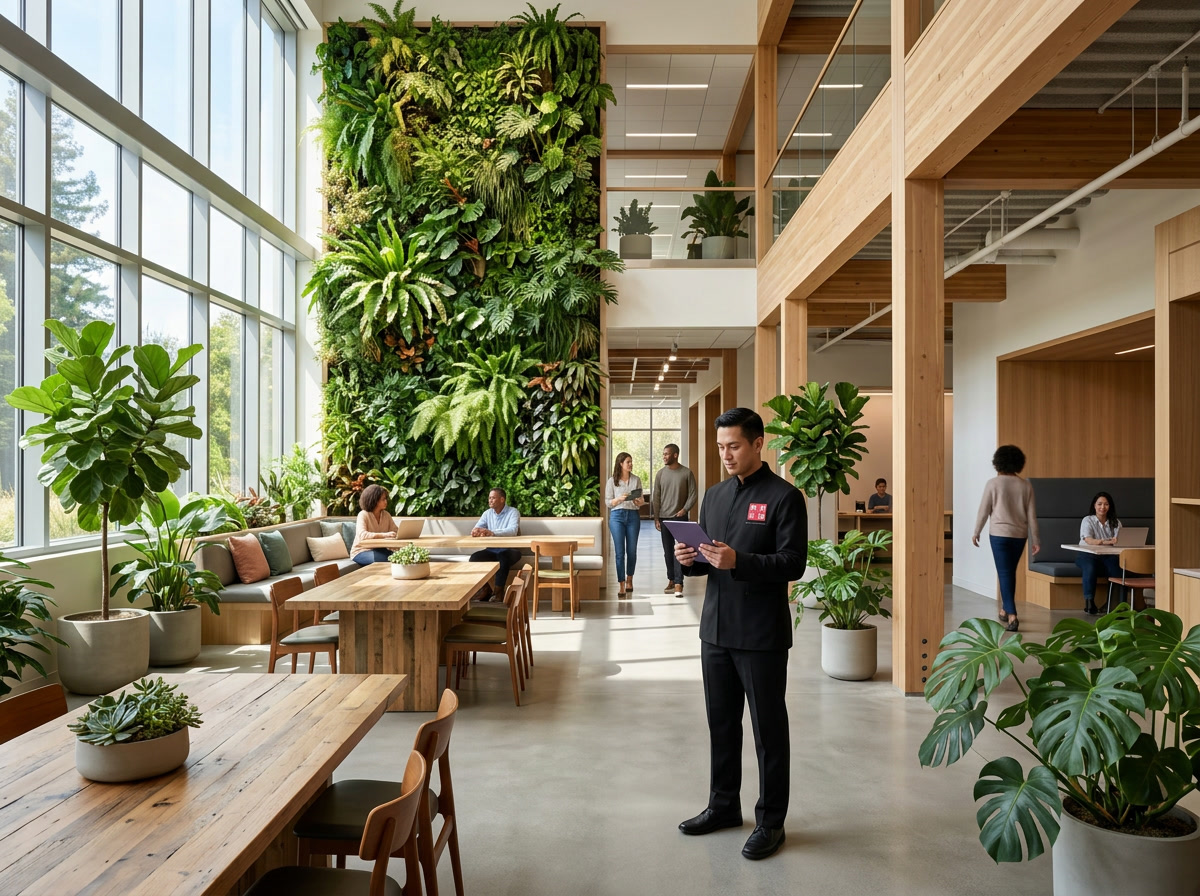
Biophilic design in an office means building nature into the workplace: living plants, daylight, views, natural materials and, sometimes, water. For a facility manager the useful question is not whether it is a nice idea, but what it takes to keep it looking good and what it can honestly be expected to do.
The evidence supports a modest claim. Nature in the workplace is associated with lower stress and a better experience of the space, but plants are not an air purifier and the productivity results are mixed. Plan it as an amenity you have to maintain, not as a wellness treatment.
Biophilic design is a recognized framework with real research behind it, and its biggest benefit is a calmer, more restorative space. Terrapin Bright Green's report, 14 Patterns of Biophilic Design, states that biophilic design "can reduce stress, enhance creativity and clarity of thought, improve our well-being and expedite healing." It was built from several hundred publications on how people respond to nature, and its 10th anniversary edition now lists 15 patterns.
Those patterns are broader than potted plants. They include a visual connection with nature, dynamic and diffuse light, the presence of water, material connection with nature (wood and stone with minimal processing) and prospect, an unimpeded view over a distance.
The research on one popular element, indoor plants, is real but small and uneven:
So write the case for biophilic elements around experience and tenant appeal. Do not promise stress or productivity percentages to an owner. Nobody can back them up.
No, not in any amount that matters. The EPA says "there is currently no evidence" that a reasonable number of houseplants remove significant quantities of pollutants in homes and offices (EPA, Improving Indoor Air Quality).
A 2019 review of 12 chamber studies converted 196 results into clean air delivery rates. It found that matching the air exchange a typical building already gets would take roughly 10 to 1,000 plants per square meter of floor space (Cummings and Waring, Journal of Exposure Science & Environmental Epidemiology).
The EPA's list for better indoor air is source control, ventilation and filtration. Plants are not on it. Keep plants in the amenity budget and the ventilation and filter schedule in the air quality budget. Our office indoor air quality guide covers the second one.
The EPA adds one operational note worth acting on: do not overwater, because overly damp soil can promote the growth of microorganisms that affect allergic people.
Five elements usually land on a facility manager's desk, and each one needs an owner:
Match plants to the light they will actually get. Choose durable species for dim interior zones and keep the more demanding ones near windows. Either assign each plant to a named person with a written watering schedule, or put it in a vendor's scope of work. "Whoever walks past" is not a schedule.
Know that every decorative fountain is a Legionella consideration. The CDC says "all decorative fountains produce aerosols," and that cleaning and disinfection are a regular part of operating one. It names four factors that drive Legionella growth: sediment and biofilm, temperature, water age and disinfectant residual. It also advises against placing one where people at increased risk of Legionnaires' disease are served, such as healthcare facilities (CDC, Controlling Legionella in Decorative Fountains).
The CDC's guidance for fountains is to use a water management program, supply the fountain with cold potable make-up water below the temperature range that favors Legionella (77 to 113 degrees Fahrenheit), and avoid idle periods. A living wall with circulating water deserves the same questions.
If a water feature is in the plan, ask the installer who will run the water program and who will log it. If nobody can answer, choose a feature that does not use circulating water.
Put every element on a calendar with a named owner, the way you would any other building system. A workable routine looks like this:
Plants, living walls and water treatment are specialist work. Hire specialists, and keep their schedules on your facility calendar next to the cleaning schedule. The cleaning crew's job is the surrounding floors, glass and surfaces, which are the part tenants notice every day.
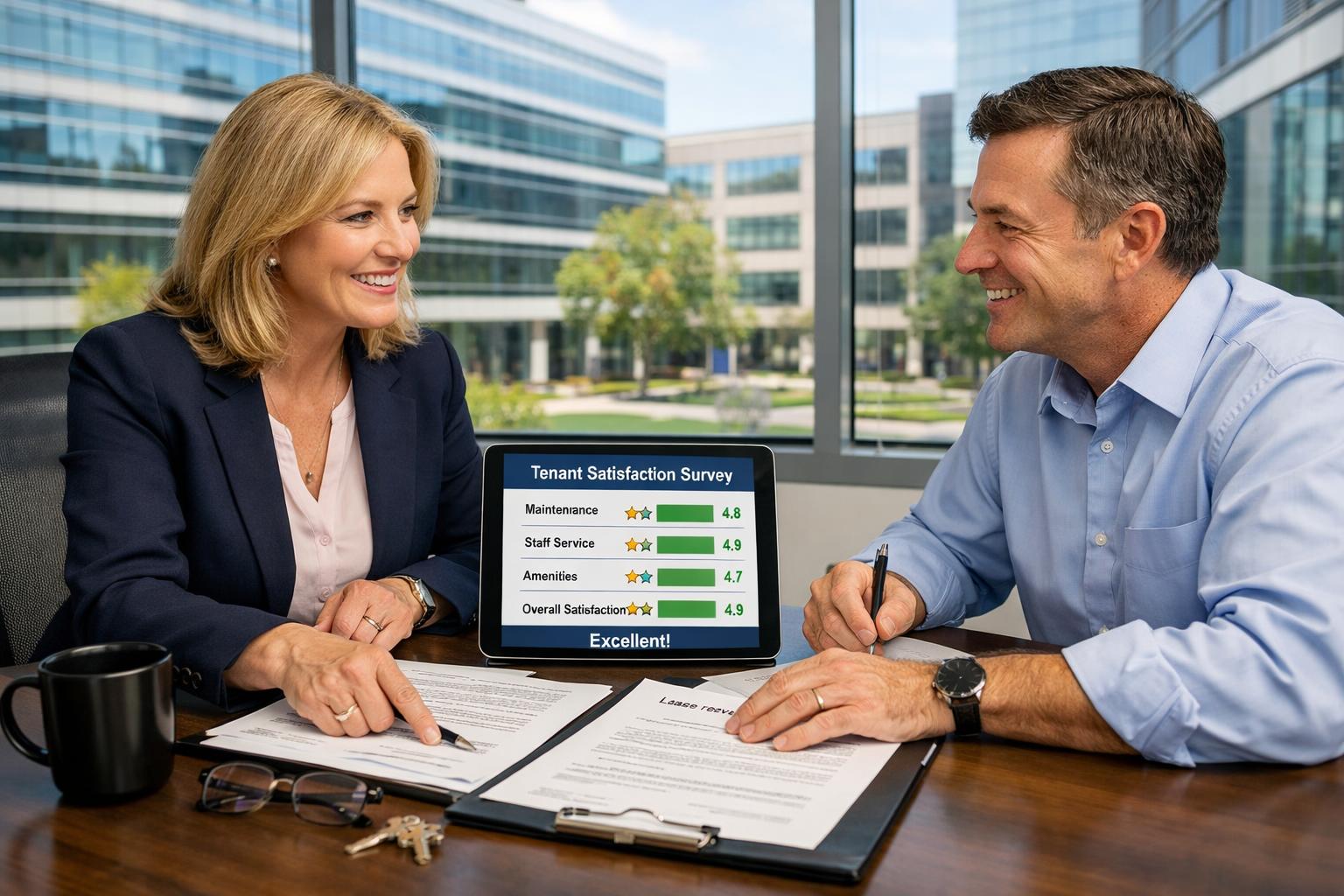
Finally, ask tenants. A short question on your satisfaction survey about daylight, greenery and the common areas tells you more than any study. Our guide to tenant satisfaction surveys shows how to ask.
Is biophilic design worth it for an office building?
For common areas and lobbies, usually yes, as an amenity. The research supports a calmer, more restorative space, while the productivity evidence is mixed, so judge it by tenant feedback and not by promised percentages.
Do indoor plants improve air quality in offices?
Not meaningfully. The EPA found no evidence that a reasonable number of houseplants remove significant pollutants, so rely on ventilation and filtration for air quality.
What is the biggest risk with water features?
Legionella. The CDC notes that all decorative fountains produce aerosols and that they need regular cleaning and disinfection under a water management program.
Who should maintain office plants?
Either a specialist plant vendor with maintenance in the contract or a named person with a written watering schedule. The facility manager's job is to make sure that one of those exists.
MAFM is a facilities management company in San Jose. We plan, schedule and coordinate the building services behind a good lobby, including your plant and water vendors, and our janitorial crews keep the floors, glass and surfaces around them clean. Learn more about facility management or contact MAFM to talk through your common areas.
MAFM offers comprehensive facility management solutions tailored to your business needs.
Get in Touch