Office Moves & Workplace
Tenant Satisfaction Surveys: How to Measure and Act
February 18, 2026
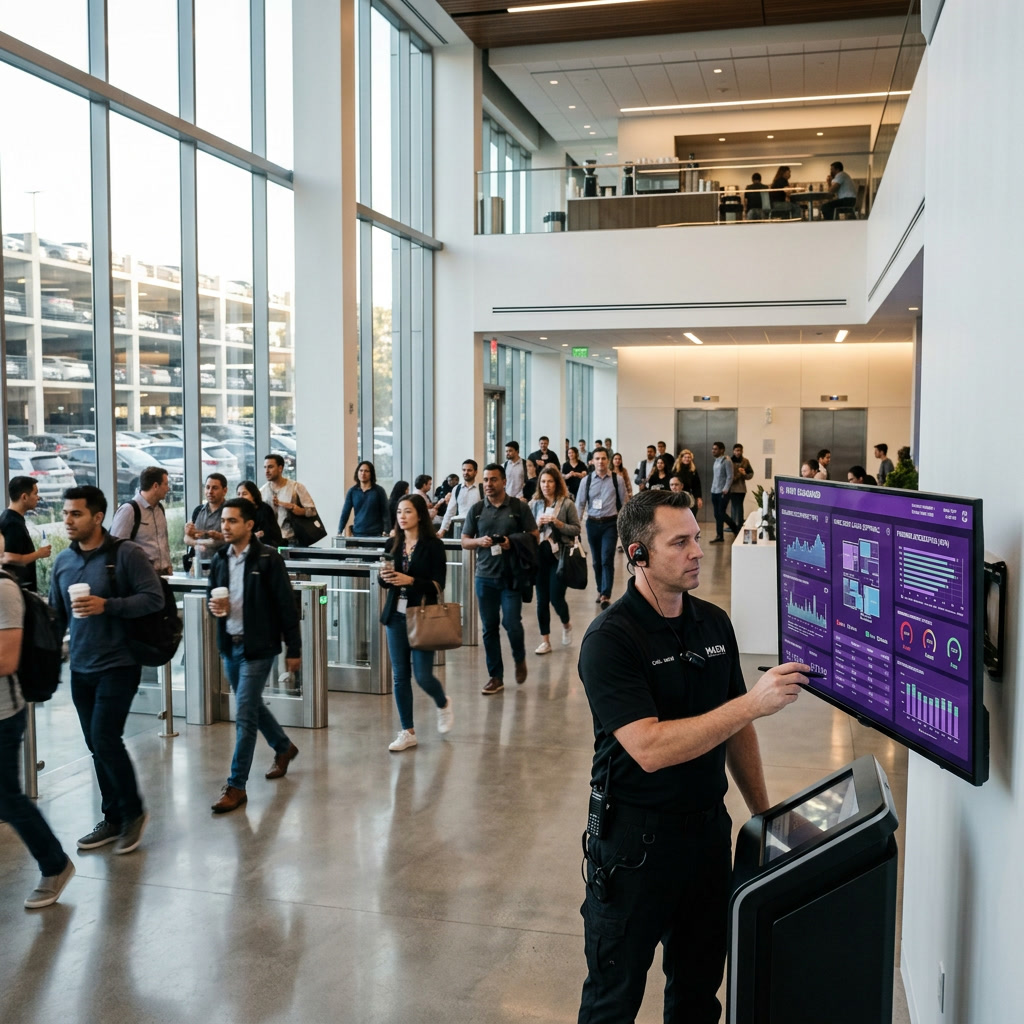
Every facility manager in Silicon Valley knows the feeling: the week after Labor Day, a building that felt half-empty in July suddenly feels like it's bursting at the seams. Parking lots fill by 8:15 a.m. instead of staying open until 10. The espresso machine on the third floor runs out of oat milk by 9:45. HVAC zones that coasted along fine during summer suddenly can't keep up with afternoon heat loads from 40% more bodies in the building. This isn't a coincidence: it's a predictable annual pattern, and it starts almost exactly when local school districts open their doors.
This week on the MAFM blog, we're running a five-part series on what we call the Back-to-School Occupancy Surge: the September spike in office and campus attendance that hits nearly every Silicon Valley commercial property, from single-tenant R&D campuses in Sunnyvale to multi-tenant Class A towers in downtown San Jose. Over the next five posts, we'll break down HVAC and environmental system capacity planning, janitorial and security staffing models, parking and access control bottlenecks, and a September readiness checklist that ties it all together on Friday.
Today's post lays the groundwork: what actually drives this surge, why it hits Silicon Valley harder than many other markets, and what happens to a facility's operating baseline when it's not planned for. If you manage a building anywhere between Redwood City and San Jose, this is the week to get ahead of it: because the surge is coming whether your facility team is ready or not.
The back-to-school occupancy surge isn't really about school buses: it's about the flexible-schedule arrangements that quietly govern summer attendance at tech companies. Between June and August, a significant share of Silicon Valley's workforce operates on informal summer hours: parents shifting to hybrid schedules around camp pickup, engineers taking extended remote stretches while relocating kids, and leadership tacitly tolerating lighter Friday attendance. Once school resumes in mid-August through early September across districts like San Jose Unified, Palo Alto Unified, and Fremont Union, those informal accommodations end almost overnight, and full five-day attendance patterns snap back into place.
Layer onto that the timing of corporate calendars. Most Silicon Valley tech firms wrap their summer internship cohorts by mid-August, then onboard new-grad and lateral hires in a concentrated wave right after Labor Day: often timed deliberately to align with the academic calendar so new employees can relocate over the summer. We regularly see property management teams report occupancy jumping from the low 60% range in July to 85-95% of badge-in capacity by the third week of September. That's not a gradual ramp; it's a step change that happens inside a two-to-three-week window.
For facilities teams, the practical effect is that every system sized around "typical summer occupancy" gets tested simultaneously: air handling, restroom consumables, elevator dispatch, food service, parking allocation, and janitorial coverage. A building that felt comfortably staffed on August 1 can feel understaffed and undersized by September 15 without a single piece of equipment failing: the load simply changed faster than the operating plan did.
We've walked into more than a few Silicon Valley properties in early October where the September surge left visible damage: not structural damage, but tenant experience damage that shows up in complaint logs, service tickets, and eventually lease renewal conversations. The pattern is consistent enough that it's worth naming directly.
HVAC complaints spike first, usually within the first two weeks. Zones that were balanced for 60% occupancy start running warm in afternoon peak hours because the system is now cooling for 90% occupancy with the same setpoints and the same maintenance schedule that hasn't accounted for a heavier condenser load. Filter change intervals that made sense in a lighter-occupancy summer suddenly leave filters overloaded weeks early, which drags down airflow right when the building needs it most.
Janitorial service levels are the second failure point. A nightly cleaning contract scoped for July's foot traffic (trash volume, restroom paper consumption, break room dishware turnover) is frequently 30-40% under-resourced for September's actual usage, and most service agreements don't auto-adjust. Facility teams that don't proactively renegotiate scope or frequency in August end up fielding tenant complaints about overflowing bins and understocked restrooms by the second week of school being back in session, with no contractual mechanism to fix it quickly.
The third failure point is the one owners feel financially: emergency service calls. When a facility team is reacting to occupancy surge symptoms instead of planning for them, HVAC balancing, extra janitorial shifts, and parking overflow management all get purchased at premium, non-scheduled rates. We've seen buildings pay 2-3x their normal service rate for expedited HVAC balancing in late September simply because nobody flagged the need in August when it could have been scheduled at standard rates.
The buildings that sail through September without a spike in tenant complaints share a common trait: their facility teams start planning in early-to-mid August, using actual leasing and badge-access data rather than guesswork. That starts with pulling occupancy trend data (badge swipes, Wi-Fi device counts, or parking utilization reports from the prior two Septembers) to build a realistic forecast of peak occupancy rather than relying on nominal square-footage-per-person ratios that rarely reflect how a hybrid-era office actually fills up.
From there, the practical work is scheduling, not guessing. HVAC providers should be booked for pre-surge balancing and filter changes in the last two weeks of August, before the wave hits, not after complaints start. Janitorial contracts should be reviewed against the projected occupancy increase, with frequency bumps (a second midday restroom service, added break room rounds) written into a temporary rider rather than negotiated ad hoc under pressure. Consumables ordering (restroom paper, hand soap, coffee service supplies) should be adjusted upward on a fixed schedule tied to the calendar, not triggered by a facilities coordinator noticing empty dispensers.
It's also worth building in a short buffer period. Rather than treating September 8 as a single hard cutover date, the properties that handle this best treat the first two weeks of September as an elevated-monitoring window: daily HVAC zone temperature checks instead of weekly, a facilities walk-through focused specifically on high-traffic common areas, and a standing check-in with the property's janitorial and security vendors to catch service gaps within 24 hours instead of a full week later when the tenant complaint has already reached the property manager.
Across the rest of this week's series, we're going deep on the operational specifics that make this planning actionable rather than theoretical. Wednesday's post will dig into HVAC and environmental system capacity: how to read your building automation system's trend data to catch undersized zones before tenants complain, and what a proper pre-September balancing service should include. Thursday's post covers staffing models for janitorial and security teams, including how to structure temporary coverage riders that scale down again once the surge stabilizes in October, so owners aren't stuck paying peak rates year-round.
We'll also cover the parking and access control side of the surge, a topic that's easy to underestimate but generates a disproportionate share of tenant frustration, since a full parking lot at 8:30 a.m. is often a new tenant's first negative impression of a property that otherwise runs smoothly. And we'll close the week Friday with a consolidated September readiness roadmap that pulls every piece (HVAC, staffing, access, and consumables) into a single pre-Labor-Day checklist you can hand directly to your operations team.
The back-to-school occupancy surge is one of the most predictable events on a Silicon Valley facility manager's calendar, yet it's routinely treated as a surprise. The buildings that handle it well aren't the ones with bigger budgets: they're the ones that start planning two to three weeks before the wave hits, using real occupancy data instead of assumptions. This week, we're giving you the specifics to do exactly that.
If your facility team is still operating on a summer schedule, now is the window to act: not September 15, when the complaints start rolling in.
MAFM offers pre-September facility assessments that benchmark your HVAC capacity, janitorial scope, and staffing levels against projected occupancy: schedule yours before the August 24 cutoff to lock in standard service rates ahead of the surge.
Reference to Wednesday's upcoming post on HVAC capacity planning and building automation trend analysis; Thursday's post on scalable janitorial and security staffing models; Friday's consolidated September readiness roadmap tying the week's series together.
ASHRAE guidance on HVAC load planning for variable occupancy commercial buildings (ashrae.org); Santa Clara County Office of Education academic calendar data for regional back-to-school timing (sccoe.org).
MAFM offers comprehensive facility management solutions tailored to your business needs.
Get in Touch