Office Moves & Workplace
Tenant Satisfaction Surveys: How to Measure and Act
February 18, 2026
The commercial real estate market in Silicon Valley has matured to a point where functional facility management (clean building, responsive maintenance, working HVAC) is the minimum expectation rather than a competitive differentiator. Every property promises these outcomes. The properties that achieve lease renewal rates 15 to 22% above market averages have moved beyond functional management into deliberate tenant experience programming that creates loyalty the market cannot easily replicate.
Tenant experience is not a single initiative or an amenity package, it is a systematic approach to every interaction a tenant has with the building, its management, and its community. It encompasses the speed of work order response, the quality of common area maintenance, the warmth of building staff interactions, the usefulness of building communications, and the genuine sense that the property ownership values the humans occupying the building as much as the rent they generate.
The framework that follows transforms tenant experience from a vague aspiration into a structured program with measurable outcomes.
Before building a tenant experience program, you need an honest baseline assessment of where your building currently delivers and where it falls short.
A tenant experience audit combines three data sources: formal satisfaction survey data, informal intelligence gathered through regular management touchpoints, and objective operational metrics.
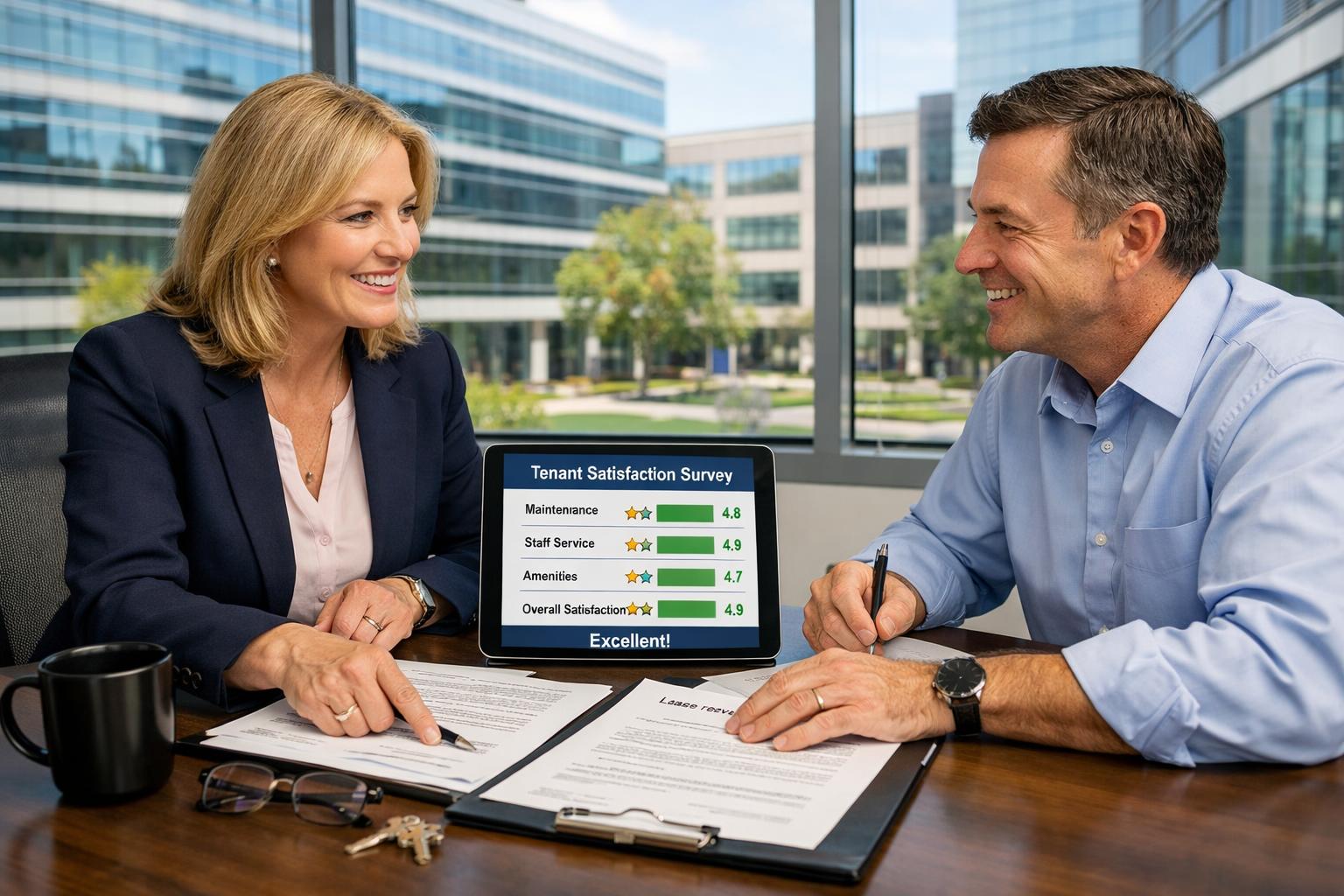
Formal satisfaction surveys should probe four experience dimensions specifically: physical environment quality covering cleanliness, temperature, lighting, and aesthetics; operational responsiveness covering work order speed, communication quality, and issue resolution; community and amenity satisfaction covering common areas, building events, and building services; and management relationship quality covering the accessibility, professionalism, and responsiveness of building management.
Use a 1-10 rating scale rather than the more common 1-5 scale. The additional granularity reveals meaningful distinctions between satisfied tenants (7-8) and genuinely enthusiastic ones (9-10) that the compressed scale obscures. Target 9-10 responses as your metric, not overall average.
Informal intelligence requires deliberate cultivation. Schedule quarterly in-person visits with each tenant's primary contact, not to solve a problem, but simply to check in. Ask open questions: what is working well in the building right now? What is your biggest frustration with the space? What is one thing you wish the building offered? These conversations surface issues and opportunities that survey instruments never capture.
Operational metrics (work order response times, inspection scores, complaint frequency, common area cleanliness scores) provide the objective view of delivery quality that self-reported satisfaction data alone cannot confirm. A tenant who reports moderate satisfaction but experiences average response times of three days has a concrete experience gap that satisfaction scores alone do not fully communicate.
Effective tenant experience programs are built on five pillars that together create the conditions for loyalty and renewal.
Pillar 1: Physical Excellence
The physical environment is the foundation on which all other experience elements rest. A lobby that impresses, restrooms that are consistently immaculate, common areas that are curated rather than merely maintained, and a building envelope that creates genuine arrival experience establish the physical standard that tenant experience programs build upon.
Physical excellence requires consistent execution rather than occasional peaks. A lobby that looks spectacular during prospective tenant tours but deteriorates to average condition between tours signals management priority that tenants notice and resent. Consistent standards (maintained at all times, not just when the building is on display) communicate genuine investment in occupant experience.
Pillar 2: Frictionless Operations
The most common experience failures in commercial buildings are not dramatic, they are the accumulation of small frictions that erode tenant goodwill over months and years. A work order submitted and acknowledged two days later. A maintenance issue that required three callbacks to resolve. A common area temperature that stayed uncomfortable for three days before anyone responded.
Frictionless operations eliminate these friction points through the systems, response standards, and quality verification processes that ensure every interaction is smooth. The goal is not perfection (emergencies happen, equipment fails, contractors underperform) but the rapid, transparent response to imperfection that demonstrates operational professionalism.
Pillar 3: Proactive Communication
The most consistent predictor of tenant satisfaction in commercial real estate research is communication quality, specifically, whether building management provides information proactively or only in response to complaints and inquiries.
Tenants who feel informed and considered by their building management team consistently report higher satisfaction than tenants with identical physical experience who feel uninformed and reactive. Monthly building updates, advance notice of all planned maintenance, transparent communication during service disruptions, and responsive acknowledgment of every tenant contact collectively create the communication experience that distinguishes valued tenants from rent payers.
Pillar 4: Community Connection
The commercial building is increasingly a workplace community as much as a physical space. Tenants in buildings with genuine community elements (shared events, inter-tenant connections, community recognition programs) report higher satisfaction and lower turnover intention than tenants in buildings where community does not exist.
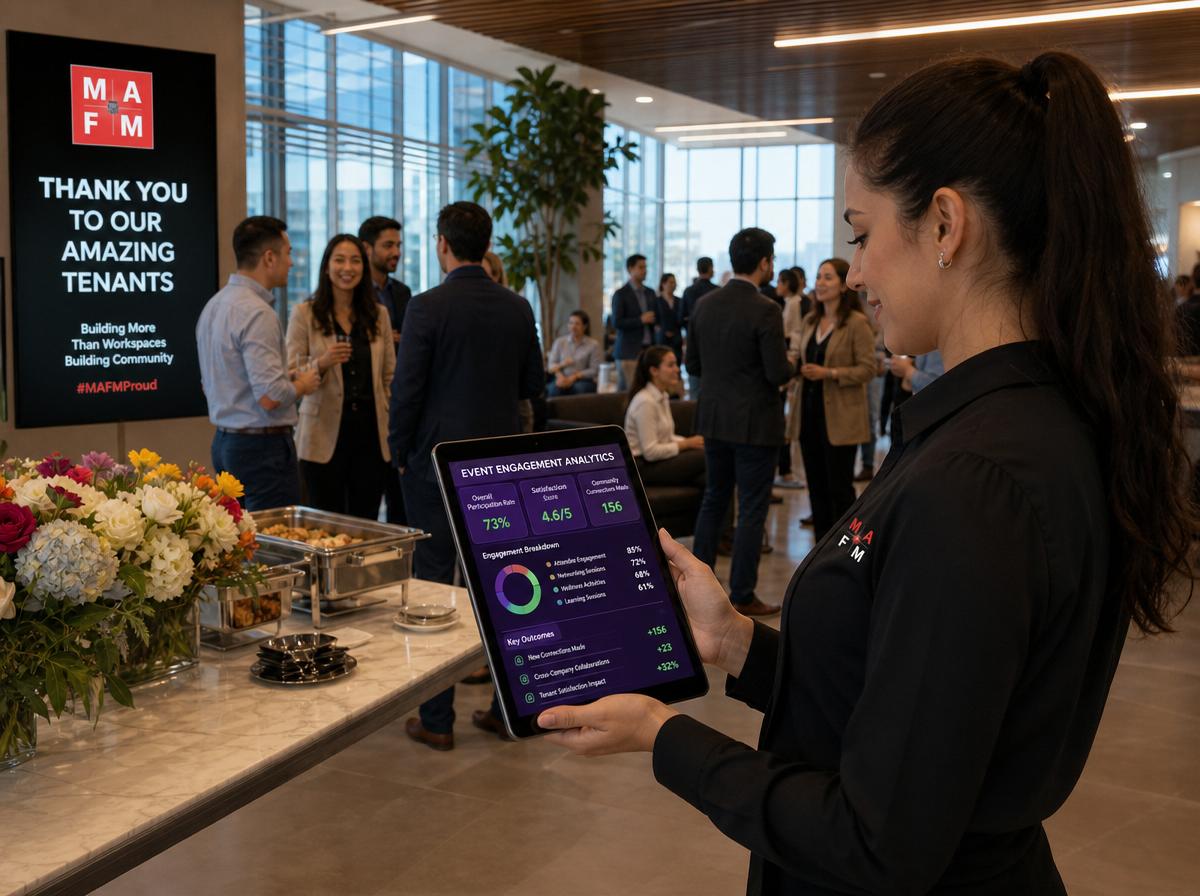
Community programming can be as simple as quarterly all-tenant social events, a building newsletter that profiles tenant companies, or a shared bulletin board (physical or digital) where tenants can connect professionally and personally. The investment is modest; the loyalty effect is disproportionate.
Pillar 5: Continuous Improvement Visibility
Tenants who see the building improving (new amenity additions, upgraded common areas, enhanced services, expanded technology infrastructure) develop confidence that their tenancy is an investment the ownership values. Tenants who see a static or declining physical environment draw the opposite conclusion.
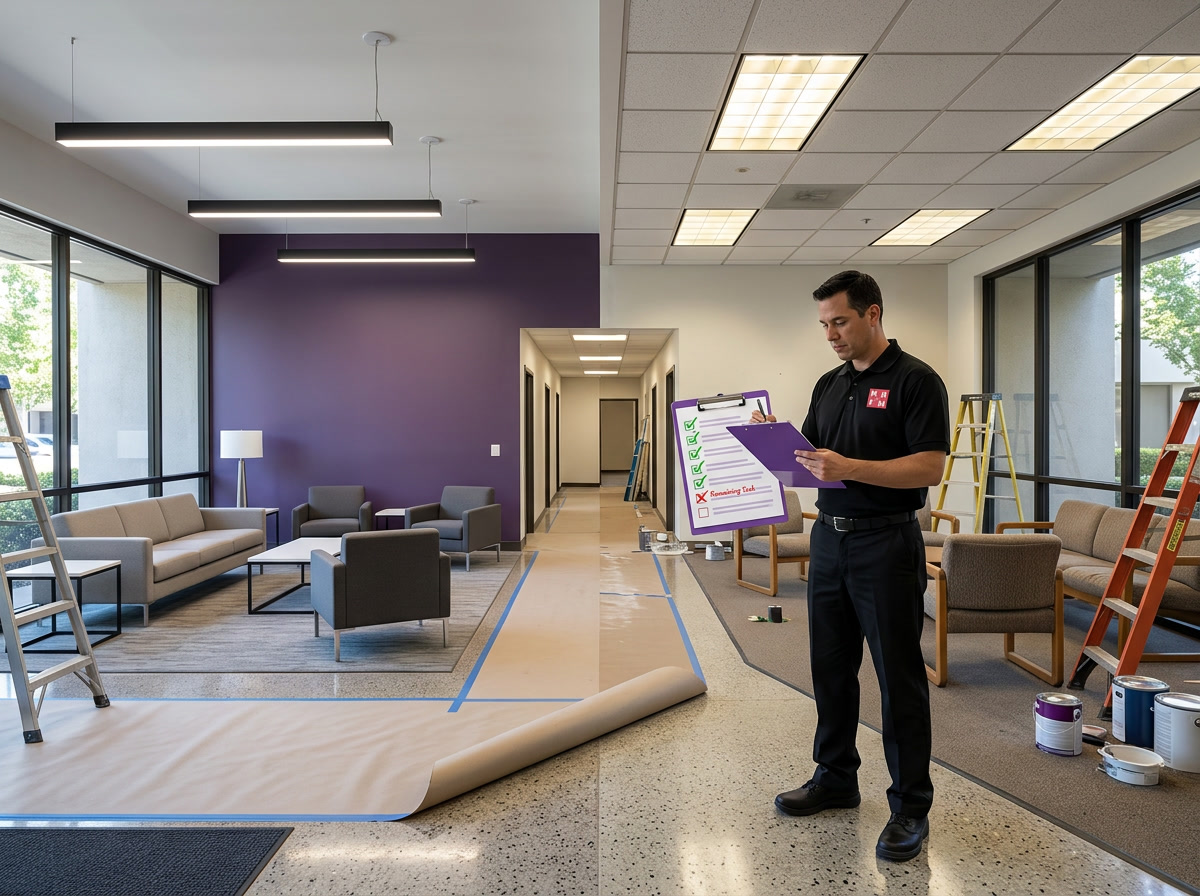
Communicate every improvement explicitly. A corridor that was repainted, a lobby seating area that was refreshed, a new EV charging station that was installed, each represents an investment decision that management should proactively communicate to tenants as evidence of ongoing property investment.
Tenant experience programs succeed when they are planned rather than improvised. A quarterly calendar of planned tenant touchpoints, communications, and events creates the consistent presence that builds relationship rather than the reactive engagement that merely manages problems.
Q1 touchpoints: Annual tenant satisfaction survey with results communication; individual tenant relationship meetings with primary contacts; building improvement communication highlighting Q4 work completed.
Q2 touchpoints: Spring common area showcase highlighting seasonal maintenance and improvement investments; mid-year operational performance report to tenants; community appreciation event.
Q3 touchpoints: Summer operational check-in addressing cooling season performance and any comfort concerns; advance communication of fall and Q4 planned maintenance; back-to-office engagement event as post-summer work patterns resume.
Q4 touchpoints: Annual renewal readiness conversations with tenants approaching lease expirations; holiday recognition and building season event; year-end operational summary highlighting the year's investments and achievements; Q1 preview communication announcing planned improvements.
This calendar ensures that no tenant goes 90 days without a positive, proactive management interaction, the minimum frequency that maintains active relationship rather than allowing tenants to experience the building only through the lens of their problems.
The challenge for buildings with multiple tenants is delivering personalized experience, which drives loyalty, at a scale that does not require prohibitive management investment.
Tenant profile documentation captures the information that enables personalized engagement: each tenant's primary contact, the business they operate, their employee headcount and typical floor population, their specific operational sensitivities, their upcoming business milestones, and their lease expiration timeline.
This profile allows management to anticipate needs rather than react to them. A tenant who mentioned six months ago that they plan to expand their team by 30% in Q3 needs a proactive conversation in May about parking capacity, conference room availability, and potential space expansion options, not a surprised response when they mention it at renewal time.
Life cycle personalization recognizes that tenant experience priorities evolve throughout the lease term. New tenants in their first six months need orientation support, operational guidance, and frequent management contact that establishes the relationship. Mid-lease tenants need consistent operational excellence and proactive communication that sustains satisfaction. Pre-renewal tenants need enhanced engagement, visible investment, and renewal conversations that position staying as the obvious choice.
Tenant experience programs represent an investment of management time, program costs, and amenity spending that requires financial justification.
Renewal rate tracking is the primary financial metric. Calculate your building's annual lease renewal rate and track it against both your historical performance and comparable properties in your submarket. Properties with formal tenant experience programs consistently achieve renewal rates 15 to 22% above market averages, on a 100,000 square foot building at $4.50 per square foot monthly, a 15% improvement in renewal rate represents $810,000 in avoided annual vacancy and turnover cost.
Net Promoter Score measurement through a single-question addition to your satisfaction survey, "On a scale of 0-10, how likely are you to recommend this building to another company?", provides a standardized metric for tracking tenant advocacy over time.
Cost of tenant acquisition versus cost of retention comparison makes the ROI case quantitatively. Every dollar spent on tenant experience programs that improve retention is measured against the $50 to $100 per square foot cost of tenant turnover, leasing commissions, tenant improvement allowances, and vacancy loss. This comparison consistently demonstrates that tenant experience investment is among the highest-return capital allocation decisions available to commercial property owners.
Tenant experience programs are the operational discipline that converts transactional landlord-tenant relationships into genuine partnerships where renewal is the default outcome rather than the uncertain result of competitive negotiation. The buildings that build these programs earn the market advantage of predictable occupancy, stable cash flow, and the kind of tenant advocacy that makes future leasing easier.
Start with your tenant experience audit this month. Conduct your relationship meetings. Build your quarterly calendar. Document your tenant profiles. The investment is measured in management hours. The return is measured in renewal rates that outperform your competition for years.
MAFM delivers structured tenant experience programs that drive the renewal rates Silicon Valley property owners need. Contact us to develop your building's tenant experience strategy.
Schedule your consultation: Contact MAFM.PRO
MAFM offers comprehensive facility management solutions tailored to your business needs.
Get in Touch