Facility Maintenance
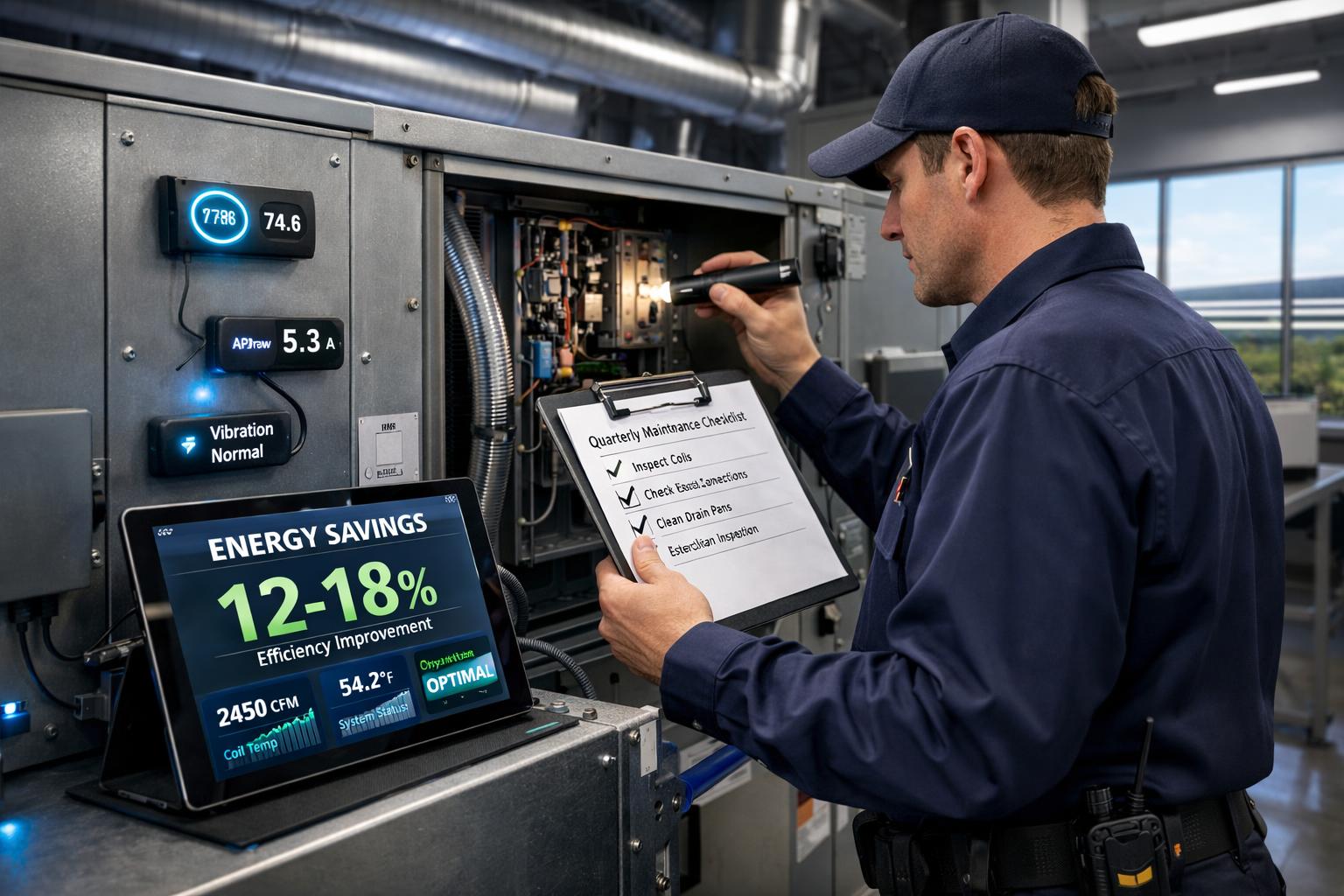
Smart HVAC Maintenance for Silicon Valley Office Buildings
February 12, 2026

Parking structures are among the most expensive building assets to construct and among the most neglected to maintain. For Silicon Valley commercial properties where structured parking is essential to tenant operations, this neglect is both common and costly.
The average multi-level parking structure represents a $15-$25 million construction investment. Yet many Silicon Valley property owners spend less on annual parking structure maintenance than they spend on lobby flower arrangements. The consequences emerge gradually (cracking concrete, corroding rebar, failing waterproofing membranes, deteriorating expansion joints) until a structural engineer delivers a report recommending seven-figure repairs.
Proactive parking structure maintenance is not glamorous work, and it rarely generates tenant appreciation. But it is the difference between a $40,000 annual maintenance program and a $400,000 emergency restoration project. Here is what every Silicon Valley facility manager needs to know.
Parking structures face environmental exposure that enclosed buildings are specifically designed to avoid. Understanding these forces explains why parking maintenance requires different protocols than standard building maintenance.
Water is the primary destroyer of parking structures. Unlike enclosed buildings with roofing systems designed to shed water, parking structures are continuously exposed to rain, irrigation runoff, and vehicle-transported moisture. Water penetrates concrete through cracks, carries chlorides and contaminants to the embedded steel reinforcement, and initiates a corrosion cycle that progressively weakens the structural system from inside.
In the Bay Area, the mild but wet winter climate is deceptive. Facility managers from harsher climates understand the destructive cycle of freeze-thaw damage. California facility managers sometimes assume their moderate climate is gentler on concrete structures. In reality, Bay Area parking structures face sustained wet-dry cycling that drives chloride contamination and carbonation at rates that produce significant deterioration within 15-20 years.
Vehicle traffic creates mechanical wear that compounds environmental damage. Turning wheels abrade concrete surfaces, especially at ramp transitions, turns, and speed bumps. Heavy vehicles concentrate loads at column locations and beam-to-column connections. The cumulative effect of thousands of daily vehicle movements grinds through protective coatings and exposes concrete to accelerated deterioration.
Effective parking structure maintenance starts with systematic annual inspections that identify deterioration early when intervention costs are lowest.
A comprehensive annual inspection should cover structural elements, waterproofing systems, drainage, safety features, and mechanical systems. The inspection should be conducted by qualified personnel who understand concrete deterioration mechanisms and structural loading requirements.
Structural inspection focuses on concrete surfaces, expansion joints, and steel components. Walk every level of the structure and document any cracking, spalling, delamination, exposed rebar, rust staining, or efflorescence, the white crystalline deposits that indicate water migration through concrete. Use a sounding hammer or chain drag to identify delaminated concrete that appears intact on the surface but has separated from the substrate beneath.
Waterproofing inspection examines traffic-bearing membrane systems on the top level and any elevated decks, joint sealants at expansion joints and wall-to-deck connections, and traffic coatings on drive lanes and parking surfaces. Look for membrane punctures, blister formation, sealant separation from concrete, and coating wear patterns.
Drainage inspection verifies that all deck drains, trench drains, and downspouts are clear and functional. Pooling water on any deck level indicates drainage failure that accelerates concrete deterioration and creates slip hazards for pedestrians and vehicles.
Safety feature inspection covers guardrails, barriers, signage, striping, lighting, and fire protection systems. These elements directly affect occupant safety and liability exposure.
Annual inspections identify issues. A preventive maintenance program addresses them systematically before they escalate.
Crack sealing is the single most cost-effective preventive maintenance activity. Concrete cracks wider than hairline width allow water to reach the steel reinforcement within the concrete. Sealing these cracks with appropriate epoxy or urethane materials costs $3-$8 per linear foot. Leaving them unsealed leads to rebar corrosion and concrete spalling that costs $50-$150 per square foot to repair, a cost multiplier of 10-20 times.
Joint sealant replacement should occur on a five to seven year cycle for expansion joints and wall connections. Failed sealants allow water to bypass the structure's designed drainage paths and attack vulnerable structural connections. Replacement costs are modest relative to the structural damage that failed joints permit.
Traffic coating maintenance extends the protective barrier between vehicle traffic and the concrete substrate. High-traffic areas (ramp transitions, turns, and entry lanes) wear through coating systems faster than general parking areas and should be recoated on an accelerated schedule.
Drainage maintenance requires quarterly attention at minimum. Clear all deck drains, trench drains, and downspouts. In the Bay Area, leaf debris and sediment from adjacent landscaping frequently clog parking structure drainage systems during the wet season.
Power washing the entire structure annually removes accumulated tire rubber, oil deposits, and surface contaminants that trap moisture against the concrete surface and accelerate deterioration. Spring is the optimal timing, removing winter season accumulation before warmer weather bakes contaminants into the surface.
Silicon Valley parking structures exhibit several failure patterns that facility managers should watch for specifically.
Top-level deterioration is the most common and most expensive failure pattern. The top level of any parking structure receives full weather exposure, and in structures built before modern waterproofing membrane standards, the top deck is often the first area to show significant deterioration. If your top level shows widespread cracking, rust staining, or concrete spalling, get a structural assessment before the damage reaches structural members.
Ramp deterioration concentrates at transition points where vehicles change elevation. The combination of turning forces, braking loads, and water drainage patterns makes ramp transitions the highest-stress areas in the structure. Inspect these locations with extra attention during every annual review.
Column base deterioration occurs where columns meet the deck surface at the lowest level. Water migrates downward through the structure and accumulates at column bases, creating persistent moisture exposure that drives corrosion of the column reinforcement. Corroding column reinforcement is a serious structural concern that requires prompt professional evaluation.
Stairwell and elevator shaft deterioration results from poor drainage and ventilation in these enclosed spaces. Moisture accumulates, concrete surfaces stay damp for extended periods, and deterioration accelerates in areas that rarely receive inspection attention.
Effective parking structure maintenance requires dedicated budget allocation that many property owners underestimate.
A well-maintained parking structure should budget $0.15-$0.25 per square foot annually for routine preventive maintenance. For a typical 200-space Silicon Valley parking structure spanning approximately 60,000 square feet, that translates to $9,000-$15,000 annually.
This annual investment prevents the repair backlog that eventually requires major restoration work. Structures that defer maintenance for 10-15 years typically face restoration costs of $15-$30 per square foot, a $900,000-$1,800,000 project for the same 60,000 square foot structure.
The financial case for preventive maintenance is among the clearest in all of facility management. Every dollar invested in annual preventive maintenance prevents $8-$12 in future restoration costs. No other building system offers this level of return on preventive investment.
Reserve fund planning should set aside $1.50-$3.00 per square foot over a 25-year cycle for eventual major maintenance events including full membrane replacement, comprehensive concrete repair, and structural rehabilitation. Starting this reserve fund now prevents special assessments or emergency financing when major work becomes necessary.
Parking structure maintenance requires specialized expertise that general facility maintenance contractors typically do not possess. Select providers based on concrete restoration experience, knowledge of waterproofing membrane systems, and familiarity with structural engineering principles.
Request references from similar Silicon Valley parking structures and verify that the provider has experience with your structure's specific construction type (post-tensioned concrete, conventionally reinforced concrete, or steel frame with concrete decks) as each requires different maintenance approaches.
Your parking structure quietly deteriorates every day that it goes without systematic maintenance attention. The damage is invisible until it becomes expensive, and by the time visible symptoms appear, the underlying deterioration has been progressing for years.
Start with a comprehensive inspection this spring. Document current conditions, establish your preventive maintenance program, and build the budget that protects this multi-million dollar asset. The parking structure will never generate tenant compliments, but neglecting it will generate costs that dwarf every other maintenance line item in your facility budget.
MAFM PRO includes parking structure maintenance in our comprehensive facility management programs for Silicon Valley commercial properties. Contact us for a parking structure condition assessment.
Schedule your consultation: Contact MAFM.PRO
February 12, 2026

February 13, 2026

February 27, 2026
MAFM offers comprehensive facility management solutions tailored to your business needs.
Get in Touch