
Contract Management
Why January is the Perfect Time to Renegotiate Your Janitorial Contract
January 17, 2026
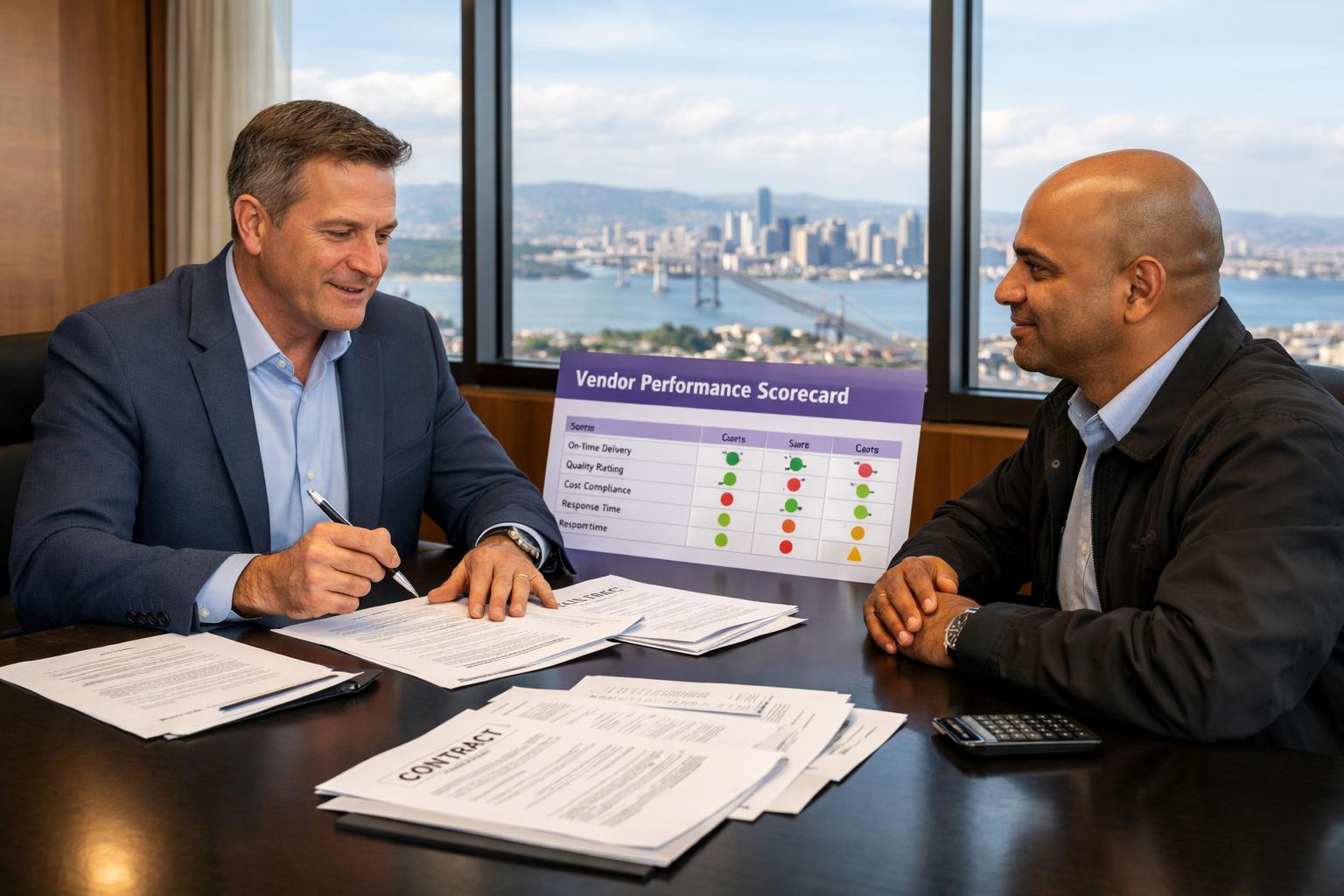
If you manage facility service contracts in Silicon Valley, March represents your highest-leverage negotiation window of the entire year. The timing dynamics of the janitorial, maintenance, and building services industry create conditions in early spring that favor buyers over sellers, and smart facility managers exploit this window every single year.
Understanding why March is different from other months gives you a tangible advantage in securing better pricing, improved service terms, and stronger accountability provisions. Here is the strategic framework behind spring contract negotiations and how to use it effectively.
The facility services industry operates on predictable annual cycles that create a March negotiation sweet spot for building owners and managers.
Most commercial cleaning and maintenance contracts in Silicon Valley run on calendar-year or fiscal-year cycles. January through March is historically the softest period for new business acquisition in the janitorial industry. Holiday-season contract terminations have taken effect, leaving service providers with capacity they need to fill. Their sales teams are under pressure to replace lost accounts and hit Q1 targets.
This dynamic flips the leverage equation. During peak contracting periods, typically September through November when annual budgets get finalized, service providers can be selective and less flexible on pricing. In March, they are more willing to negotiate aggressively on pricing, absorb startup costs, and agree to performance terms they would push back on during stronger months.
Additionally, March sits far enough from most contract renewal dates that you have time to complete a proper evaluation process rather than making rushed decisions under deadline pressure.
Before entering any negotiation, you need a clear picture of what you currently have versus what you actually need. Most facility managers are operating under contracts that have been renewed with minor adjustments year after year without a fundamental reassessment.
Pull every active facility service contract and evaluate each one against three criteria: cost competitiveness, scope alignment, and performance quality.
Cost competitiveness means comparing your current per-square-foot rates against current market pricing. Silicon Valley janitorial rates for Class A office space typically range between $0.08 and $0.15 per square foot depending on scope and frequency. If your rates fall outside this range in either direction, you either have an unusually good deal or you are overpaying.
Scope alignment means confirming that the contracted scope still matches your building's actual needs. Tenant turnover, occupancy changes, and operational shifts over the past year may have created mismatches between what you are paying for and what you actually require.
Performance quality means honestly assessing whether your current provider delivers consistent, measurable results. Review tenant complaint logs, inspection scores, and your own observations. If you are constantly managing your vendor's performance, the contract relationship is already broken regardless of pricing.
Even if you intend to stay with your current provider, running a competitive bid process is the single most powerful tool for securing better terms. Nothing sharpens a vendor's attention like the knowledge that you are actively evaluating alternatives.
Issue a formal Request for Proposal to three to five qualified providers. Your RFP should include a detailed scope of work with specific deliverables and frequencies, clearly defined performance standards and measurement methodologies, your inspection and reporting requirements, insurance and licensing requirements specific to California, and your expected contract term and renewal structure.
Give respondents three weeks to submit proposals. This timeline is long enough for serious providers to prepare quality submissions and short enough to maintain momentum in your process.
When evaluating responses, resist the temptation to select purely on price. The lowest bidder in facility services frequently delivers the worst outcomes because they have under-resourced the account from day one. Instead, evaluate total value: pricing, staffing plan quality, management structure, references from similar Silicon Valley properties, and their demonstrated understanding of your specific building needs.
Pricing gets all the attention, but the contract terms you negotiate determine your actual experience over the next 12-36 months. Focus your negotiation energy on these high-impact provisions.
Performance guarantees with financial consequences. Your contract should include specific, measurable performance standards tied to financial remedies. If the provider fails a defined percentage of inspections in any quarter, automatic rate reductions should apply. This provision alone transforms vendor accountability.
Staffing commitments. Specify minimum staffing levels for your property and require advance notification of any personnel changes. High staff turnover is the primary driver of service quality inconsistency in janitorial contracts, and contractual staffing commitments give you leverage to address the issue before it affects your building.
Termination flexibility. Negotiate a 30-day termination for cause provision and a 60-90 day termination for convenience provision. Contracts that lock you in for 12 months with no exit create situations where underperforming providers have no incentive to improve.
Scope change mechanisms. Include a clear process for adding or removing scope elements with pre-agreed rate structures. This prevents the common problem where every change request becomes a separate negotiation.
Annual rate adjustment caps. If your contract spans multiple years, cap annual rate increases to a fixed percentage or tie them to a specific cost index. Open-ended annual adjustment provisions consistently result in above-market rate growth.
Silicon Valley facility managers who consistently secure the best contract terms share several tactical approaches that distinguish them from average negotiators.
Lead with data, not emotions. Present your market research, benchmark data, and performance documentation as the foundation for your negotiation position. Vendors respond to evidence-based discussions far more productively than adversarial demands.
Bundle services for leverage. If you manage multiple properties or need multiple service types (janitorial, landscaping, porter services), bundling these into a single contract or negotiating them simultaneously with the same provider increases your leverage significantly. Providers value account size and will offer better terms for larger commitments.
Negotiate the full package before discussing final pricing. Agree on scope, terms, staffing, and performance standards first. Once the provider has invested time and energy in structuring the deal, they are psychologically committed and more flexible on final pricing.
Create genuine competition. Do not use competing bids as a bluff. Actually evaluate the alternatives seriously and let every provider in the process know that you are doing so. The credibility of your competitive process determines how aggressively vendors will compete for your business.
If your negotiation process results in a provider change, the transition period is the highest-risk phase. Poor transitions create service gaps that frustrate tenants and can take months to recover from.
Build a 30-day transition plan that includes a two-week overlap period where the outgoing and incoming providers both have access to the building. The incoming provider uses this period for facility walkthroughs, supply room setup, staff orientation, and relationship building with your team.
Require the incoming provider to present a detailed 90-day service plan covering their ramp-up strategy, initial deep cleaning schedule, communication protocols, and performance tracking methodology.
Communicate the transition to tenants proactively. Explain the change, introduce the new provider's on-site management, and provide a direct contact for any issues during the transition period. Transparency prevents tenant anxiety and gives your new provider a foundation of goodwill.
March gives you timing leverage that simply does not exist during other months. Whether you are renegotiating with your current provider or exploring the market, the conditions right now favor facility managers who are prepared, data-driven, and willing to run a genuine competitive process.
Start your contract audit this week. Pull your current agreements, benchmark your rates, and decide which contracts need attention. The negotiation window closes as Q2 ramps up and vendor capacity tightens. The best deals go to facility managers who move while the leverage is in their favor.
MAFM helps Silicon Valley property managers secure optimal facility service contracts through data-driven negotiations and strategic vendor management.
Schedule your consultation: Contact MAFM.PRO
January 17, 2026

August 21, 2026

September 17, 2026
MAFM offers comprehensive facility management solutions tailored to your business needs.
Get in Touch