Professional Window Cleaning Programs for Silicon Valley Commercial Buildings
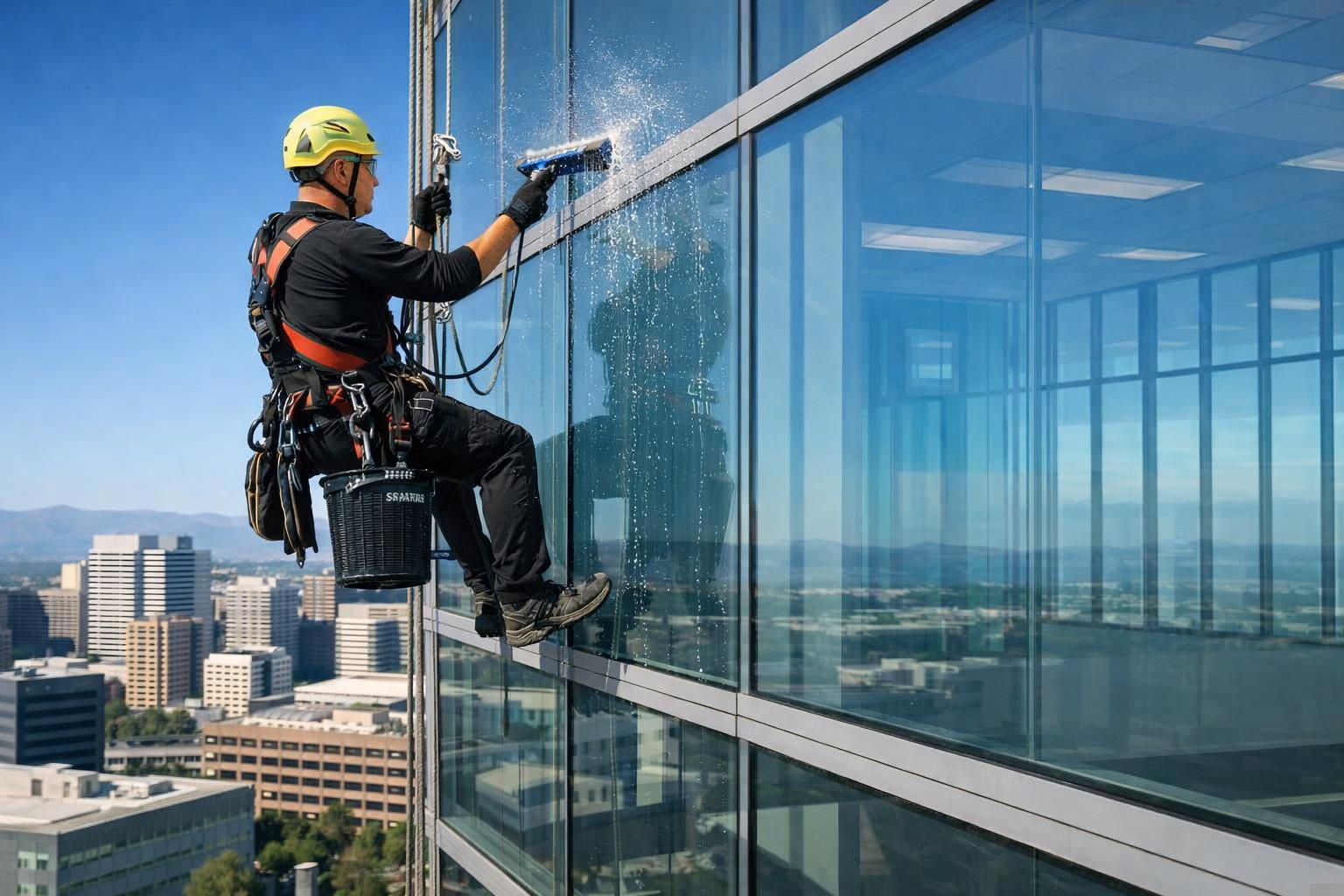
Professional Window Cleaning Programs for Silicon Valley Commercial Buildings
Windows represent the largest visible surface of most Silicon Valley commercial buildings, thousands of square feet of glass creating first impressions for tenants, visitors, and prospects. Yet window cleaning receives minimal strategic attention despite directly affecting building appearance, energy efficiency (dirty glass blocks solar gain in winter), and tenant satisfaction.
Properties default to infrequent, inconsistent window cleaning: "We'll schedule it when windows look bad" or "Twice a year whether they need it or not." This reactive approach leaves windows perpetually degraded between cleanings, creates permanent etching from mineral deposits and environmental contaminants, and forces expensive restoration that proper maintenance prevents.
Silicon Valley's climate creates specific window cleaning challenges: minimal rain (windows never naturally rinse), hard water from irrigation overspray (mineral etching), and seasonal wildfire ash (abrasive particulate requiring special handling). Properties implementing systematic window cleaning programs maintain pristine glass year-round while preventing permanent damage that reduces property value and forces premature glass replacement.
Why Window Cleaning Frequency Matters
Permanent Damage from Deferred Maintenance
Glass appears inert and permanent but degrades predictably when contaminants remain too long.
Hard water etching:
Silicon Valley's hard water (150-250 ppm dissolved minerals) leaves mineral deposits when evaporated
Sprinkler overspray hitting windows deposits calcium and magnesium
Initial deposits wipe off easily
After 30-60 days, minerals bond to glass surface
After 90+ days, etching becomes permanent (cannot be removed by normal cleaning)
Permanent etching requires expensive restoration (acid treatments, polishing) or glass replacement
Oxidation staining:
Metal window frames (aluminum, bronze) oxidize
Rainwater or irrigation runoff carries oxidation onto glass
Creates brown/orange staining below metal components
Fresh staining removes with standard cleaning
Aged staining (6+ months) bonds to glass requiring aggressive restoration
Environmental contamination:
Urban pollution deposits acidic compounds on glass
Wildfire ash contains abrasive silica particles
Bird droppings contain uric acid etching glass
Immediate cleaning prevents damage; delayed cleaning allows permanent etching
A Palo Alto office building deferred window cleaning for 18 months:
Restoration required: Acid treatment and polishing
Cost: $8,500
Preventive cleaning cost (quarterly service for same period): $3,200
Excess cost from deferred maintenance: $5,300
Note: Some panels still showed permanent etching after restoration
Energy Performance Impact
Dirty windows reduce natural light transmission and solar heat gain.
Light transmission reduction:
Clean glass: 88-90% visible light transmission
Moderately dirty glass: 70-75% transmission
Very dirty glass: 50-60% transmission
Consequences:
Tenants compensate for reduced natural light by increasing electric lighting (higher energy costs)
Reduced solar heat gain in winter requires more heating energy
Reduced tenant satisfaction with workspace quality
A Mountain View building measured lighting energy before/after window cleaning:
Perimeter zone lighting energy (pre-cleaning): $4,800 monthly
Same zones (post-cleaning): $4,100 monthly (15% reduction)
Tenants reported: "Workspace feels brighter and more pleasant"
Annual lighting savings from clean windows: $8,400
Annual window cleaning cost: $6,800
Net annual benefit: $1,600 plus tenant satisfaction improvement
Establishing the Right Cleaning Frequency
Factors Affecting Optimal Schedule
Building height and exposure:
Low-rise (1-3 stories): More irrigation overspray, easier for tenants to notice dirt
Mid-rise (4-10 stories): Less overspray, still visible from ground
High-rise (10+ stories): Minimal overspray, primarily environmental pollution
Surrounding environment:
Construction nearby: Dust and debris settlement requires more frequent cleaning
Adjacent landscaping: Sprinkler overspray affects lower floors
Urban vs. suburban: Urban properties accumulate pollution faster
Irrigation system design:
Poorly aimed sprinklers hitting building: Weekly overspray creates rapid mineral buildup
Properly designed system avoiding building: Minimal irrigation impact
Building class and tenant expectations:
Class A buildings: Tenants expect pristine appearance
Class B buildings: Moderate standards acceptable
Class C buildings: Basic cleanliness sufficient
Recommended Frequency by Building Type
Class A office (Silicon Valley standard):
Exterior windows: Quarterly (every 3 months)
Interior windows (high floors): Semi-annually
Ground floor exterior: Monthly (highest visibility, most contamination)
Class B office:
Exterior windows: Semi-annually
Interior windows: Annually
Ground floor exterior: Quarterly
Buildings with heavy irrigation overspray:
Affected surfaces: Monthly minimum
Consider irrigation system redesign (often cheaper than excessive cleaning)
Buildings near construction:
Duration of construction exposure: Monthly cleaning
Resume normal schedule when construction complete
Window Cleaning Methods and Safety
Interior Window Cleaning
Relatively straightforward but still requires proper technique and equipment.
Method:
Spray glass with cleaning solution
Squeegee in overlapping vertical or horizontal strokes
Wipe window edges and sills with microfiber cloth
Equipment:
Professional window cleaning solution (not household products)
Professional squeegees with sharp rubber blades
Microfiber cloths (lint-free)
Extension poles for high windows
Safety:
Step stools or small ladders for windows above reach
No standing on furniture
Weight rating appropriate for use
Labor rate:
Interior windows: $1.50-$3.50 per pane depending on size and access
Typical office building (200 windows): $300-$700 per cleaning
Exterior Window Cleaning - Low-Rise (1-3 Stories)
Accessible from ground with extension poles or small ladders.
Equipment:
Water-fed poles (extend 30-40 feet)
Purified water system (removes minerals preventing spotting)
Traditional squeegees and ladders (older method)
Safety harnesses if working from ladders above 6 feet
Purified water systems:
Deionize water removing all dissolved minerals
Pure water acts as natural cleaner (attracts dirt)
No soap required (no residue, no streaking)
Equipment investment: $2,000-$5,000
Produces spot-free results on exterior glass
Labor rate:
Ground-level exterior: $2.00-$4.00 per pane
Second/third floor: $3.00-$5.00 per pane
Exterior Window Cleaning - High-Rise (4+ Stories)
Requires specialized access equipment and trained personnel.
Access methods:
Bosun's chair (rope access): Technician rappels from roof
Swing stage (suspended scaffold): Platform for 1-2 workers
Boom lift: Articulating arm positions worker at windows
Building maintenance unit (BMU): Permanent roof-mounted system
Safety regulations:
OSHA fall protection requirements
California Title 8 safety standards
Certified rope access technicians (SPRAT or IRATA certification)
Insurance: $2-5 million liability minimum
Scheduling considerations:
Weather dependent (no rain, wind limits)
Roof access coordination
Tenant notification (visual presence outside windows)
Labor rate:
High-rise exterior: $4.00-$8.00 per pane depending on building height and complexity
Mobilization fees: $500-$2,000 per visit
Buildings over 15 stories: Often $10,000-$30,000 per complete exterior cleaning
Special Situations and Treatments
Post-Construction Window Cleaning
Construction creates unique contamination requiring specialized cleaning.
Typical construction contaminants:
Concrete and mortar splatter
Paint overspray
Caulk and adhesive residue
Protective film adhesive (labels)
Metal grinding residue
Specialized cleaning process:
Scraping (careful technique to avoid scratching)
Solvent application for adhesives
Multiple cleaning passes
Final polish
Timing:
Initial clean: After construction completion, before tenant occupancy
Final detail: 30 days after initial (address any residual issues)
Cost:
Post-construction window cleaning: $5.00-$12.00 per pane (2-4x normal rate)
Often included in construction contract but poorly executed
Better to specify professional window cleaning company rather than GC's laborers
Hard Water Stain Restoration
When preventive cleaning failed and permanent etching occurred.
Assessment:
Test small area determining if staining responds to treatment
Severe etching may be permanent (glass replacement only option)
Restoration methods:
Acidic cleaners (diluted hydrochloric or phosphoric acid)
Fine abrasive compounds
Mechanical polishing
Cost:
Hard water restoration: $8.00-$20.00 per pane
Severe cases: Glass replacement may be more economical
Prevention:
Regular cleaning prevents mineral buildup
Adjust irrigation systems eliminating overspray
Consider water-repellent coatings in high-risk areas
Window Film and Coating Compatibility
Some window treatments require special cleaning considerations.
Low-E coatings:
Factory-applied during glass manufacturing
Generally durable and cleanable with standard methods
Avoid abrasive materials
Aftermarket window film:
Applied to existing glass for solar control or privacy
Can be damaged by harsh chemicals or abrasive cleaning
Verify cleaning methods with film manufacturer
Use only approved cleaning solutions
Anti-graffiti coatings:
Protect glass from etching or paint
Require periodic reapplication
Clean with approved methods to preserve coating
Cost Structures and Contracting
Pricing Models
Per-pane pricing:
Fixed price per window regardless of size
Simple billing
Works well for buildings with uniform window sizes
May overprice large windows or underprice small ones
Square footage pricing:
Price per square foot of glass
More accurate for buildings with varied window sizes
Requires measurement
Hourly pricing:
Price per labor hour
Less common for window cleaning
Used for specialized restoration work
Frequency discounts:
Annual contracts with scheduled service
10-20% discount vs. one-time service
Guaranteed schedule
Priority service
Sample Contract Terms
Comprehensive window cleaning agreement:
Scope: Interior and exterior windows, glass doors, glass partitions
Frequency: Quarterly exterior, semi-annual interior
Weather contingency: Reschedule within 7 days if weather prevents service
Quality standard: Streak-free, spot-free finish
Re-clean guarantee: Return within 48 hours if quality issues reported
Insurance: $2 million general liability, workers compensation
Safety: OSHA compliant, certified rope access technicians for high-rise
Billing: Net 30 days
Term: 12 months with automatic renewal
Termination: 60 days written notice
Price adjustment: Not more than 5% annually
Quality Control and Inspection
Post-Service Inspection
Property manager or facility manager should inspect after each service.
Inspection checklist:
Streak-free finish on all glass
Frames and sills wiped clean
No water spots or mineral deposits
Screens reinstalled properly (if removed)
No damage to window frames or seals
Ground-level debris removed
Deficiency response:
Document with photos
Notify vendor same day
Vendor returns within 24-48 hours to correct
Persistent quality issues trigger vendor review
Tenant Feedback Loop
Tenants notice window cleanliness (or lack thereof).
Post-service communication:
Email notification: "Building windows professionally cleaned [date]"
Reminder: "Please notify management of any issues within 48 hours"
Feedback mechanism: Simple email or web form
Tenant complaint response:
Inspect reported issue within 24 hours
Vendor returns to address legitimate deficiencies
Document all complaints and resolutions
Track patterns indicating vendor performance problems
A San Jose property tracked tenant window cleaning feedback:
Year 1 (previous vendor): 18 complaints following 4 cleaning services (4.5 per service)
Year 2 (new vendor with stricter quality requirements): 3 complaints following 4 services (0.75 per service)
Improvement: 83% reduction in complaints
Contributing factors: Better vendor, clearer quality standards in contract, systematic inspection before tenant occupancy
Maintain Pristine Glass Year-Round
MAFM coordinates professional window cleaning services for Silicon Valley commercial properties, including scheduling management, quality inspection, hard water prevention, and vendor accountability systems that keep your building's glass spotless while preventing permanent damage.
Schedule your consultation: Contact MAFM.PRO
Ready to Optimize Your Facilities?
MAFM offers comprehensive facility management solutions tailored to your business needs.
Get in Touch