Insurance Cost Management for Silicon Valley Commercial Properties: The Risk Management Approach That Reduces Premiums by 15-30%
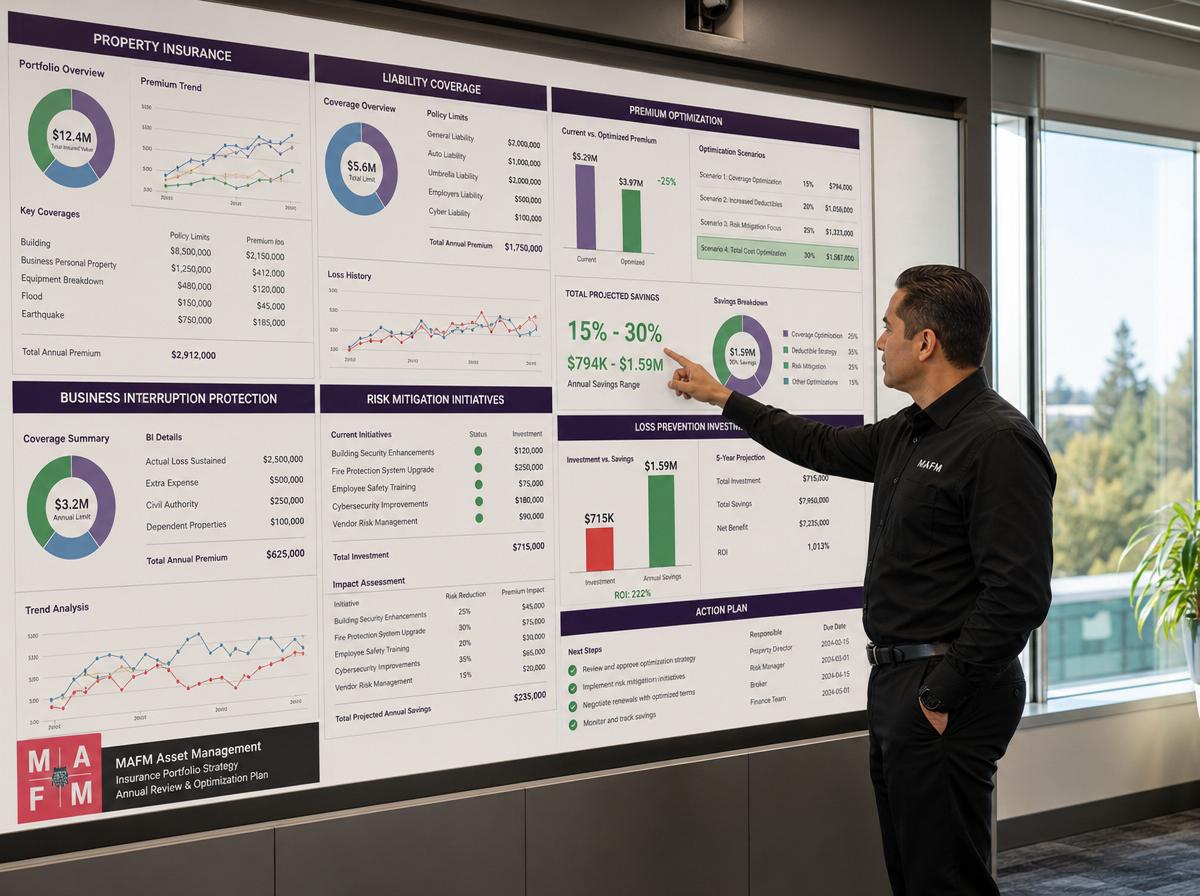
Insurance Cost Management for Silicon Valley Commercial Properties: The Risk Management Approach That Reduces Premiums by 15-30%
Commercial property insurance in California has become one of the most volatile line items in facility operating budgets. The combination of escalating wildfire risk, increased construction costs that drive replacement value assessments, and insurer withdrawals from California markets have produced premium increases of 25–40% over the past three years for many Silicon Valley commercial buildings, with no corresponding improvement in coverage terms.
For facility managers and property owners, insurance cost management has moved from a periodic renewal negotiation to an active risk management discipline. The buildings that maintain reasonable premium levels despite market pressures are those that can demonstrate to underwriters, with documented evidence, that their loss prevention programs, building systems maintenance, and risk management practices reduce their probability of insured loss relative to comparable buildings.
This evidence-based approach to insurance positioning is within every facility manager's capability to execute and consistently produces premium savings that far exceed the investment in documentation and program improvement.
How Underwriters Evaluate Commercial Property Risk
Understanding how insurance underwriters assess your building is the prerequisite for positioning it favorably.
Underwriters evaluate commercial property risk across five primary dimensions: physical condition and construction quality, loss history (both the building's specific claims and the broader portfolio's claims if applicable), building systems maintenance and inspection compliance, location and external hazard exposure, and management quality as evidenced by documentation and program sophistication.
Physical condition assessment is where building condition documentation becomes directly valuable in insurance contexts. A Facility Condition Index below 10% with documented recent investments in building systems communicates to an underwriter that the property is well-maintained and proactively managed. A building with no documented condition assessment and a history of deferred maintenance projects signals elevated risk that underwriters price accordingly.
Loss history is the most direct driver of premium variation, a building with three water damage claims in five years pays dramatically more than a comparable building with no claims, regardless of the cause of those claims. This is where a comprehensive water damage prevention program becomes a premium management tool as well as a building protection measure.
Building systems compliance with required inspections (fire alarm testing, sprinkler inspection, elevator inspection, backflow prevention testing) signals management quality to underwriters and affects coverage terms in specific ways. Some insurers require documented inspection compliance as a policy condition; others simply price buildings with documented compliance lower than buildings where inspection status is unknown.
The Loss Prevention Documentation Package
The most powerful premium management tool available to Silicon Valley facility managers is a comprehensive loss prevention documentation package presented to underwriters at renewal.
This package communicates, with evidence, that your building has a lower-than-average probability of insured loss because of specific, documented prevention programs. Underwriters who can verify that a building has documented fire and life safety compliance, water leak detection infrastructure, roof maintenance records, HVAC preventive maintenance documentation, and staff training programs for emergency response can justify pricing the building below their standard model for comparable risks.
The documentation package should include annual fire and life safety inspection reports for all systems, demonstrating compliance with NFPA 72, 25, and 80 requirements; water leak detection system installation documentation and test records; roof inspection reports from the past three years showing current condition and maintenance history; HVAC preventive maintenance records demonstrating scheduled service compliance; staff emergency response training records; and a brief loss prevention program narrative that contextualizes the documentation.
Presenting this package proactively, rather than waiting for the underwriter to ask, signals management sophistication that distinguishes your building from the majority of commercial properties that provide no documentation beyond loss runs and basic property information.
Wildfire Risk Management in the Insurance Context
Wildfire risk has become the dominant driver of commercial property insurance pricing in California, and the Bay Area's position adjacent to fire-prone hillsides and open spaces has made wildfire risk management a specific, demonstrable insurance positioning opportunity.
Defensible space maintenance around the building perimeter (the removal of dry vegetation, combustible debris, and fire-path fuel within a defined zone) demonstrates active wildfire risk mitigation that insurers can credit. For buildings in or near wildland-urban interface areas, a documented defensible space program with annual maintenance records provides evidence of risk management that standard commercial buildings in less exposed locations cannot provide.
Building envelope fire resistance documentation (ember-resistant vents, Class A roofing, fire-resistant siding materials) provides physical evidence of construction quality that reduces wildfire vulnerability. If your building has had any renovation or upgrade that improved its fire resistance characteristics, document those improvements for the underwriter's record.
Emergency response plan documentation specific to wildfire scenarios demonstrates management preparedness. An evacuation plan that accounts for smoke conditions, an HVAC recirculation protocol for smoke events, and a documented communication plan for wildfire emergencies all communicate to underwriters that your management team has thought through the wildfire risk in ways that unprepared buildings have not.
Coordination with local fire department is an underwriting positive that many building owners overlook. Having your building included in the local fire department's pre-incident planning database, so responding units already have building information, access points, and utility shutoff locations documented before any emergency, is both a safety improvement and an insurance positioning advantage.
Claims Management and Loss Run Optimization
Even with excellent loss prevention, incidents occur. How you manage claims affects both the immediate financial outcome and the long-term premium impact.
Claims reporting timing affects coverage in ways many building owners do not understand. Property insurance policies typically require prompt notification of losses, often within 24–72 hours of discovery. Late reporting can jeopardize coverage, and the failure to report initially and then file later always raises questions about the delay that complicate claims.
Claims documentation quality determines recovery amounts. Photographs taken immediately at discovery, contractor invoices for all remediation work, business interruption calculations with supporting records, and a clear narrative of the incident, response, and remediation outcome all support maximum recovery under the claim.
Small claim management requires strategic consideration. A small water damage claim of $8,000 that is below your deductible anyway, or only modestly above it, may cost more in premium increases over the following three to five years than the recovery provides. Insurance brokers can model the breakeven between claiming versus self-funding for losses in the deductible-adjacent range.
Subrogation pursuit, recovering insurance payments from the party whose negligence caused the loss, is a claims management function that property owners should actively support. When a contractor's negligence causes a water loss or when a tenant's employee creates a fire condition, the insurer's right to recover from the responsible party reduces the insurer's net loss and can affect loss run history.
Coverage Review and Structure Optimization
Beyond premium management, annual coverage structure review ensures that your building is protected at appropriate limits with appropriate terms.
Replacement cost valuation updates are essential in a construction cost environment that has increased 30–45% over three years. A building insured at 2022 replacement cost values is underinsured in 2026, and co-insurance provisions in many commercial property policies penalize underinsurance by reducing claim recovery proportionally. Verify that your building's insured replacement cost reflects current construction costs, not the values from your last formal appraisal.
Ordinance or law coverage provides for the increased construction costs that code-required upgrades impose when rebuilding after a loss. Silicon Valley's evolving building codes (electrification requirements, energy standards, accessibility standards) mean that rebuilding a damaged building to its original specifications is rarely code-compliant. Ordinance or law coverage funds the gap between replicating the original building and meeting current code requirements.
Flood coverage review is relevant for Silicon Valley properties in FEMA flood zone designations, near waterways, or in areas subject to storm drain flooding. Standard commercial property policies exclude flood, and the damage from flood events, including the atmospheric river storms that now affect the Bay Area with increasing frequency, requires separate flood coverage to be recoverable.
Conclusion
Insurance cost management is the intersection of facility management excellence and financial performance, where the documentation discipline, building system maintenance, and loss prevention programs that define good facility operations translate directly into reduced insurance premiums and improved coverage terms.
Engage your insurance broker before your next renewal with the documentation package described here. Request market remarketing to ensure your coverage is competitively priced. Review your coverage structure against current replacement values and code requirements. The premium savings and coverage improvements available to well-managed Silicon Valley buildings are substantial, but only facility managers who actively pursue them capture them.
MAFM maintains the documented loss prevention programs and building systems records that position our clients' properties favorably with insurance underwriters. Contact us to discuss how our management approach supports your insurance positioning.
Schedule your consultation: Contact MAFM.PRO
Ready to Optimize Your Facilities?
MAFM offers comprehensive facility management solutions tailored to your business needs.
Get in Touch