Future-Proofing Your Facility Management Career: The Skills and Strategies That Define Tomorrow's FM Leaders
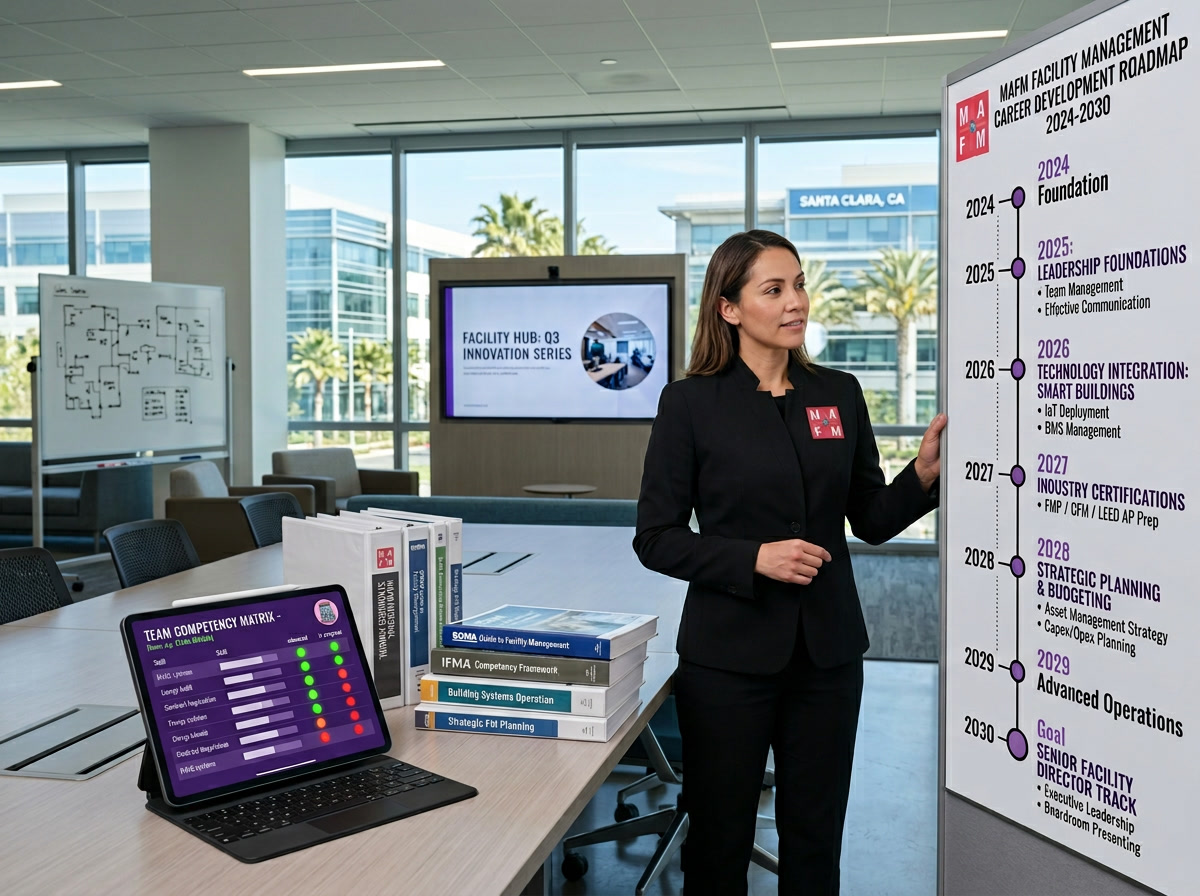
Future-Proofing Your Facility Management Career: The Skills and Strategies That Define Tomorrow's FM Leaders
The facility management professional of 2030 will bear little resemblance to the facility manager of 2020. The role is transforming from an operational execution function into a strategic discipline that integrates technology, data analytics, sustainability science, tenant experience design, and financial management into a single professional domain.
For facility managers who embrace this evolution, the career trajectory has never been more promising. The convergence of building technology complexity, sustainability mandates, workplace experience expectations, and operational sophistication has elevated facility management from a back-office function to a boardroom conversation. Companies and property owners are competing for facility leaders who can navigate this complexity, and compensation for skilled professionals has increased accordingly.
For facility managers who resist the evolution, who define their role as keeping the building clean and the equipment running, the professional landscape is narrowing. The tasks that defined facility management for the past thirty years are increasingly being automated, outsourced, or absorbed into broader operational roles.
Here is an honest assessment of where the profession is heading and what you need to do to lead rather than follow.
The Skills Transformation
The technical skills that built facility management careers over the past two decades remain necessary but are no longer sufficient. The profession now demands competencies that cross traditional boundaries between operations, technology, finance, and organizational leadership.
Data literacy has become the most critical emerging skill for facility managers. The volume of data generated by modern building systems, energy consumption, occupancy patterns, equipment performance, air quality metrics, work order trends, cost allocations, overwhelms facility managers who lack the ability to interpret, analyze, and communicate data-driven insights.
Data literacy does not mean becoming a data scientist. It means understanding how to read dashboards, identify meaningful trends in operational data, formulate questions that data can answer, and present data-supported recommendations to stakeholders who think in financial terms. The facility manager who can walk into a budget meeting with a chart showing that preventive maintenance investment reduced emergency repairs by 40% speaks a language that ownership understands and respects.
Financial acumen has moved from nice-to-have to essential. Property owners and corporate real estate leaders expect facility managers to manage budgets with the same discipline as any other department head. This means understanding cost per square foot benchmarking, total cost of ownership analysis, capital planning and reserve fund management, and the ability to present facility investments as business cases rather than expense requests.
Sustainability expertise is rapidly becoming a baseline professional requirement. California's regulatory trajectory means that facility managers who cannot navigate energy benchmarking, carbon reduction strategies, waste diversion compliance, and electrification planning will be professionally disadvantaged within the next three to five years. The facility managers who develop this expertise now position themselves as essential resources during the building decarbonization transition.
Technology management skills bridge the gap between building systems and the IT infrastructure that increasingly controls them. Facility managers who understand network connectivity, cybersecurity basics for operational technology, API integration between building systems, and cloud-based platform management are dramatically more valuable than those who treat technology as someone else's domain.
Certifications That Matter
Professional certifications signal competency to employers and provide structured learning pathways that build the skills the market demands.
The Certified Facility Manager (CFM) credential from IFMA remains the industry's most recognized professional certification. The CFM validates competency across eleven core areas of facility management and requires both examination and documented professional experience. For facility managers who have not yet pursued certification, the CFM provides the strongest return on investment in career positioning.
The Facility Management Professional (FMP) credential serves as a stepping stone for professionals building toward CFM certification or those earlier in their careers who want to demonstrate commitment to professional development without the experience requirements of the CFM.
LEED accreditation in operations and maintenance validates sustainability expertise that is increasingly relevant to Silicon Valley commercial properties. As building performance standards tighten and tenants prioritize green building credentials, LEED O+M expertise differentiates facility managers in the job market.
Building Operator Certification from the Northwest Energy Efficiency Council provides practical training in building energy management that directly translates to operational cost reduction. The certification covers HVAC optimization, lighting systems, indoor air quality, and energy accounting, all skills that produce measurable financial results.
Certified Energy Manager from the Association of Energy Engineers deepens energy management expertise beyond basic building operation into strategic energy planning, utility rate analysis, and renewable energy integration. As energy costs represent an increasing share of facility budgets and electrification mandates accelerate, this certification's value is growing.
Building Your Professional Network
Career advancement in facility management depends on professional relationships as much as technical competence. The facility managers who advance into leadership roles are typically those who are visible in professional communities and known by peers and decision-makers beyond their own organization.
IFMA's Silicon Valley chapter provides the most direct local networking opportunity for Bay Area facility professionals. Chapter events, educational programs, and committee involvement connect you with peers who face similar challenges and with industry partners who can support your professional development.
BOMA's local association connects facility managers with the property management and ownership community that drives hiring decisions for facility leadership roles. Visibility in BOMA events positions you as a professional who understands the property management perspective, a valuable differentiator when competing for portfolio-level facility management positions.
Industry conferences (IFMA's World Workplace, BOMA International Conference, and Greenbuild) provide exposure to national and global trends that inform local practice. The investment in conference attendance pays returns through new ideas, vendor relationships, and the broadened perspective that comes from seeing how facility management operates outside your immediate market.
Mentorship relationships with experienced facility leaders accelerate career development by providing guidance that generic training cannot deliver. Seek mentors who have navigated the career path you aspire to follow and who can provide honest feedback about your strengths, development areas, and strategic career decisions.
Positioning for Leadership Roles
The path from facility manager to director of facilities, vice president of operations, or head of corporate real estate requires deliberate positioning that goes beyond technical excellence.
Develop your executive communication skills. The ability to present complex operational information to non-technical leadership audiences (board members, C-suite executives, investment committees) separates facility managers who remain in operational roles from those who advance into strategic leadership. Practice presenting facility performance in financial terms, strategic context, and concise formats that respect executive time.
Seek cross-functional experience that broadens your perspective beyond pure facility operations. Project management for capital improvement programs, involvement in lease negotiation support, participation in due diligence for property acquisitions, and collaboration with tenant experience teams all build the multidisciplinary expertise that leadership roles demand.
Build a track record of measurable results. Document every significant achievement in quantifiable terms: cost reductions, energy savings, tenant satisfaction improvements, safety record performance, and successful project completions. This documented track record becomes the evidence base for your candidacy when leadership opportunities arise.
Develop your team leadership capabilities. Senior facility management roles involve leading teams of facility managers, engineers, and vendors. The leadership skills required (coaching, delegation, performance management, conflict resolution, and strategic planning) are distinct from the technical skills that got you to your current role and require intentional development.
The Next Five Years
The facility management profession between 2026 and 2030 will be shaped by forces that are already visible to professionals paying attention.
AI integration will automate routine decision-making while elevating the strategic role of facility managers. The professionals who thrive will be those who learn to leverage AI tools for analysis, optimization, and prediction while applying human judgment to the complex, relationship-dependent decisions that AI cannot handle.
Building electrification will create massive demand for facility managers who can plan and execute the transition from gas-fired to electric building systems. This transition represents billions of dollars in capital investment across Silicon Valley's commercial building stock, and the facility managers who develop electrification expertise will be central to every project.
Wellness-focused building operations will continue expanding as occupant health becomes a documented competitive advantage in talent attraction and retention. Facility managers who can design and manage wellness-integrated building operations (air quality programs, biophilic design maintenance, circadian lighting management) will command premium compensation.
The convergence of these trends creates a profession that is more complex, more valued, and more rewarding than facility management has ever been. The opportunity belongs to professionals who prepare now.
Conclusion
The facility management profession is not contracting, it is expanding into a strategic discipline that demands broader skills, deeper expertise, and stronger leadership than at any point in its history. The professionals who invest in their development now will lead this transformation. Those who do not will watch others lead it.
Start your professional development plan this month. Identify the skills gap between where you are and where the profession is heading. Pursue the certification that strengthens your weakest competency area. Join the professional association that connects you with your next opportunity. The future of facility management in Silicon Valley is being shaped right now, and it belongs to those who show up prepared.
MAFM PRO invests in our team's professional development because tomorrow's facility challenges demand today's preparation. Contact us to learn how our commitment to excellence extends from our leadership team to every building we manage.
Schedule your consultation: Contact MAFM.PRO
Ready to Optimize Your Facilities?
MAFM offers comprehensive facility management solutions tailored to your business needs.
Get in Touch