Fire and Life Safety System Management: The Compliance and Maintenance Guide Every Silicon Valley Facility Manager Needs
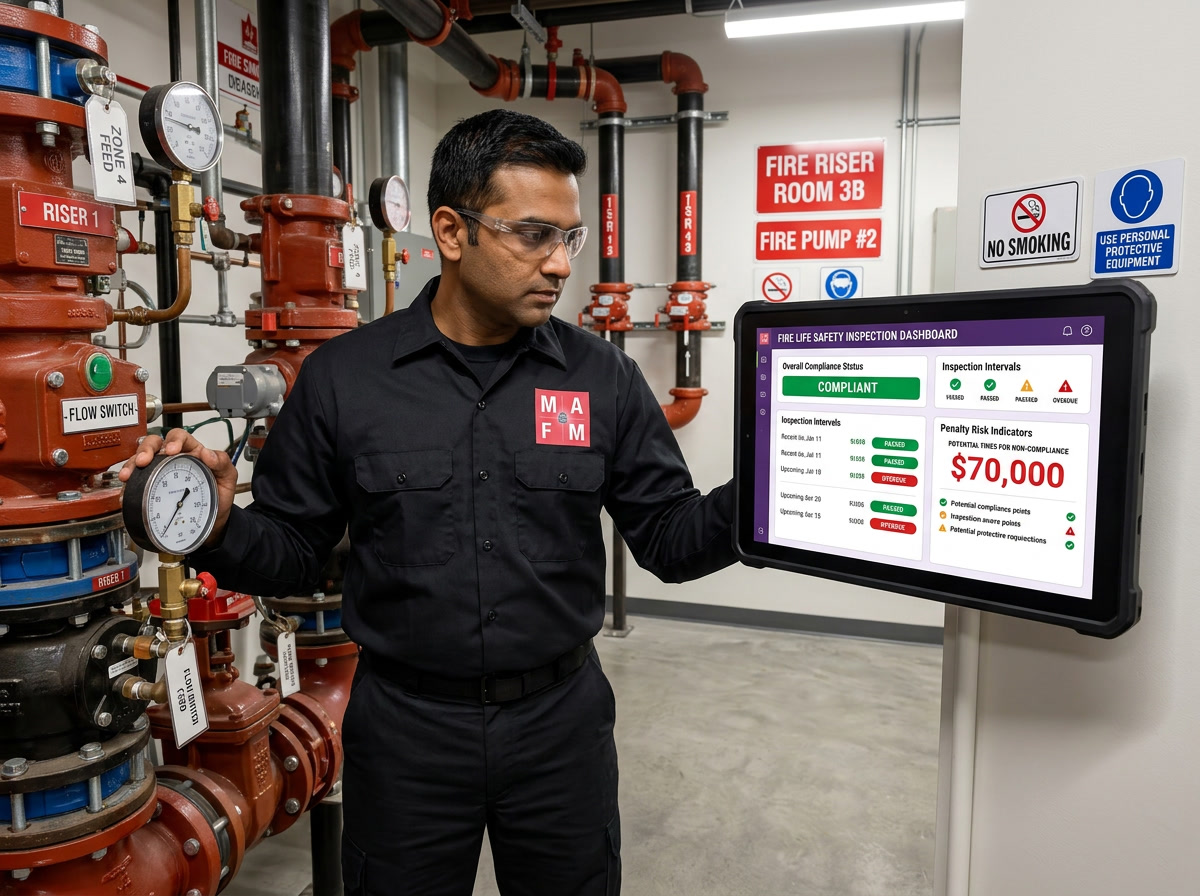
Fire and Life Safety System Management: The Compliance and Maintenance Guide Every Silicon Valley Facility Manager Needs
Fire and life safety systems are the only building systems where a maintenance failure can cost lives. Fire alarms, sprinkler systems, emergency lighting, exit signage, fire-rated assemblies, and smoke control systems form the protective infrastructure that every building occupant depends on but rarely thinks about. The facility manager who maintains these systems is performing the most consequential work in the entire building operation.
The compliance framework surrounding fire and life safety systems is correspondingly strict. California fire codes, local fire department requirements, and insurance carrier mandates create a web of inspection, testing, and maintenance obligations that demand systematic management. A missed inspection deadline, a failed system test, or an improperly maintained component creates regulatory exposure, insurance complications, and genuine safety risk.
Here is the comprehensive management framework that keeps Silicon Valley commercial buildings compliant and protected.
Fire Alarm and Detection Systems
Fire alarm systems require annual inspection, testing, and maintenance under NFPA 72 standards, with California-specific amendments that add requirements beyond the national code.
Annual visual inspection covers every device in the system: smoke detectors, heat detectors, manual pull stations, notification appliances including horns, strobes, and speakers, control panels, annunciators, and all wiring runs accessible for inspection. The inspector verifies that devices are properly positioned, unobstructed, undamaged, and suitable for their installed environment.
Annual functional testing verifies that every initiating device actually triggers the alarm system and every notification appliance actually activates. Smoke detectors must be tested using listed testing methods, manufacturers' smoke simulant or equivalent, not just by pressing a test button. Pull stations must be physically activated. Duct detectors, heat detectors, and waterflow switches must be operationally tested.
The fire alarm monitoring connection to the supervising station must be tested quarterly to verify that signals are received and processed correctly. This test confirms the critical link between your building's alarm system and the fire department dispatch that it triggers.
Sensitivity testing for smoke detectors must be performed within one year of installation and every two years thereafter. Detectors that have drifted outside their listed sensitivity range must be cleaned and retested or replaced. This requirement catches the gradual contamination that causes detectors to become either oversensitive, generating nuisance alarms, or undersensitive, failing to detect actual smoke conditions.
Maintain all test records for a minimum of three years. Fire marshals and insurance auditors routinely request test documentation, and gaps in records create the same compliance exposure as gaps in testing.
Automatic Sprinkler Systems
Sprinkler systems are the single most effective fire suppression technology in commercial buildings. Their reliability depends on maintenance that many facility managers underestimate in both scope and importance.
Weekly and monthly inspections by on-site facility staff should verify that all control valves are in the open and locked position, all gauges display normal pressure, fire department connections are unobstructed and in serviceable condition, and no sprinkler heads are painted, damaged, corroded, or obstructed by stored materials.
Quarterly testing of water flow alarm devices and valve supervisory switches confirms that the system will actually signal the fire alarm panel when activated. A sprinkler system that operates but does not notify anyone provides suppression without alerting occupants and the fire department.
Annual sprinkler inspections by qualified contractors cover the complete system: piping, hangers, bracing, sprinkler heads, control valves, check valves, fire department connections, and all associated components. The inspector verifies NFPA 25 compliance across every element.
Five-year internal pipe inspections apply to wet pipe systems and are frequently overlooked. The inspector opens the system at specified points to examine pipe interior condition. Significant corrosion, foreign material accumulation, or microbiologically influenced corrosion discovered during internal inspection can indicate systemic issues that threaten reliability.
Spare sprinkler head inventory must be maintained on-site: a minimum of six spare heads of each type installed in the building, stored in an approved cabinet with a wrench. This requirement ensures that damaged or activated heads can be replaced promptly to restore protection.
Emergency and Exit Lighting
Emergency lighting and exit signage provide the illumination and wayfinding that occupants need to evacuate safely when normal power fails. These systems are life safety critical and frequently under-maintained.
Monthly functional testing requires activating emergency lighting and exit signs by simulating a power failure and verifying that all units illuminate to required levels. This test can be conducted by switching off the circuit breaker serving each unit or by using the test switch on each fixture.
Annual 90-minute discharge testing verifies that emergency lighting batteries provide the required minimum duration of illumination. Under NFPA 101 and California building code, emergency lighting must operate for at least 90 minutes on battery power. Units that fail this test must be repaired or replaced immediately.
Exit signs must be continuously illuminated during occupied hours. Burned-out lamps, failed LEDs, or dead batteries in exit signs create code violations and, more importantly, evacuation hazards. Include exit sign inspection in your nightly cleaning checklist, cleaning staff who circulate through the building after business hours are well-positioned to identify dark exit signs.
Photoluminescent exit signs and path markings, increasingly common in California buildings, require adequate ambient light charging to function during power failures. Verify during annual testing that these devices achieve the required luminance levels after the specified dark adaptation period.
Fire-Rated Assemblies and Smoke Barriers
Fire-rated walls, floors, ceilings, and doors create the compartmentalization that contains fire spread and protects evacuation routes. Breaches in fire-rated assemblies, often created during tenant improvement construction or maintenance work, compromise the building's passive fire protection system.
Annual fire door inspection is now explicitly required under NFPA 80, and California has adopted this requirement. Every fire-rated door in the building must be inspected annually for proper closing and latching, intact fire-rated glazing, functional self-closing and automatic-closing devices, intact edge seals and gasketing, and absence of field modifications that compromise the fire rating.
Fire-rated door inspection frequently reveals issues that have accumulated over years of normal use: doors propped open with wedges, self-closers removed or disabled, oversized gaps from hinge sag, and added hardware that penetrated fire-rated cores. Each of these conditions compromises the door's ability to contain fire and smoke.
Firestopping penetration seals at every location where pipes, conduits, or ducts penetrate fire-rated walls and floors must be maintained. When maintenance or tenant improvement work requires penetrating a fire-rated assembly, proper firestop restoration must be documented. The facility manager should verify firestop integrity after any work that involves rated wall or floor penetrations.
Fire Extinguishers and Standpipe Systems
Portable fire extinguishers provide first-response suppression capability that can control or extinguish small fires before they grow beyond manual containment.
Monthly visual inspections verify that extinguishers are in their designated locations, accessible without obstruction, charged to operating pressure, and undamaged. Document each monthly inspection on the extinguisher tag.
Annual maintenance by a licensed extinguisher service company includes a thorough examination of each extinguisher's mechanical components, operating mechanism, and agent condition. Internal examination is required at intervals specific to each extinguisher type.
Hydrostatic testing is required every five or twelve years depending on extinguisher type. This test verifies the structural integrity of the pressure vessel under test conditions that exceed normal operating pressure.
Standpipe systems in multi-story buildings require the same quarterly flow testing and annual inspection regimen as sprinkler systems. Five-year hydrostatic testing of standpipe hose connections verifies that the system can deliver water at the pressures fire department operations require.
Building Your Compliance Calendar
The volume of inspection and testing requirements across all fire and life safety systems demands a comprehensive compliance calendar that prevents missed deadlines.
Map every system, every required inspection type, and every frequency into a single calendar document. Color-code by frequency: monthly items, quarterly items, annual items, and multi-year items each in a distinct color for visual tracking.
Assign responsibility for each inspection to a specific person or contractor. Monthly inspections by on-site staff, quarterly testing by fire protection contractors, and annual comprehensive inspections should each have named responsible parties.
Document everything. Inspection reports, test results, deficiency corrections, and contractor certifications should be organized by system and maintained for a minimum of three years. Digital document management systems that provide audit-trail access simplify both ongoing management and fire marshal inspections.
Schedule fire marshal liaison meetings annually. Proactive communication with your local fire authority establishes a cooperative relationship that serves you far better than the adversarial dynamic that develops when the fire marshal discovers compliance gaps during an unannounced inspection.
Conclusion
Fire and life safety system management carries a weight that no other facility management responsibility approaches. The systems you maintain protect every person in your building. The compliance you ensure protects your property ownership from regulatory penalties, insurance complications, and liability exposure.
Build your compliance calendar this month. Verify that every required inspection is scheduled, every test has been completed on time, and every deficiency from previous inspections has been corrected. Fire and life safety is the one facility management domain where good enough is never good enough.
MAFM PRO maintains comprehensive fire and life safety compliance across every property we manage. Contact us for a fire safety compliance audit.
Schedule your consultation: Contact MAFM.PRO
Ready to Optimize Your Facilities?
MAFM offers comprehensive facility management solutions tailored to your business needs.
Get in Touch