Conference Room and Shared Space Management: The Amenity Operations Playbook for Silicon Valley Commercial Buildings
Conference Room and Shared Space Management: The Amenity Operations Playbook for Silicon Valley Commercial Buildings
Conference rooms and shared amenity spaces occupy a unique position in commercial building operations. They are the most intensively used common areas, the most visible indicators of management quality, and the spaces where facility failures create the most immediate tenant frustration. A conference room that is not ready for a meeting (dirty table, missing markers, empty coffee station, uncomfortable temperature) disrupts business operations in a way that a dirty corridor simply does not.
The hybrid work era has amplified this dynamic. When employees come to the office specifically for collaboration, meetings, and in-person interaction, the spaces that support those activities carry outsized importance. A building with mediocre private offices but excellent shared spaces often outperforms a building with the reverse configuration in tenant satisfaction surveys.
Here is the operational framework that transforms shared spaces from complaint generators into the amenity assets that drive tenant satisfaction and renewal.
The Conference Room Readiness Standard
Every conference room in your building should achieve a defined readiness standard before every meeting. This standard is not aspirational, it is the minimum condition that must be verified between each room turnover.
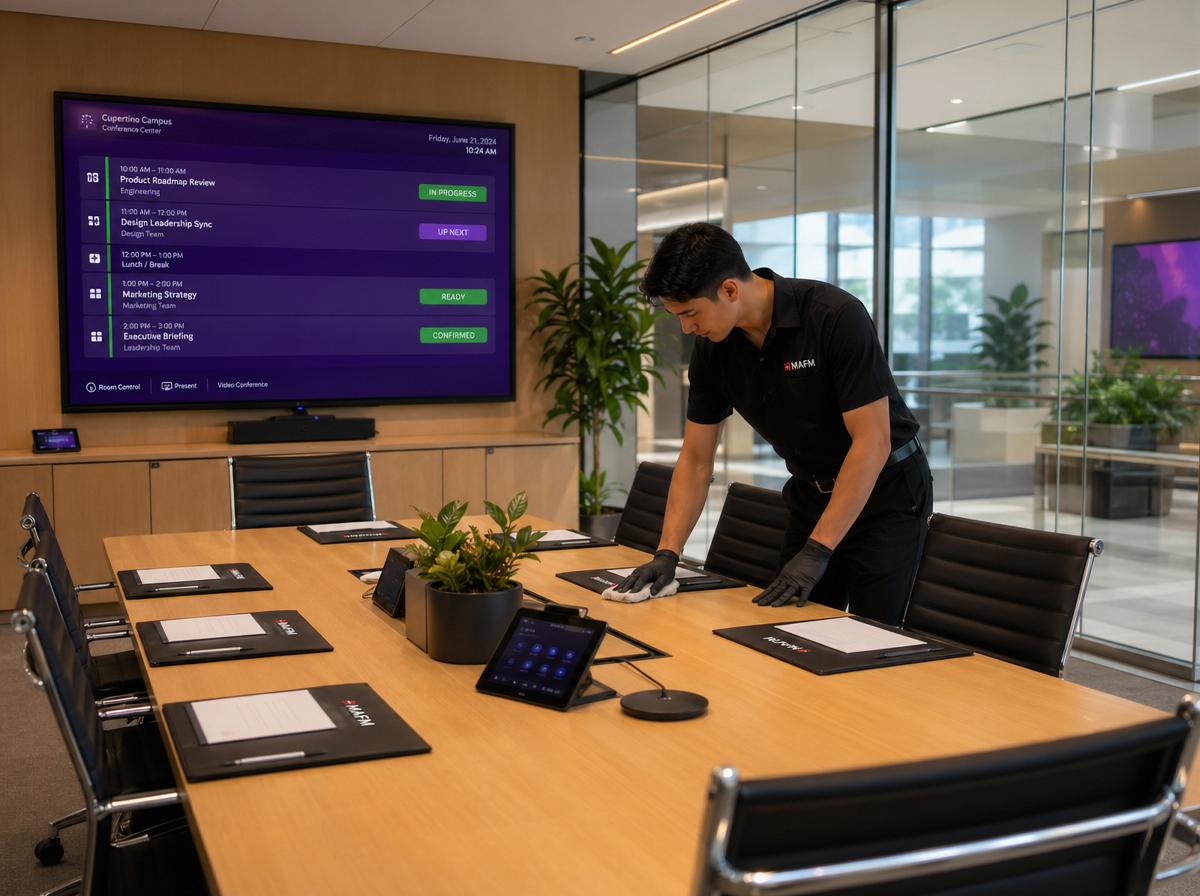
Surface cleanliness covers the conference table, all seating surfaces, any side tables or credenzas, window sills, and presentation equipment surfaces. The table surface should be free of crumbs, spills, rings, and debris. Chairs should be arranged uniformly and wiped clean. These are not nightly cleaning tasks, they are real-time turnover tasks that must occur between each meeting.
Supply readiness ensures that dry-erase markers work and are available in at least three colors, erasers are clean, notepads and pens are replenished, and any room-specific supplies (AV remotes, cables, adapters) are present and positioned consistently. Tenants who enter a conference room and discover dead markers or missing cables form an immediate negative impression that extends to overall building management.
Technology readiness means the display screen or projector is powered and functional, video conferencing equipment is connected and operational, wireless presentation capability is tested, and room scheduling displays show accurate information. Technology failures in conference rooms generate the most emotionally charged tenant complaints because they disrupt meetings in real time in front of clients, partners, and leadership.
Climate readiness requires that the room has reached a comfortable temperature before the meeting begins and that the HVAC system maintains consistent conditions throughout occupancy. Conference rooms with insufficient cooling capacity for full occupancy, a common design failure in older buildings, create discomfort that escalates as meeting duration extends.
The Turnover System
Achieving consistent readiness requires a systematic turnover process rather than periodic cleaning visits that may or may not coincide with actual room transitions.
For buildings with room scheduling systems, integrate cleaning notifications into the scheduling workflow. When a meeting ends and the room becomes available, the facility team receives an alert to service the room before the next scheduled use. This integration is straightforward with modern room scheduling platforms and eliminates the timing gap between dirty rooms and cleaning attention.
For buildings without scheduling integration, establish a check schedule based on usage patterns. High-use conference rooms should be checked every 60–90 minutes during business hours. Lower-use rooms can be checked every two to three hours. Every check follows the same readiness standard verification regardless of whether the room has been used since the last check.
Assign conference room turnover to specific staff members rather than including it in general cleaning responsibilities. A designated day porter with conference room management as a primary responsibility produces dramatically better results than distributing the responsibility across a general cleaning team whose attention is divided among many priorities.
Stock each conference room with a small supply cache (backup markers, a spare notepad, cleaning wipes for quick table service) that allows the turnover attendant to address most supply and cleanliness issues without leaving the floor to retrieve materials. This cache reduces turnover time and ensures that rooms can be restored to readiness within five minutes of the previous meeting's conclusion.
Shared Lounge and Collaboration Areas
Shared lounges, collaboration areas, and informal meeting spaces require different management approaches than formal conference rooms because their use patterns are less structured and less predictable.
These spaces experience continuous, low-intensity use throughout the business day rather than the scheduled, defined-duration use of conference rooms. Occupants use them for casual conversation, individual work, phone calls, and impromptu meetings. The furniture configuration changes as users rearrange seating to suit their needs. Food and beverages are consumed more freely than in formal meeting rooms.
Management of these spaces should emphasize continuous attention rather than scheduled turnover. Day porter routes should include shared lounge areas on every circulation pass, with specific attention to clearing used cups and plates, wiping table surfaces, straightening furniture, and replenishing any amenity supplies.
Furniture selection for shared spaces should prioritize durability and cleanability alongside aesthetics. Upholstered seating looks inviting but absorbs spills and stains in ways that hard-surface seating does not. Performance fabrics with stain-resistant treatments, dark patterns that hide wear, and removable cushion covers that can be laundered or replaced extend the visual life of lounge furniture significantly.
Power outlet availability is the amenity most frequently requested and most commonly underserved in shared collaboration spaces. Tenants who use these spaces for work need device charging, and the absence of accessible power outlets limits the space's usefulness. Retrofit power solutions (furniture-integrated outlets, floor boxes, and tabletop power units) can be added to existing spaces without major construction.
Break Rooms and Kitchen Areas
Tenant break rooms and shared kitchen facilities generate complaint volumes second only to restrooms. The combination of food handling, multiple users with varying cleanliness standards, and equipment that requires regular maintenance creates a facility management challenge that demands dedicated attention.
Cleaning frequency for shared break rooms should match restroom frequency at minimum. During business hours, break rooms should be checked every two hours for counter wiping, sink cleaning, appliance exterior cleaning, table clearing, trash management, and floor spot mopping. These checks maintain the space at an acceptable standard between the thorough nightly cleaning that addresses deeper soil and equipment interiors.
Appliance management is the most common pain point. Coffee machines, microwaves, and refrigerators require regular deep cleaning that exceeds routine wipe-down. Coffee equipment should be descaled monthly and cleaned weekly. Microwaves should be cleaned interior and exterior twice weekly. Refrigerators should be cleaned weekly with a monthly purge of abandoned items, communicated to tenants in advance to allow retrieval.
Pest prevention in break rooms requires rigorous sanitation that goes beyond appearance cleaning. Clean behind and beneath all appliances monthly. Verify that food waste containers are sealed and emptied daily. Inspect for pest evidence during every cleaning visit. Break rooms are the highest-risk pest attractant location in any commercial building.
Outdoor Amenity Spaces
Silicon Valley's climate makes outdoor amenity spaces (patios, courtyards, rooftop terraces, garden areas) usable for eight to ten months annually. These spaces are increasingly important to tenant satisfaction as employers seek to provide work environments that include access to fresh air and natural settings.
Maintain outdoor amenity spaces with the same frequency and attention you apply to indoor common areas. Furniture should be cleaned weekly, cushions maintained and stored properly, and surfaces kept free of debris and bird droppings. Landscaping elements within outdoor amenity areas should receive more frequent attention than general building landscaping because occupants interact with these plantings at close range.
Shade and weather protection extend the usability of outdoor spaces. Canopies, shade sails, and umbrellas transform an unusable sun-baked patio into a comfortable outdoor workspace. These elements require seasonal maintenance: cleaning, fabric inspection, and structural hardware verification.
Power and connectivity in outdoor spaces enable the productive use that tenants increasingly expect. Weatherproof power outlets and strong wireless signal coverage transform an attractive outdoor area into a functional work environment.
Conclusion
Conference rooms and shared amenity spaces are where facility management quality is most visible and most impactful. The buildings that manage these spaces with systematic attention to readiness, turnover, and continuous maintenance create the workplace experience that tenants value and that drives the renewal decisions that protect property value.
Evaluate your shared space management this week. Walk every conference room, lounge, break room, and outdoor space with the readiness standards outlined here. Identify the gaps between current practice and the standard, and build the turnover systems and staffing assignments that close those gaps consistently.
MAFM PRO manages conference rooms and shared amenity spaces with the systematic attention that delivers consistent tenant satisfaction. Contact us to elevate your building's shared space experience.
Schedule your consultation: Contact MAFM.PRO
Ready to Optimize Your Facilities?
MAFM offers comprehensive facility management solutions tailored to your business needs.
Get in Touch